Slide title
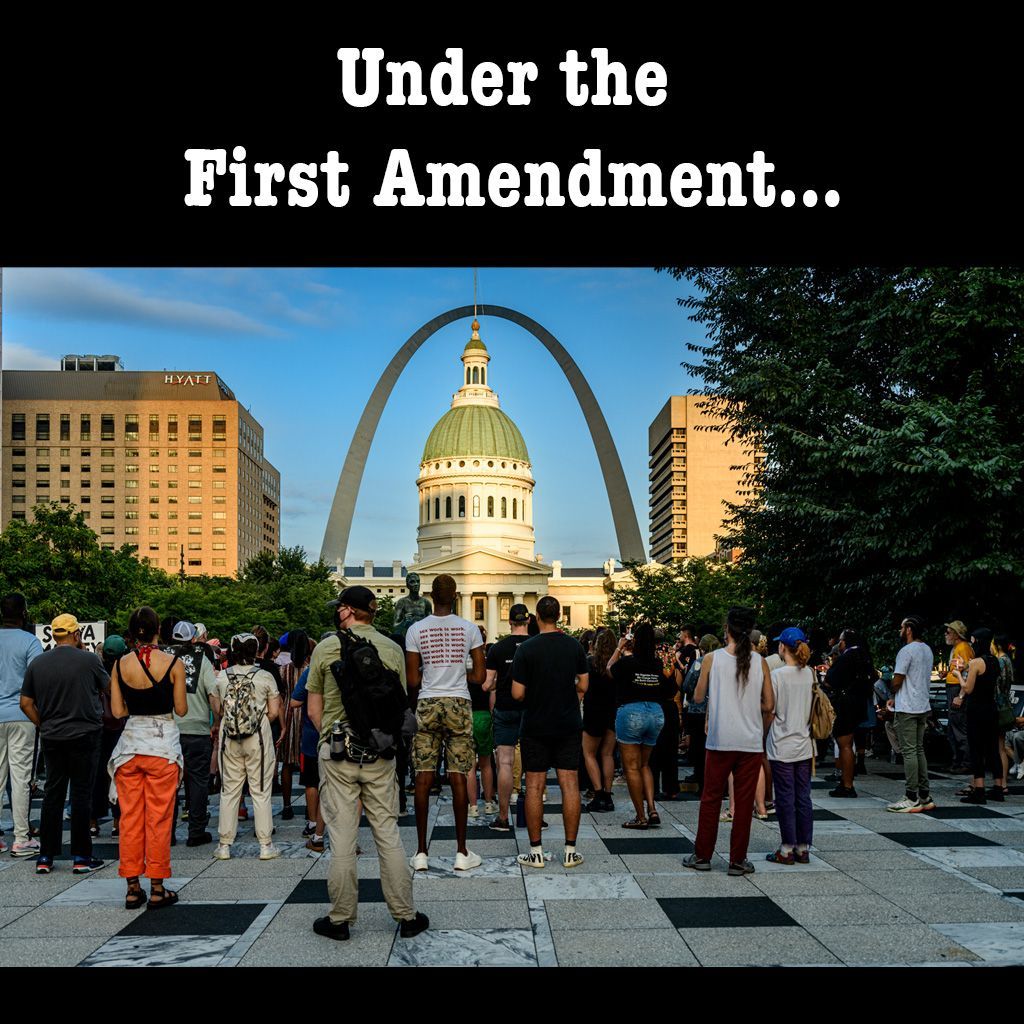
Free Speech, First Amendment rights, protest, civil disobedience, U.S. Constitution, stand up, speak out, take a stance, freedom of speech, freedom of assembly, freedom of religion,
Button
Slide title
Button
Slide title
Button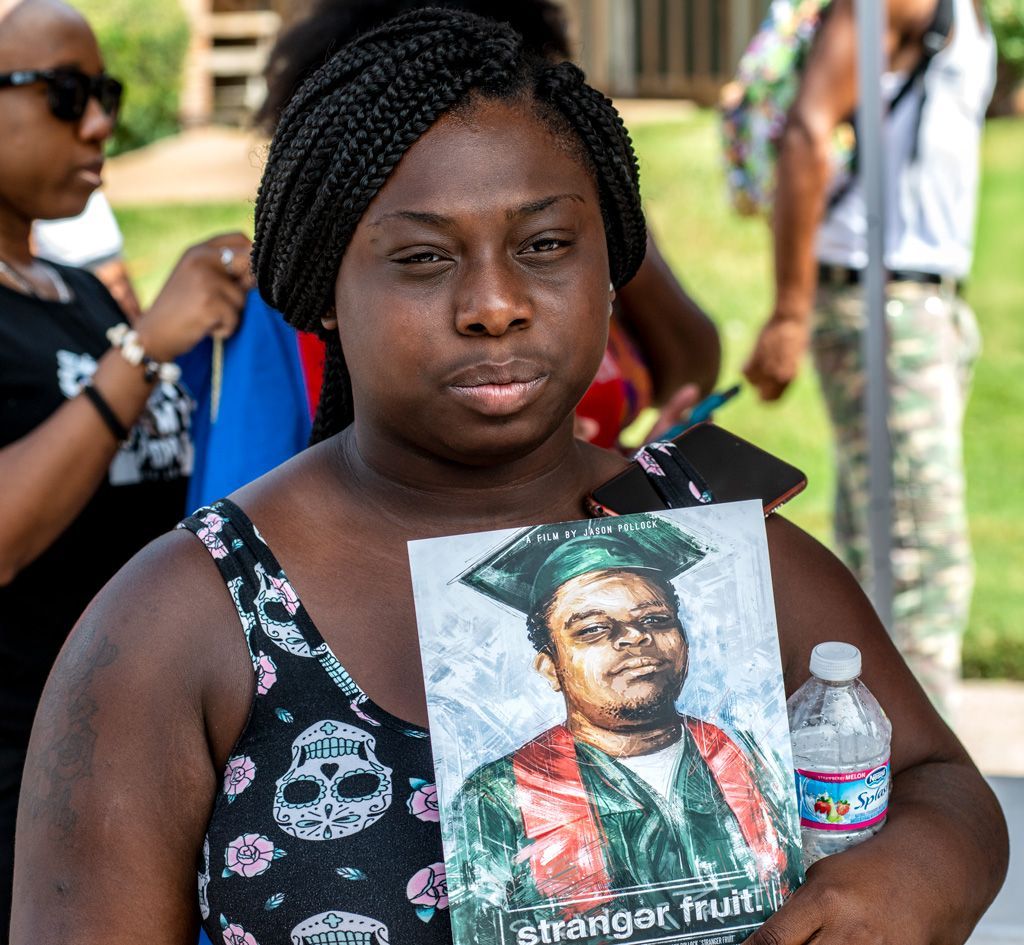
Slide title
At the annual memorial commemorating the 4th anniversary of Michael Brown’s death, this woman, among hundreds of others, gathered to pay their respects to a life lost way too early for all the wrong reasons. The death of Michael Brown, Jr. in Ferguson, Missouri, spawned the Black Lives Matter movement in the United Sates. Michael had just graduated from high school a few months before his death. Photographed on August 9, 2018.
Button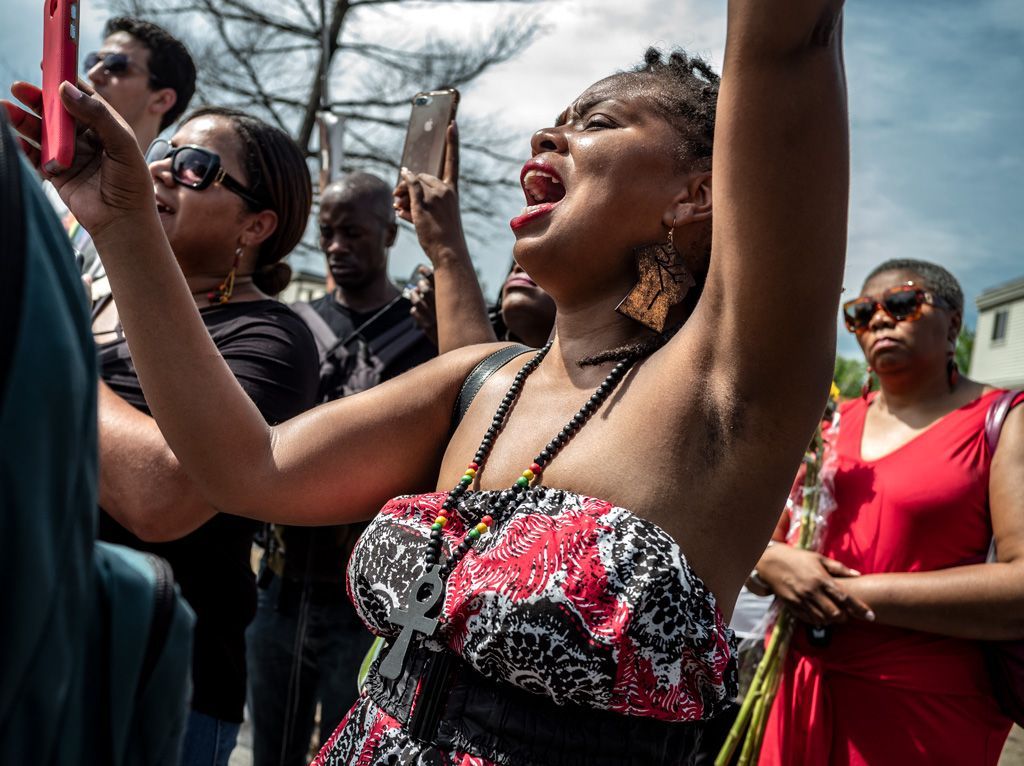
Slide title
At the 4th annual memorial to Michael Brown, Jr. on Canfield Drive, a residential neighborhood in Ferguson, Missouri, emotions ran high with speeches and participation by the family, elected officials, civil rights activists, and friends of the family. Photographed August 9, 2018.
Button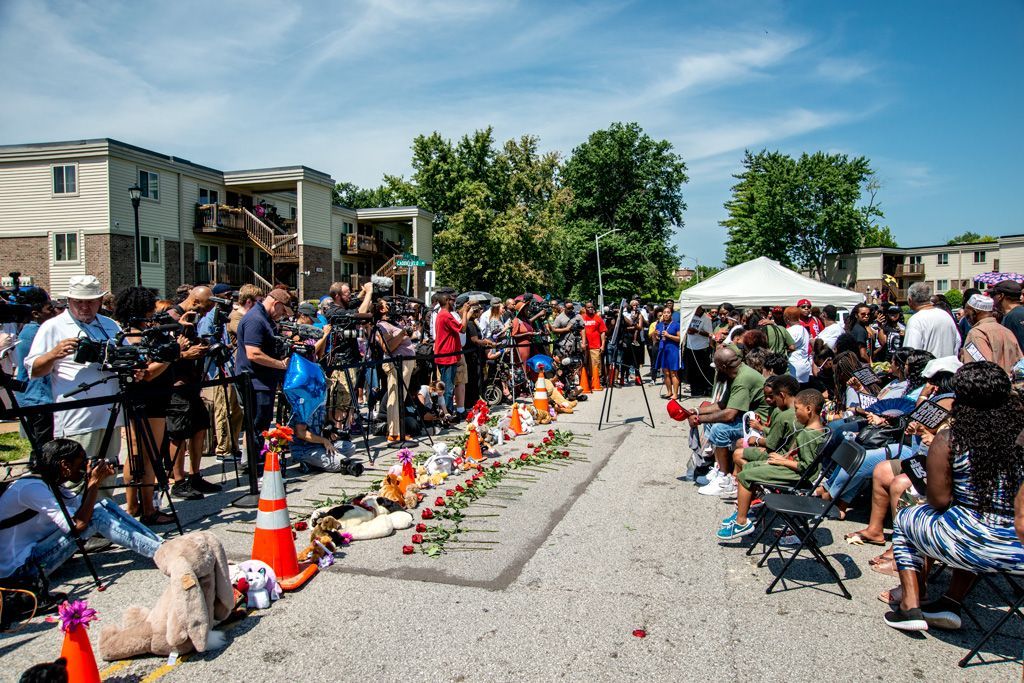
Slide title
At the 5th anniversary memorial for Michael Brown, Jr., showing the actual spot where the young unarmed youth was murdered by a Ferguson, Missouri, police officer on Canfield Drive. Photographed August 9, 2019.
Button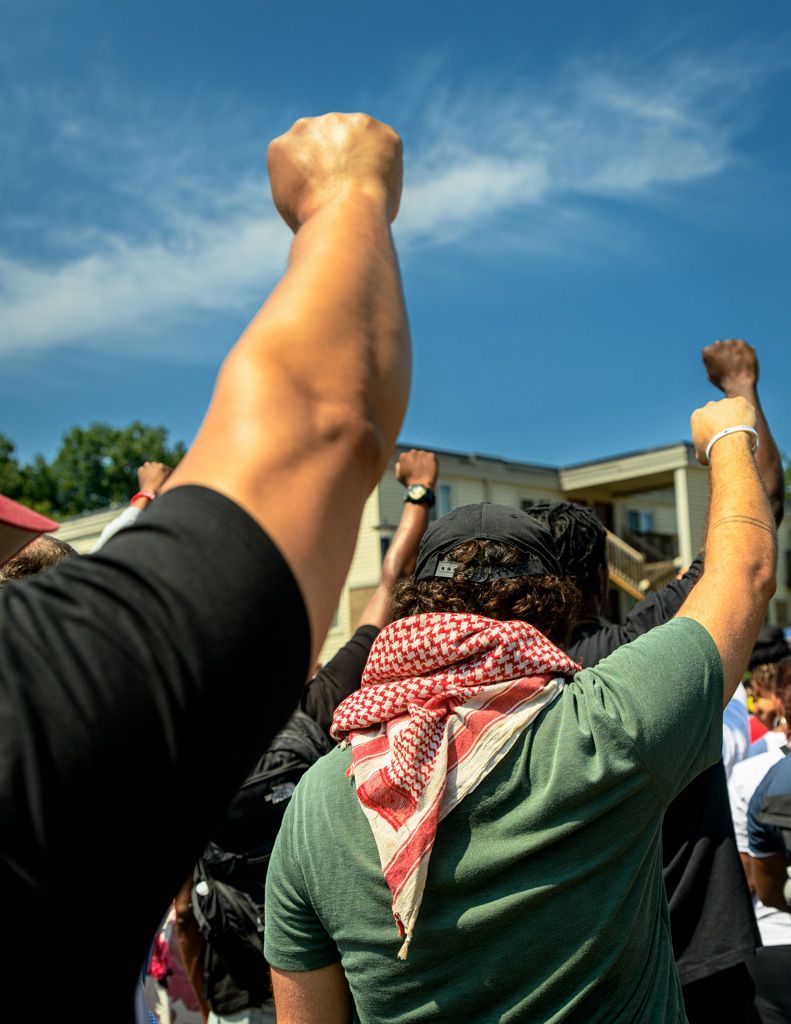
Slide title
From the 10th anniversary memorial for Michael Brown, Jr. Along with mournful reverence, there was a sense that the work of the Black Lives Matter movement was not finished, with racism still existing in American society. The raised fist is a graphic symbol of resistance to those who would oppress anyone because of their race, color of skin, gender, religious beliefs, country of origin, or any other factor. Photographed August 9, 2024.
Button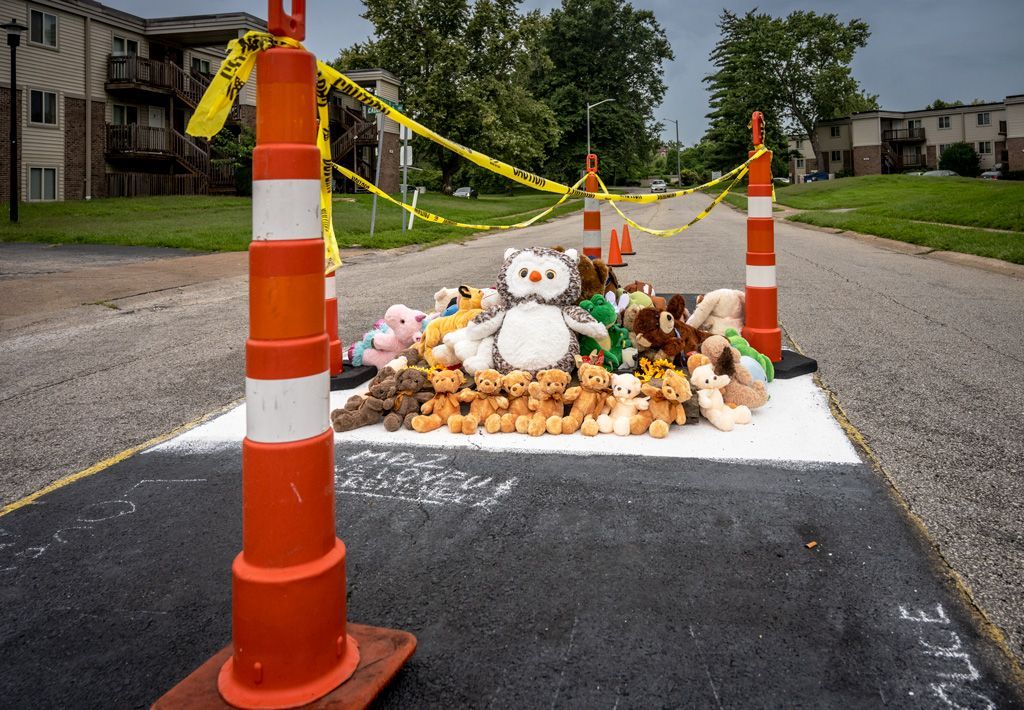
Slide title
Scene from the 9th anniversary memorial for Michael Brown, Jr. prior to the event. Mourners prepare the site of his death each year with stuffed animals to emphasize that this was an unarmed youth gunned down for no other discernible reason that he had jaywalked across a street. Photographed August 9, 2023
Button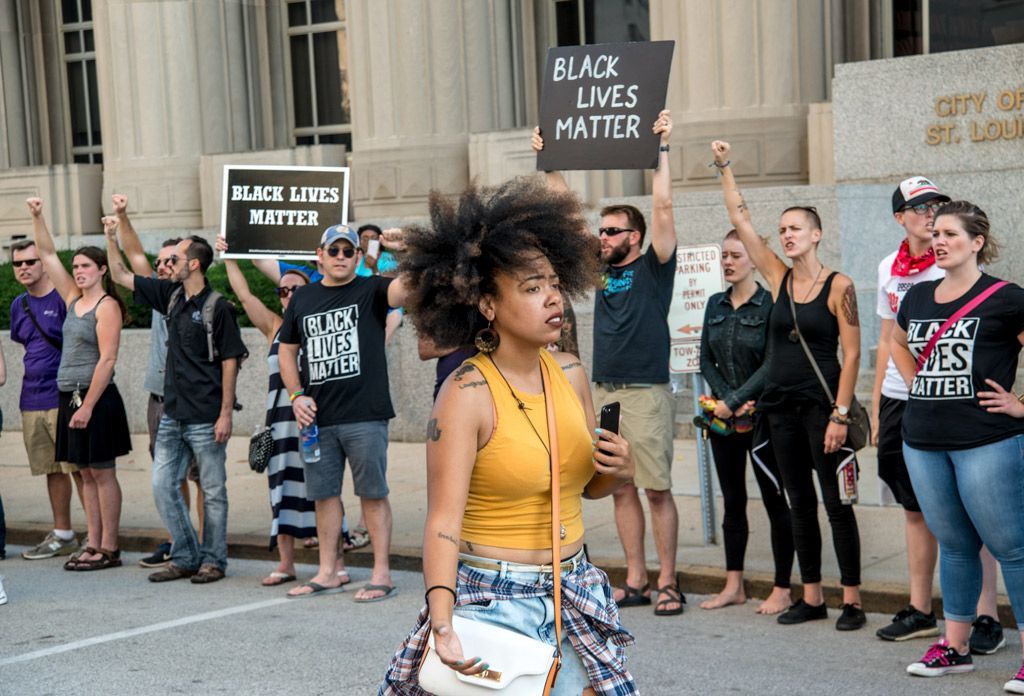
Slide title
After Michael Brown’s murder, violence continued against Black men by police forces and spawned protests throughout the region. They were organized to underscore that Black Lives Matter — working inside and outside of the system to heal the past, call attention the present, and reimagine the future. Ultimately, public awareness and law suits against cities and police departments caused reforms. But even today, work remains. Notice that almost all of the protesters here, in front of a downtown circuit courthouse, are white. This is indicative of the popular support this movement attracted. The protest leader, shown in the foreground, is longtime BLM activist Ohun Ashe. Photographed on October 14, 2017.
Button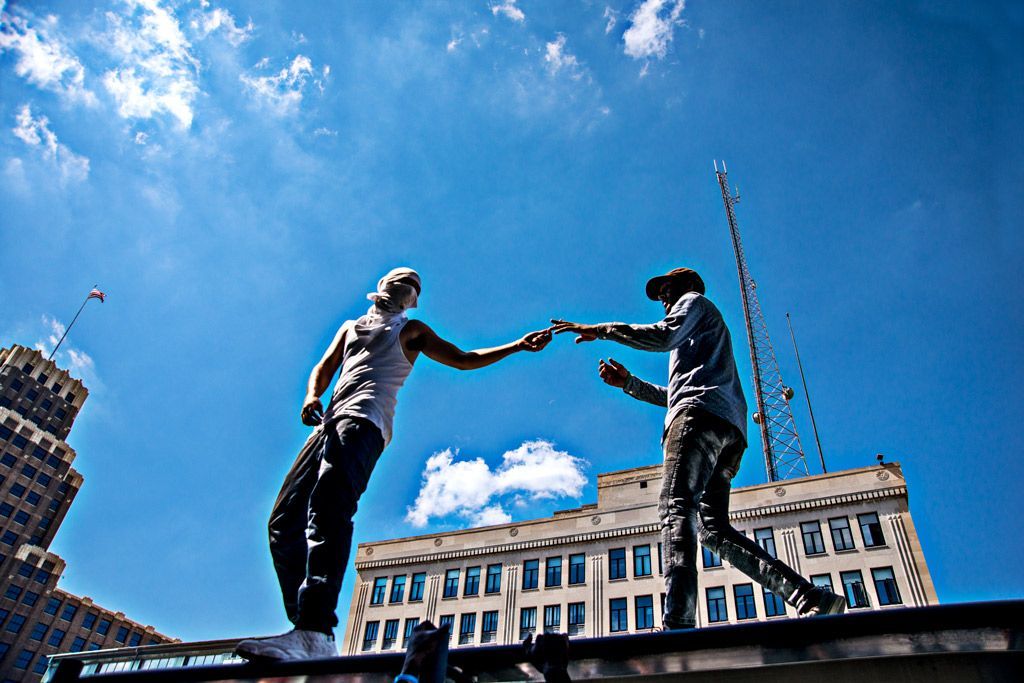
Slide title
Two protesters touch fingers in a Michelangelo “Sistine Chapel & David” moment as they stand atop a public bus shelter in downtown St. Louis to lead chants during the Stockley protests there. Photographed on September 15, 2017.
Button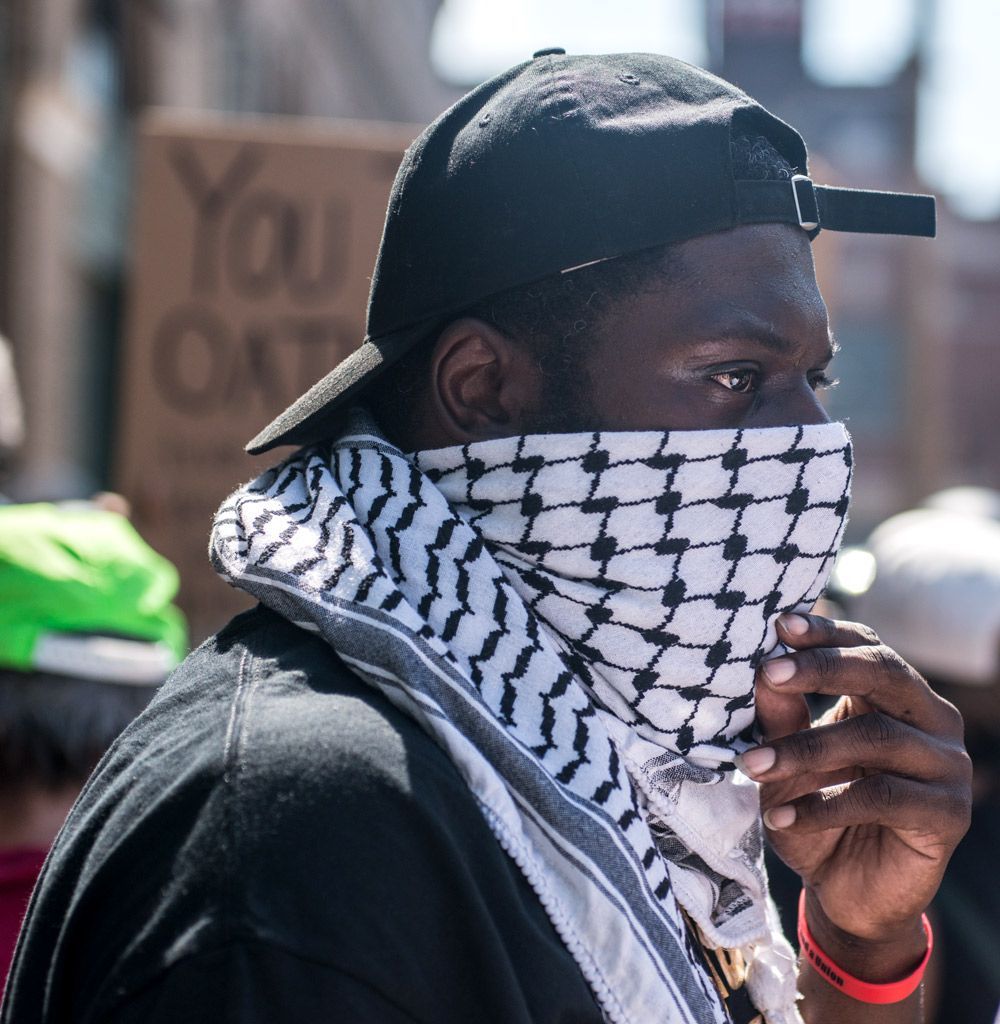
Slide title
A protester, wearing a Palestinian keffiyeh to protect from tear gas, faces a police line in front of the St. Louis Municipal Courts protesting the acquittal of St. Louis police officer Jason Stockle, who shot and killed Anthony Lamar Smith, an unarmed black man. Over 160 people were arrested in the first three days of demonstrations that were largely peaceful, resulting in law suits against the St. Louis Metropolitan Police Department for unnecessary use of force against protesters, protected by the First Amendment. Photographed on September 15, 2017.
Button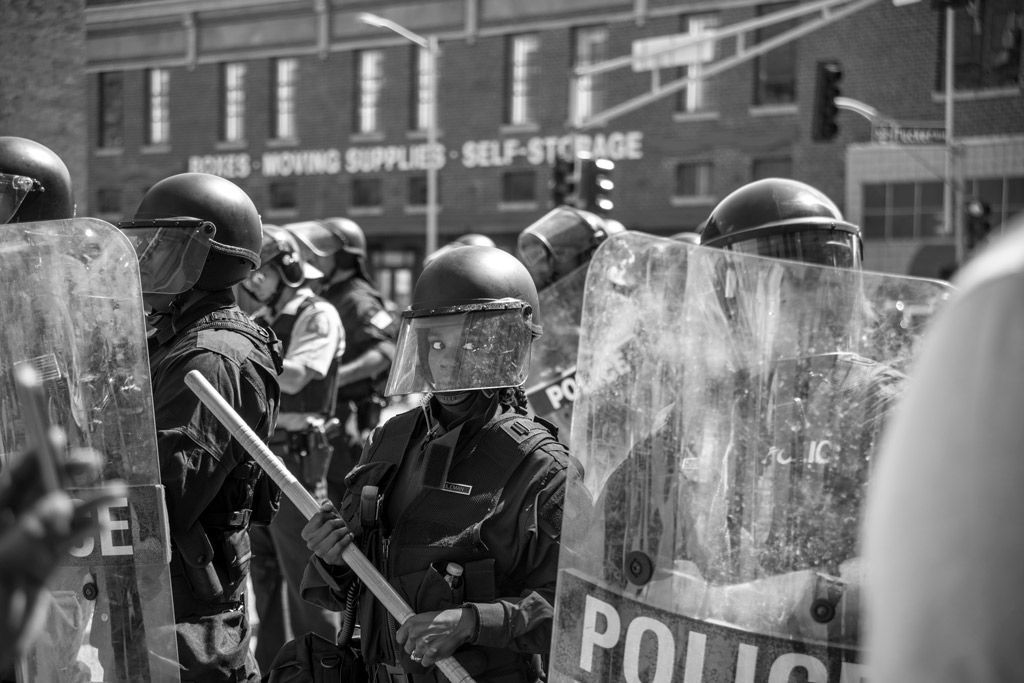
Slide title
This police line was ordered to contain the Stockley protesters in downtown St. Louis. The female officer’s concern is vividly apparent.
Later, the police employed a tactic termed “kettling” where protesters are surrounded without an escape route, then ordered to disperse causing chaos — and the opportunity for the police to make arrests for not obeying the order to disband. Photographed on September 15, 2017.
Button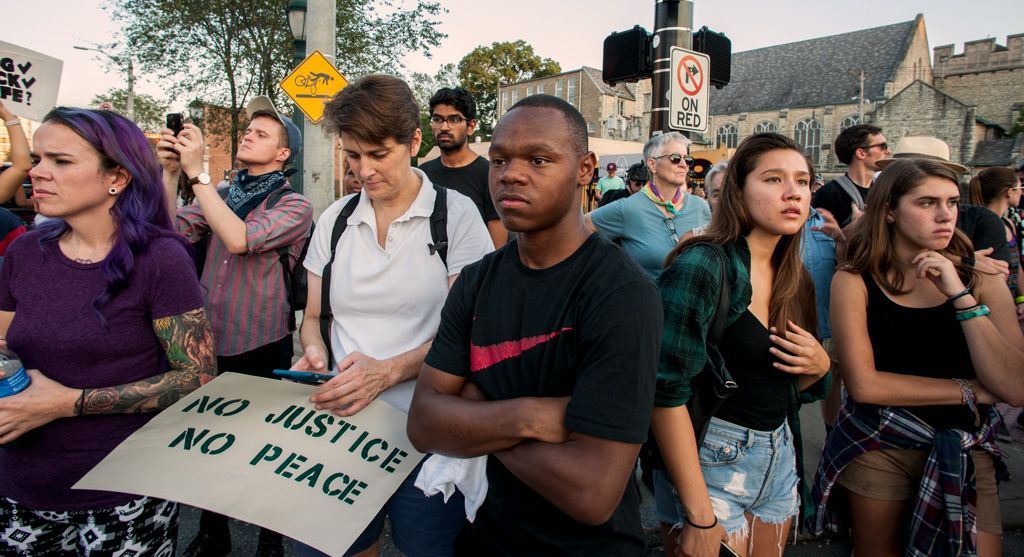
Slide title
Protesters gathered during a march for slain Anthony Lamar Smith, after police officer Jason Stockley had been acquitted of his murder. Stockley, a known rogue officer, was reported to have stored his personal AK-47 assault rifle in the trunk of a police car to use to pursue those he perceived as criminals. This group marched from the Delmar Loop to the corner of Skinker Avenue and the Forest Park Parkway, blocking traffic along the way to call attention to the continued killing of black men where white men are usually only detained or arrested. Photographed on September 16, 2017.
Button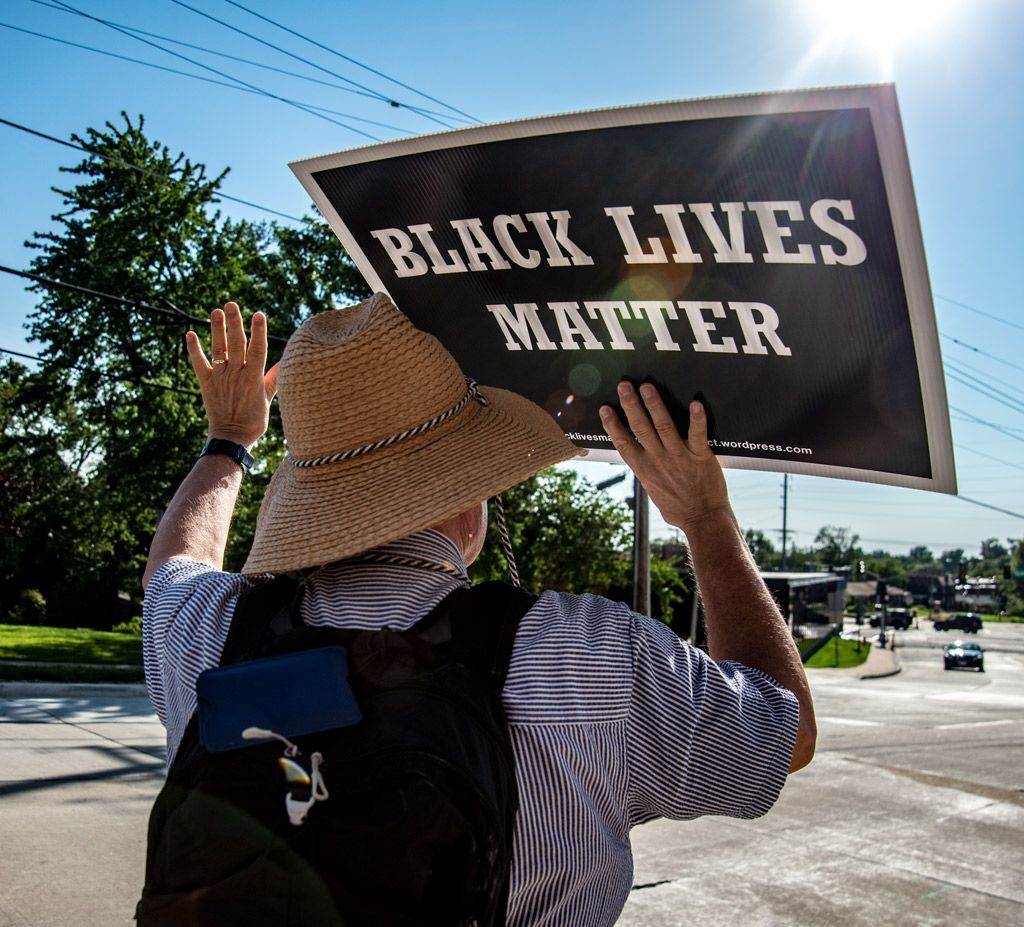
Slide title
In the St. Louis suburb of Richmond Heights, police escalation of a shoplifting event turned deadly with the shooting of a 23-year old black man, Terry Tilman. The events that unfolded were suspicious and ultimately pointed to excessive force by the police when the frightened man ran, only to be gunned down. It took 20 months for video to be released by the police that cast doubt on the officer’s story. Black Lives Matter protesters were at the Richmond Heights City Hall to call attention to this tragedy on a hot summer day. Photographed September 5, 2019.
Button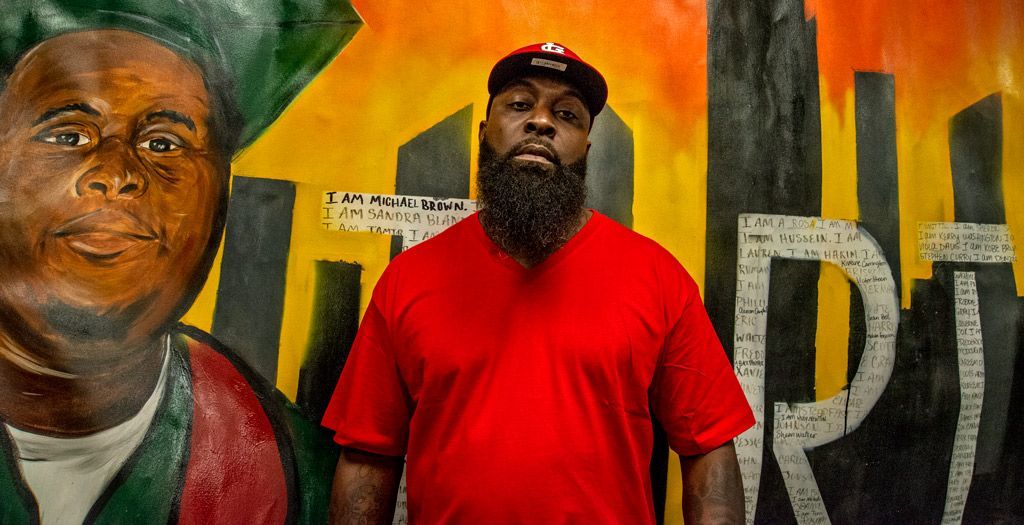
Slide title
Michael Brown, Sr., father of Michael Brown. Michael’s murder sparked an awakening of the public to the “Jim Crow” tactics of police departments nationwide with protests and riots in Ferguson, a suburb of St. Louis. Reforms, including a federal consent decree, forced Ferguson’s police department to adopt new rules, procedures, training, and more since then. And the work continues. This photo, taken five years after his son’s death on August 8, 2019, at a tribute Michael’s father organized under the banner of a new foundation, Chosen for Change, with a memorial at the Urban League offices in Ferguson.
Button
Slide title
Button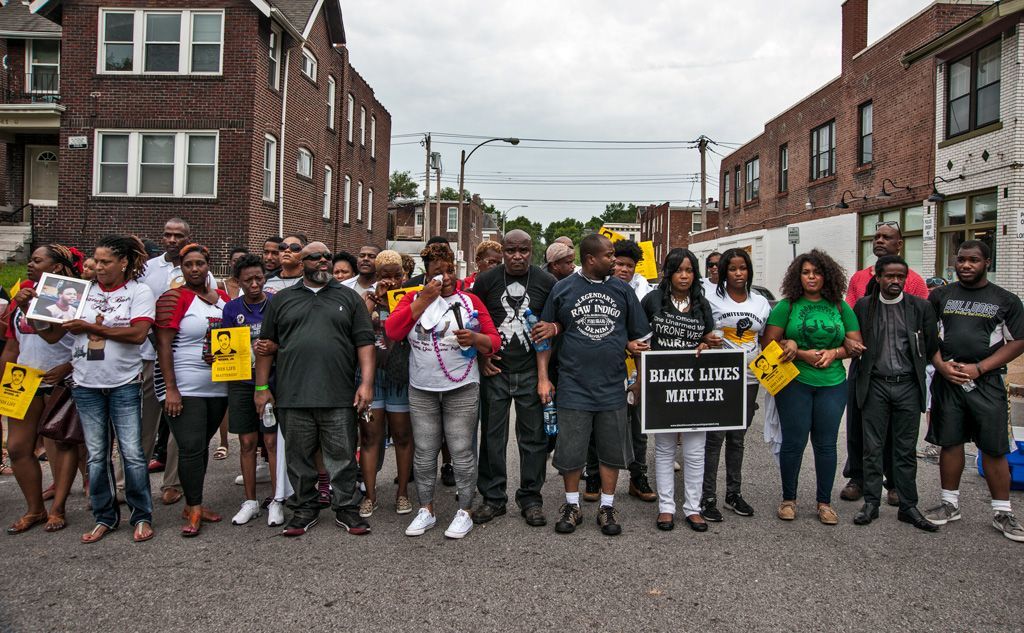
Slide title
The killing of Black men, young and old, continued after Michael Brown’s death like a plague. Here, prior to a candlelight vigil, family, friends and neighbors of 18-year old VonDerrit Myers, Jr., gathered in the Shaw neighborhood where he was gunned down by an off-duty St. Louis police officer pulling a secondary security guard job. The off-duty officer chased the 18-year old ultimately firing 17 shots at him before he was killed. The officer was not in uniform and did not identify himself as an officer, but began pursuing VonDerrit and two friends with his weapon already drawn, causing the trio to run. Photographed on August 8, 2015.
Button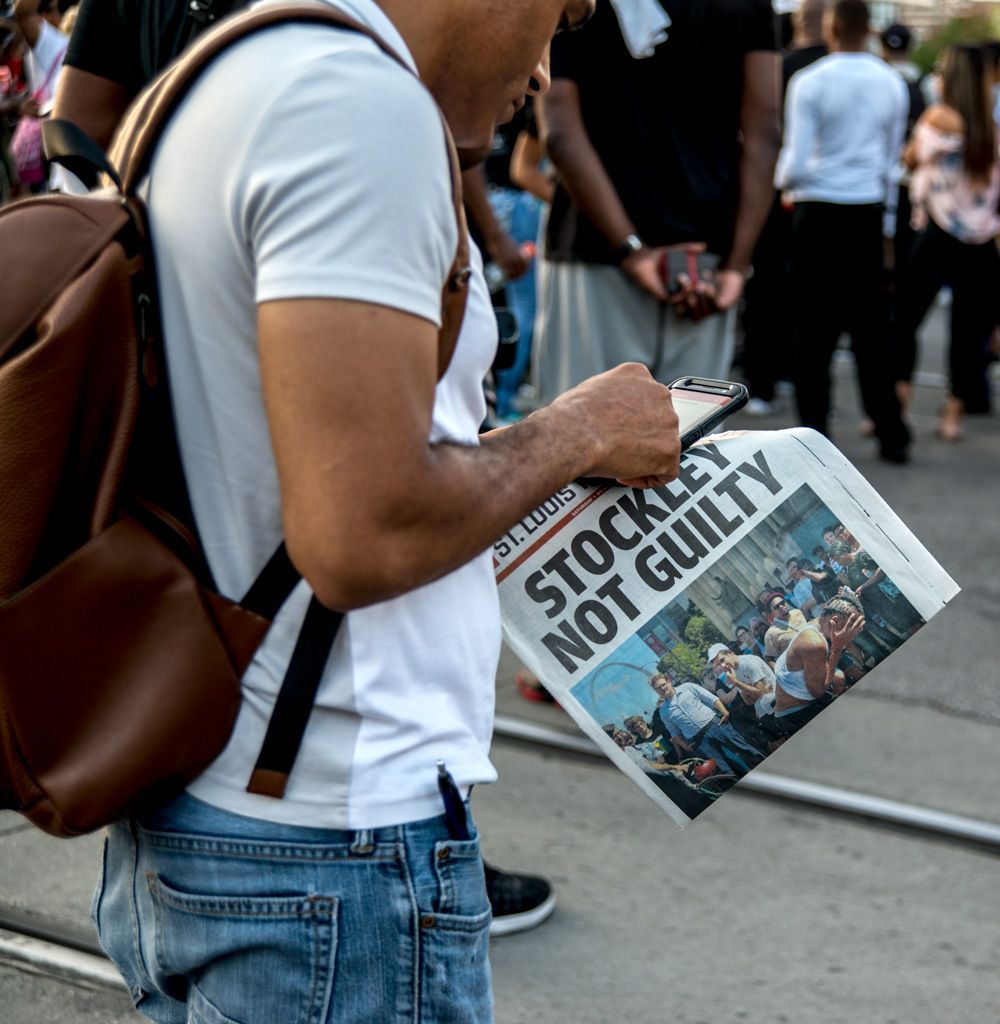
Slide title
A demonstrator, prior to a protest, holds a copy of the St. Louis Post-Dispatch newspaper with a headline that sounded the alarm for that day’s action. Hundreds of protesters showed up of all ages, races, varied socioeconomic backgrounds, and education to have their voices heard about their shock of the trial verdict. Photographed on September 16, 2017.
Button-
Slide title
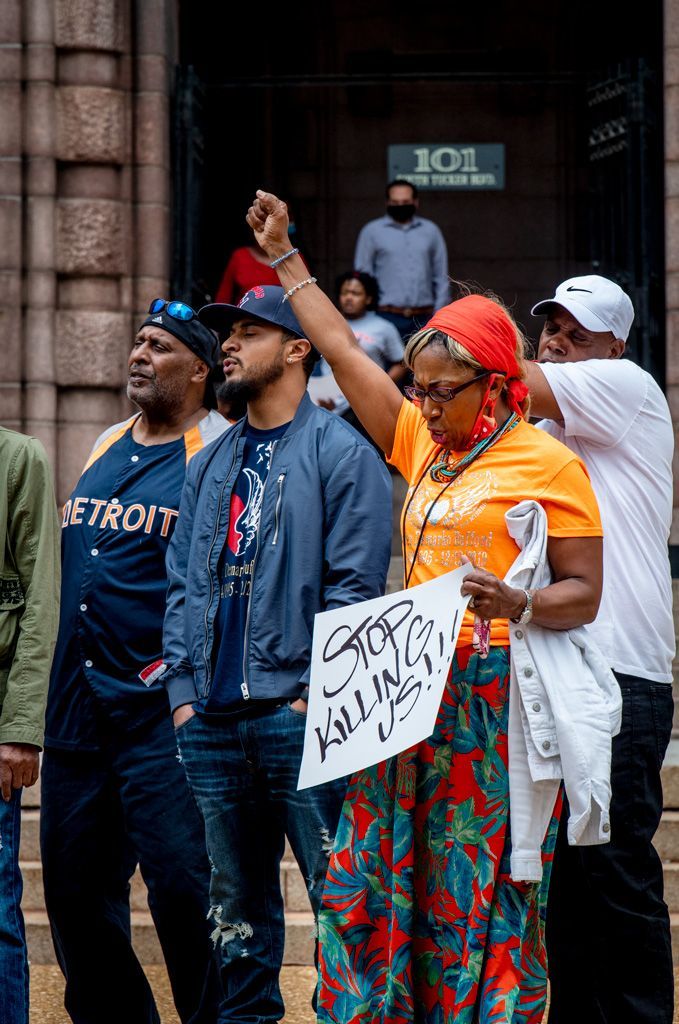
Families of victims of Fatal State Violence (FSV) assembled on the steps of St. Louis City Hall to decry the continued killing of Black men and women by police. It was both a demonstration and a memorial for the deceased loved ones. Here, a mother with husband and son, remember their son and brother in a plea for restraint. Photographed May 24, 2022.
Button 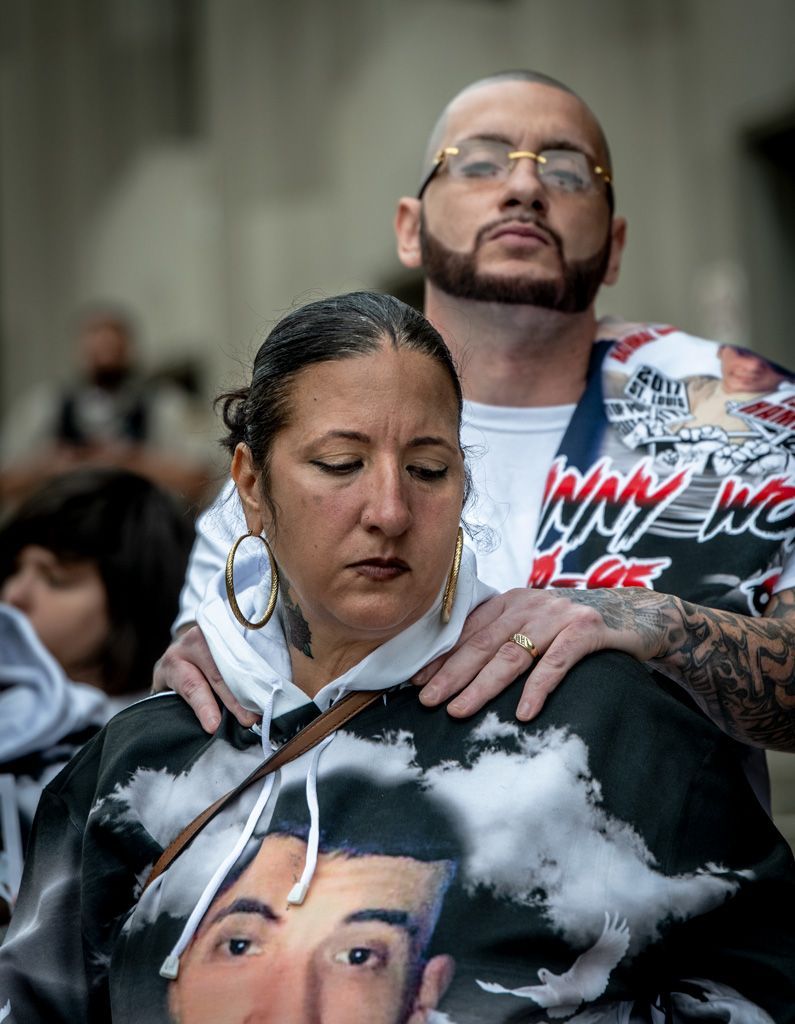
Slide title
The parents of Isaiah Hammett at a memorial vigil outside the St. Louis Circuit Courts as they await a hearing into the death of their son by a SWAT team. Without a search warrant, the team entered the house where Isaiah was caring for his sick grandfather on June 7, 2017. Within minutes Isaiah was dead. The police report justified the shooting, but was later debunked. At this vigil, the family displayed morgue photos of the body, contradicting police claims about what happened during the raid on their home. Photographed September 20, 2023.
Button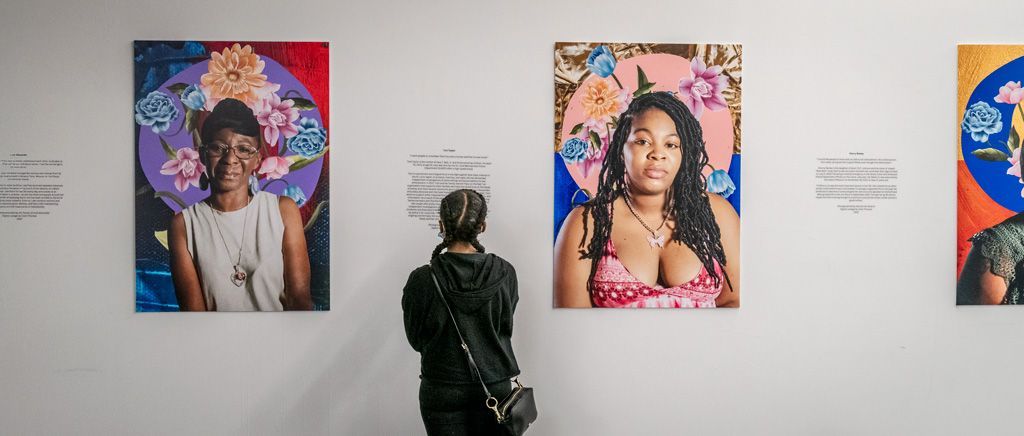
Slide title
The First Amendment isn’t limited to public speech, demonstrations, or mass media reporting. ArchCity Defenders, a local non-profit and holistic civil rights law firm, who works with FSV victim families produced an exhibit of family stories at a local art gallery to dramatize the epidemic of Fatal State Violence in the St. Louis metropolitan area. This photo shows a visitor reading one account of family loss next to photos of the victims’ mothers. It was a powerful and effective way to let others understand these tragedies in a more personal way. Photographed on January 20, 2023.
Button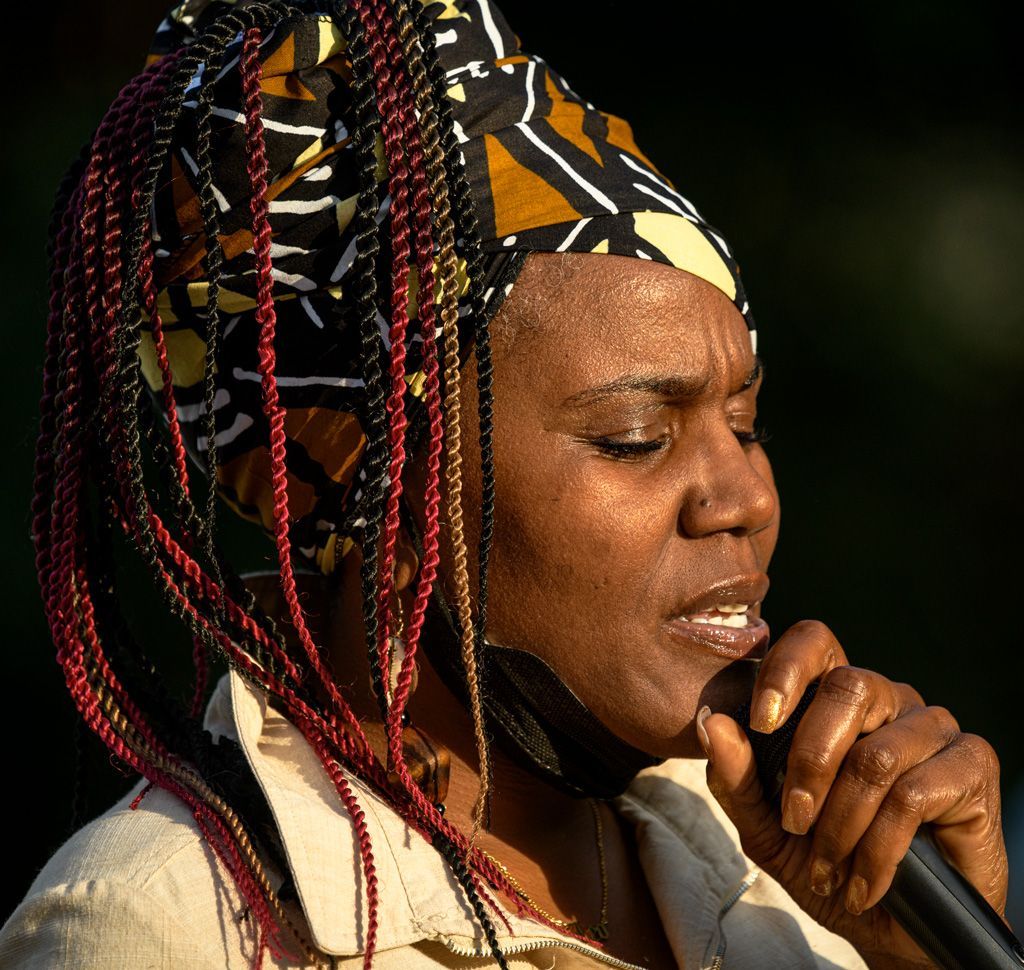
Slide title
At a vigil in Kiener Plaza in downtown St. Louis: This unidentified woman led a prayer for Sonya Massey, a 36-year-old unarmed Black woman who was murdered by a white sheriff’s deputy in Sangamon County, Illinois (near Springfield). She had called 911 about a possible prowler, but was shot and killed by the responding officer as she stood at her stove holding a pot of hot water. He cited “fear for his life” to justify the use of lethal force. The officer was eventually found guilty of second-degree murder. Photographed on July 29, 2024.
Button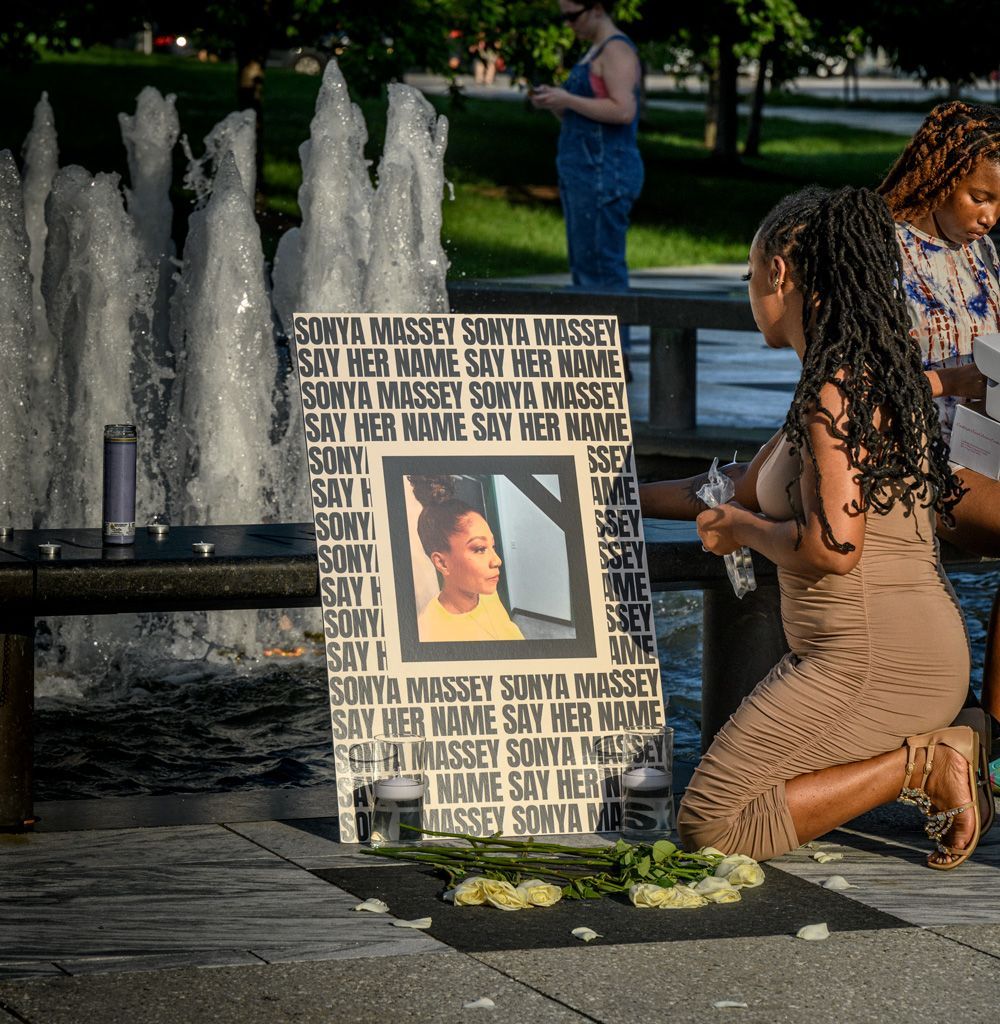
Slide title
A family member of Sonya Massey kneels down at a makeshift memorial during the Say Her Name protest at Kiener Plaza in downtown St. Louis. On January 29, 2025, Sean Grayson, the former Illinois sheriff’s deputy, who shot Sonya Massey, was convicted of second degree murder and sentenced to 20 years in prison. Photographed July 29, 2024.
Button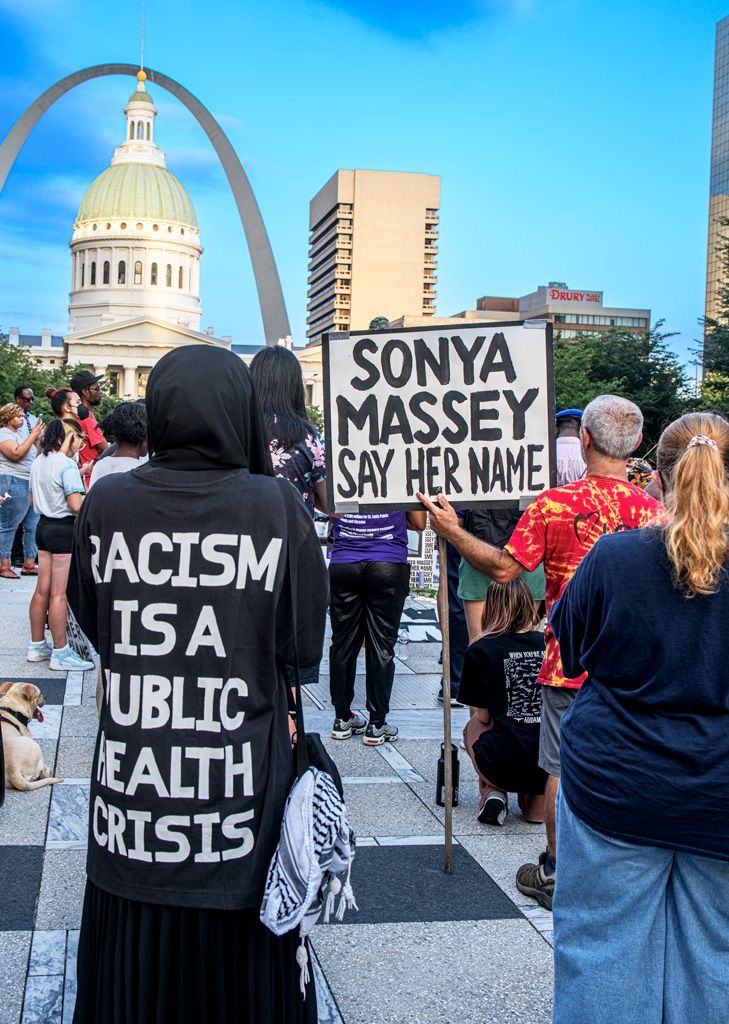
Slide title
Signs and speeches memorialize yet another senseless killing at the hands of poorly trained or racist police officers, who take an oath to protect and serve the public. Instead, too often, they take the lives of innocent people based on skin color, ethnicity, or being in the wrong place at the wrong time. Photographed July 29, 2024.
Button
Slide title
Button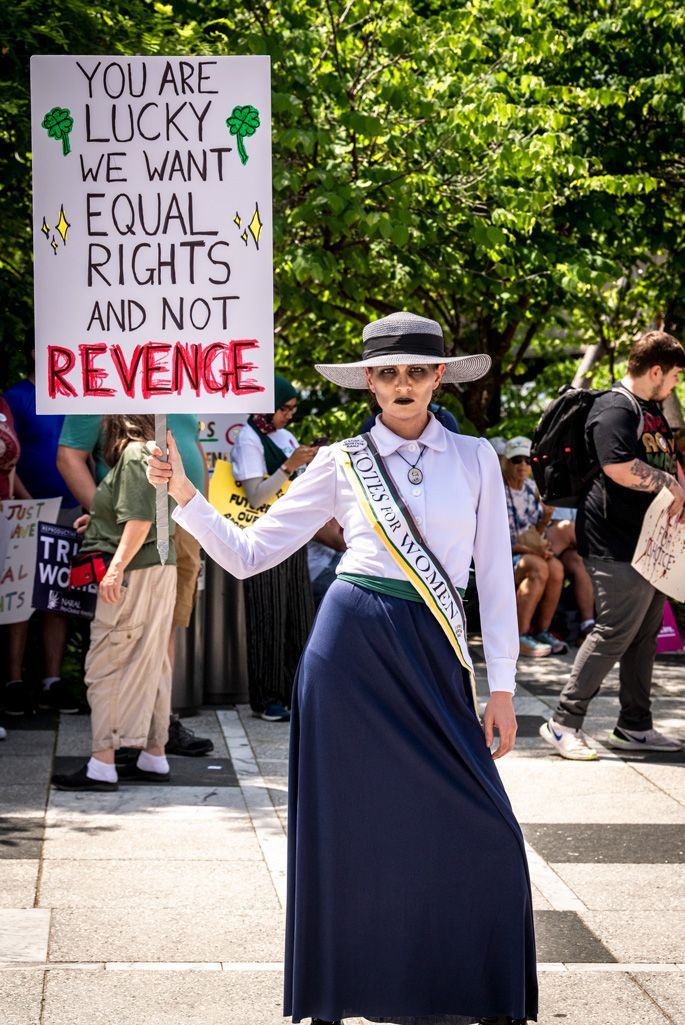
Slide title
An activist at an equal rights rally in Kiener Plaza in downtown St. Louis, where the campaign for a statewide referendum to legalize abortion in Missouri was announced just prior to the Supreme Court’s (SCOTUS) decision to overturn Roe v Wade. The SCOTUS’ decision returned Missouri to a state that banned abortions. Later the Amendment 3 vote passed with 51.6% of the vote restoring safe and legal abortions, and other reproductive medical services in Missouri. Photographed on May 14, 2022.
Button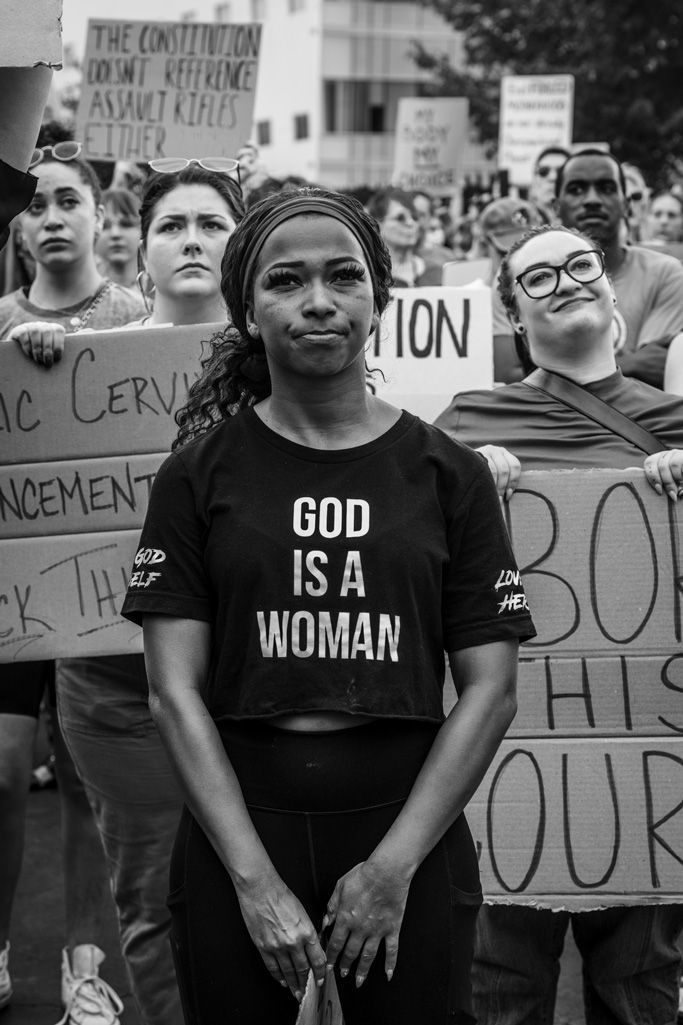
Slide title
This image was created just one hour after the U.S. Supreme Court announced they had overturned Roe v Wade. Women’s Reproductive Rights advocates quickly gathered at the Planned Parenthood Offices in St. Louis’ Central West End to express their outrage and disagreement with the decision, launching new efforts to make abortion safe and legal in Missouri once again. Photographed on June 24, 2022.
Button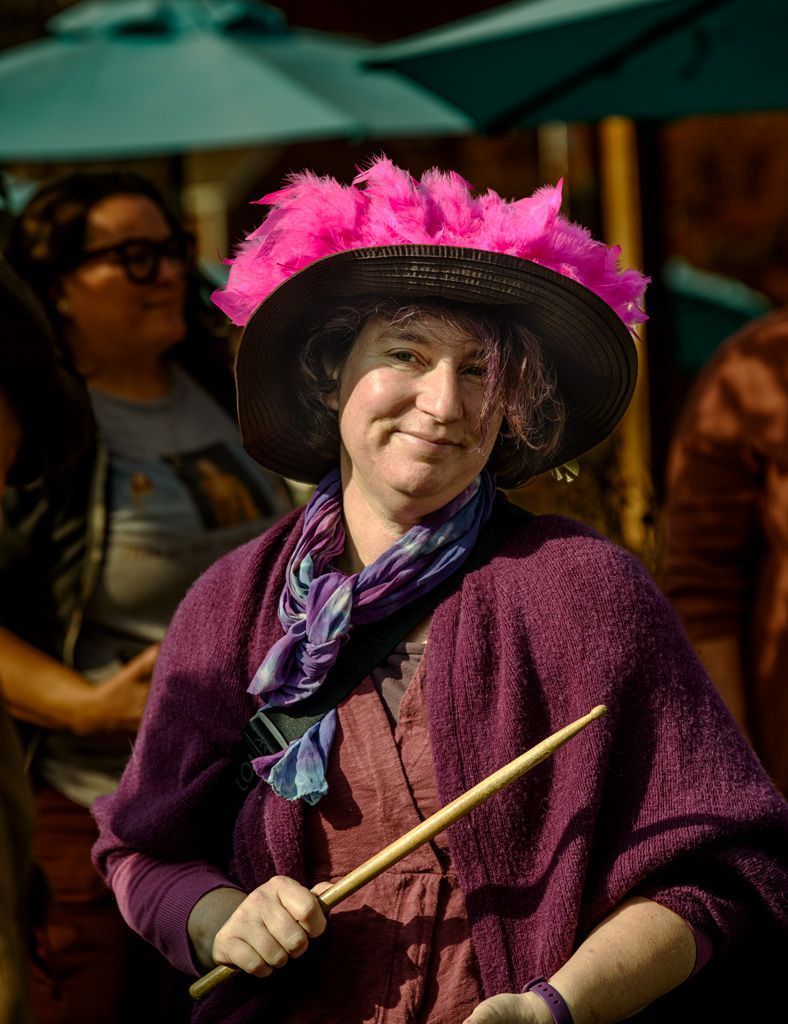
Slide title
A member of Joia World Music preparing to participate in a Women’s Reproductive Rights march and rally in the Dogtown neighborhood of St. Louis to protest the Missouri State Legislature’s efforts to override the successful Amendment 3 referendum by Missouri voters to legalize abortion. Several women’s groups, along with male allies, marched to speak out at this and several later protests. Photographed on November 2, 2024.
Button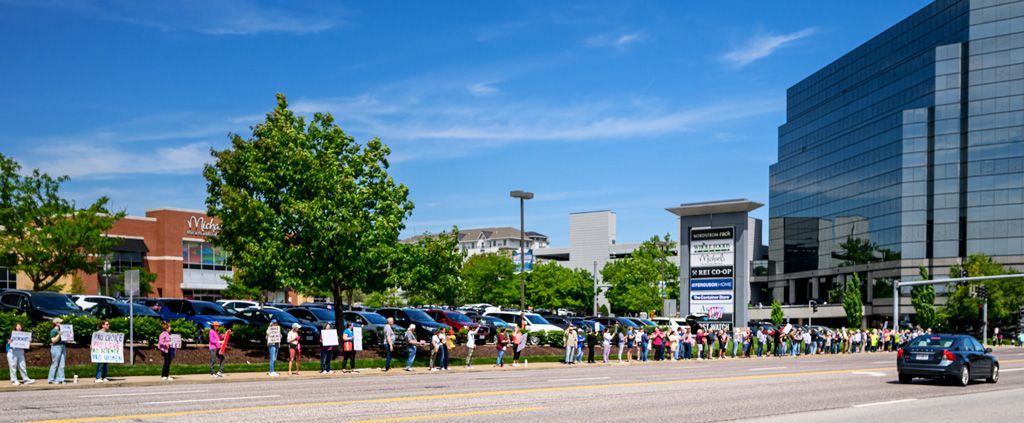
Slide title
Billed as the Mother Lovin’ Rally, this Mother’s Day demonstration took place at the junction of I-64, Eager Road and Brentwood Boulevard in St. Louis County. It was centered on Women’s Reproductive Rights and Legal Abortions, a hot issue in Missouri. Signs held by protesters for nearly three long blocks on both sides of the roadway targeted many other objections these voters had with the Trump administration’s policies and actions. Photographed May 10, 2025.
Button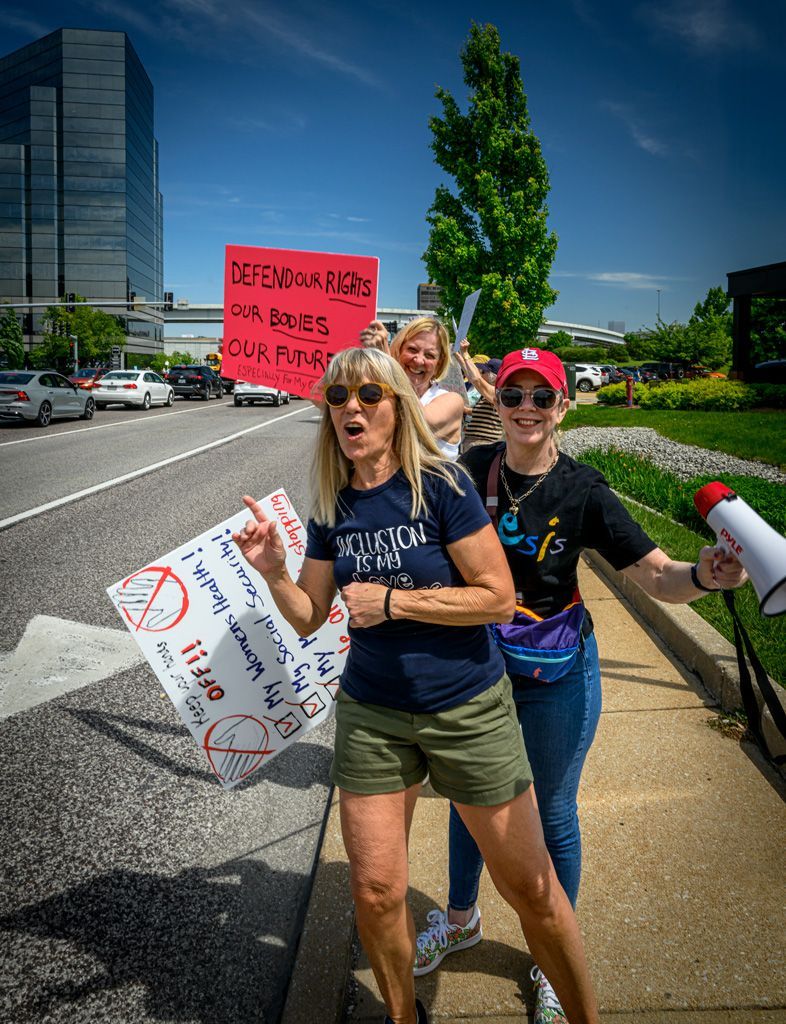
Slide title
The Mother Lovin’ Rally for safe, legal abortions in Missouri, held on Mothers Day, brought out record crowds. When the U.S. Supreme Court overturned Roe v Wade, Missouri voters passed a statewide referendum to make abortions legal in Missouri once again. But, then, the majority Republican State Senate and House worked to invalidate that referencdum by the people. Photographed May 10, 2025.
Button
Slide title
Button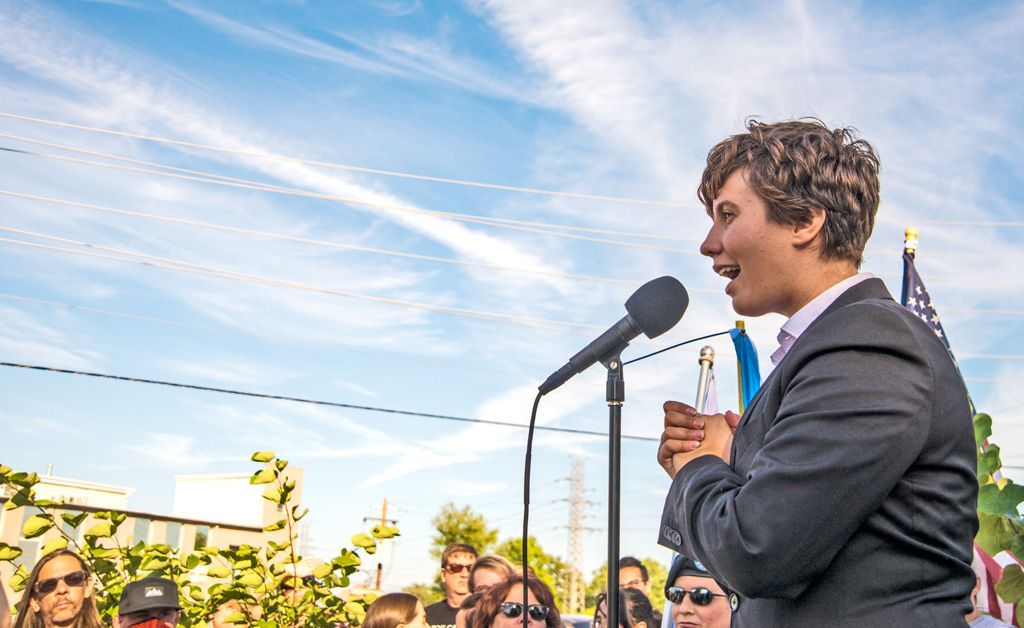
Slide title
In 2017, a parcel of land on Vandeventer Avenue in St. Louis, was developed as the Transgender Memorial Garden to honor transgender people killed by anti-LGBTQ violence. Since then, the garden has been relocated to the Benton Park West neighborhood in the City. But, on this day, the garden was dedicated and those it memorialized mourned. They also protested the continuing prejudice and violence against non-binary human beings through ignorance. Photographed July 30, 2017.
Button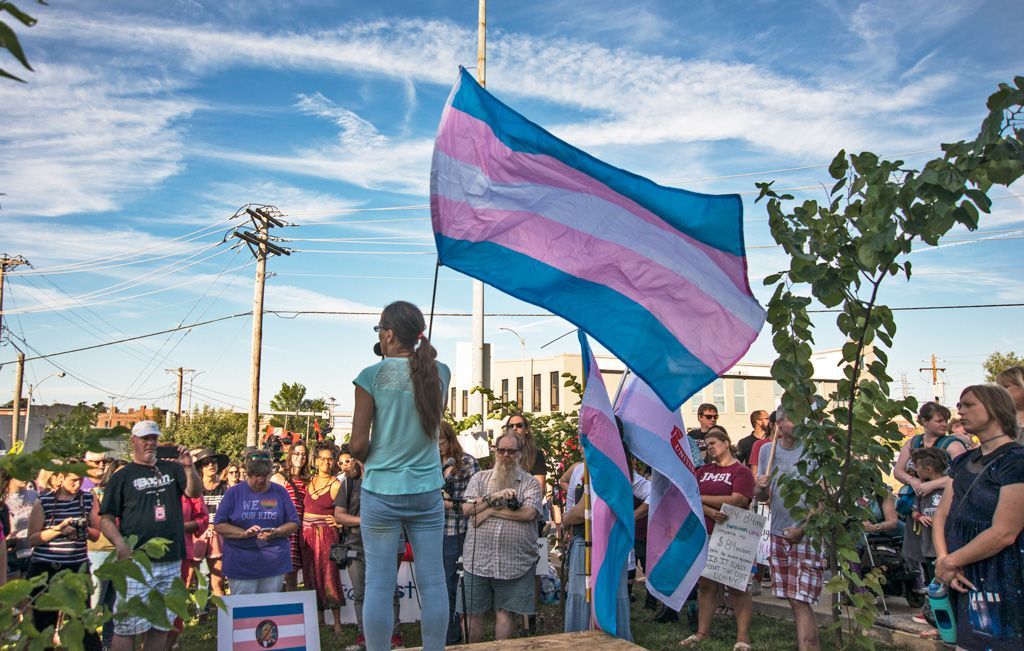
Slide title
Speakers at the Transgender Memorial Garden dedication and protest spoke of a history of violence, solidarity, ways to educate the public, and how they, along with allies, can work together. Photographed July 30, 2017.
Button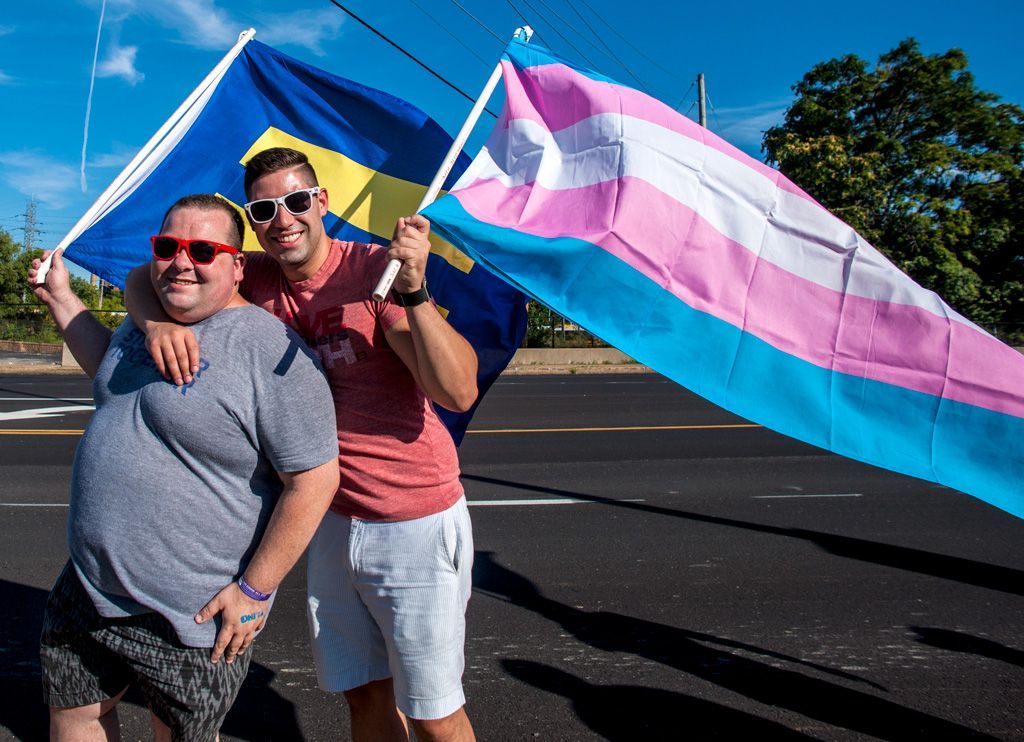
Slide title
Raising the flags of equality and LBGTQIA+, the mood of the event was upbeat and cheerful at times, but never far away from a somber tone of mourning for those who were persecuted for their sexual orientation. Photographed July 30, 2017.
Button
Slide title
Button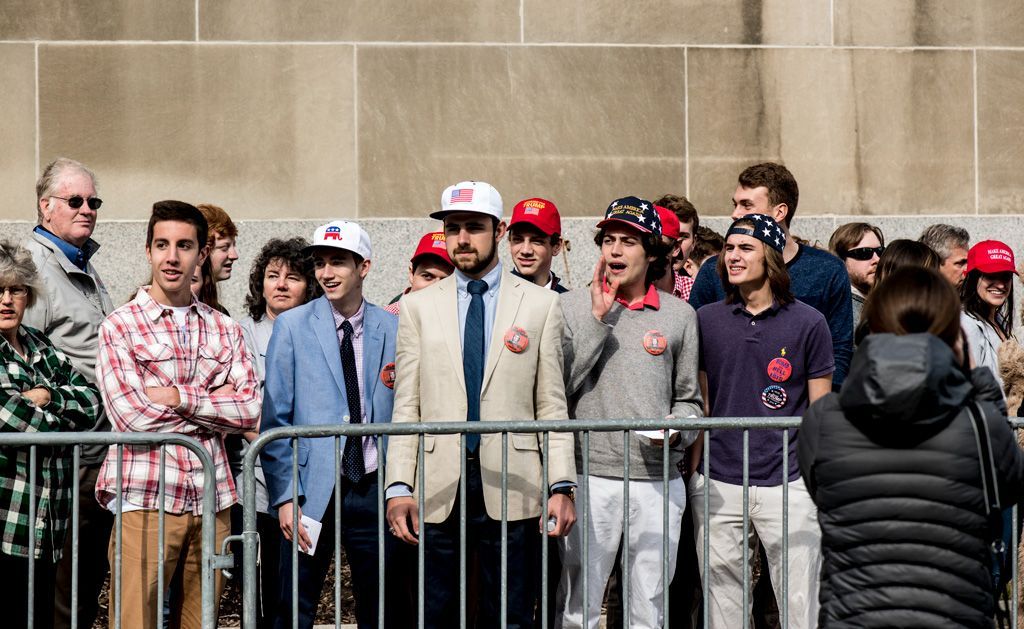
Slide title
These are Trump supporters who came attended the first Trump rally in St. Louis in 2016 at the Peabody Opera House (now Stifel Theatre). More counter protesters joined together outside the indoor rally for Donald Trump. Photographed March 11, 2016.
Button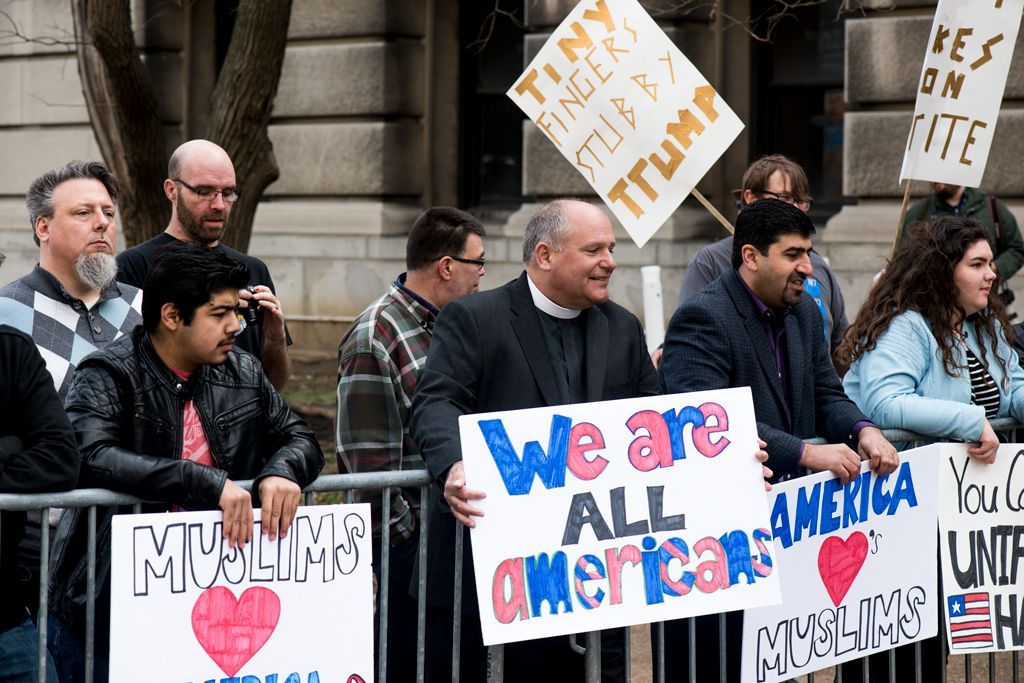
Slide title
A small segment of the anti-Trump protesters demonstrated their opposition to a Trump presidency, carried signs, and chanted themes that remain today as the opposition stance has not changed, except to become more intense. Photographed March 11, 2016.
Button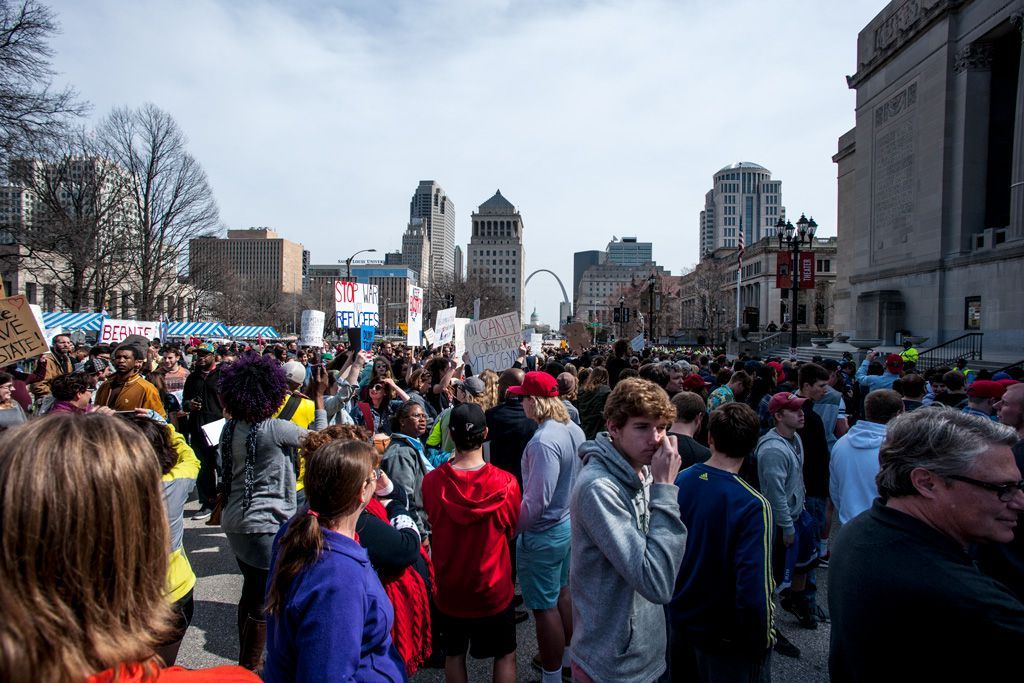
Slide title
A broader view of the anti-Trump protest held outside of the Peabody Opera House shows the proximity to the Gateway Arch. The crowd was orderly but very vocal. Already, clear lines differentiating the two political views were drawn along economic, racial, demographic, and constitutional issues. Photographed March 11, 2016
Button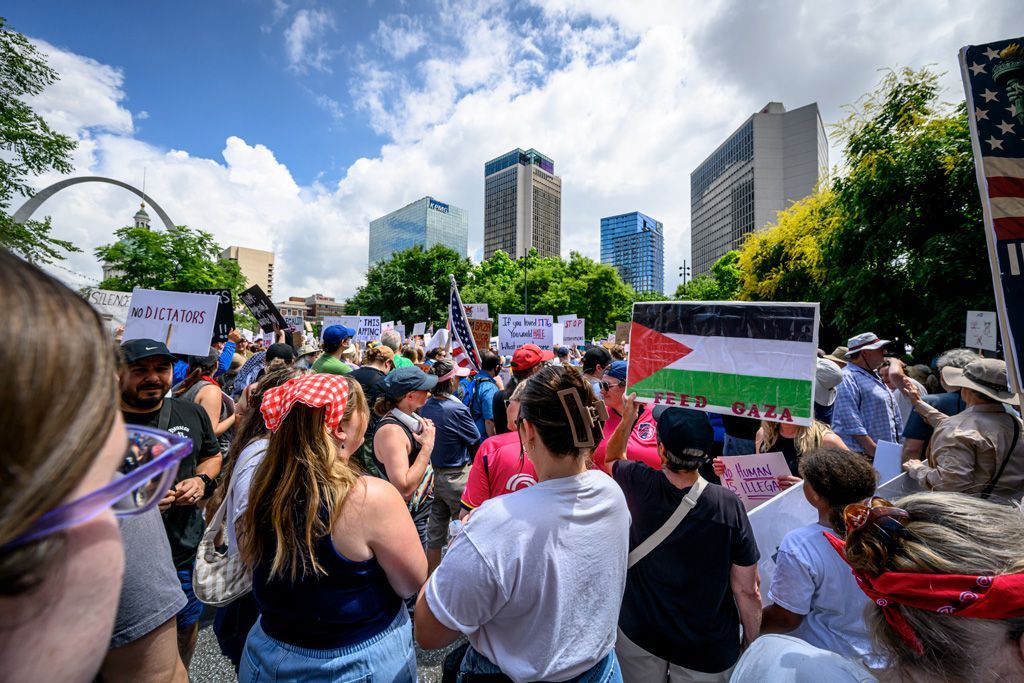
Slide title
The crowd attending the first “No Kings” protest in downtown St. Louis spilled out from the entire area of Kiener Plaza shoulder to shoulder, past the City Garden west of the Plaza, and onto the side streets adjacent Kiener Plaza. While chanting was loud, and emotions high, the protest was peaceful and orderly with many guest speakers including politicians, activists, and heads of organizations working for civic progress. Photographed June 14, 2025.
Button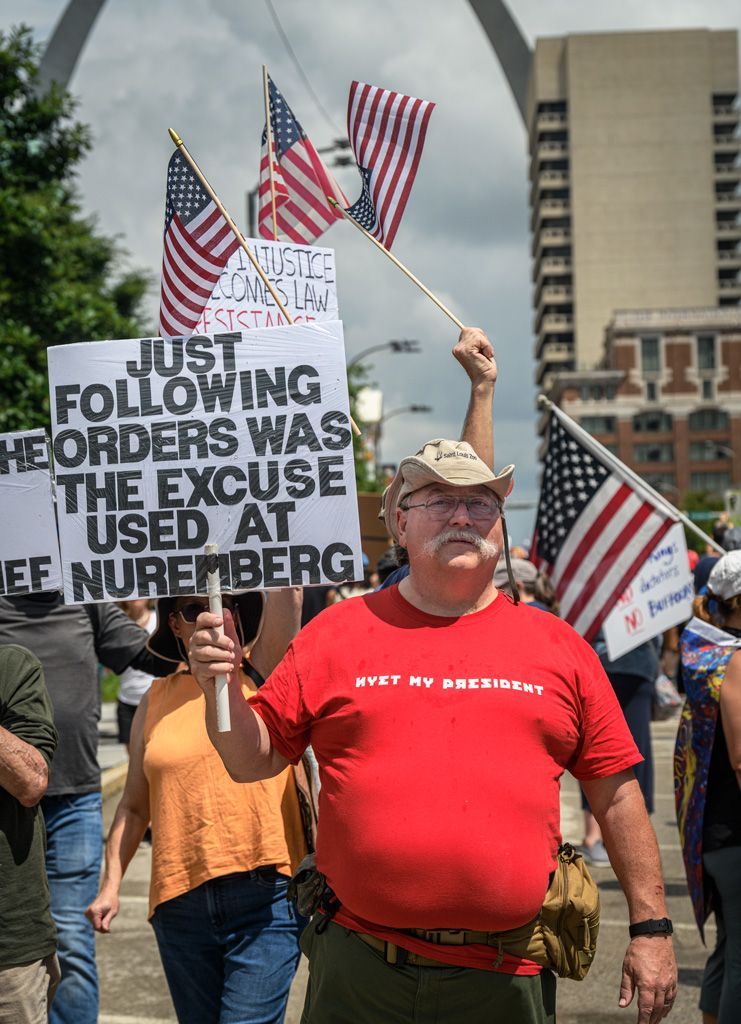
Slide title
This gentleman, along with several thousand others, brought a sign that harks back to the 1940’s after the U.S. and its allies defeated Nazi Germany in World War II. Today, many politicians, partisans, and members of the Trump Administration are the recipients of this reminder. Photographed June 14, 2025.
Button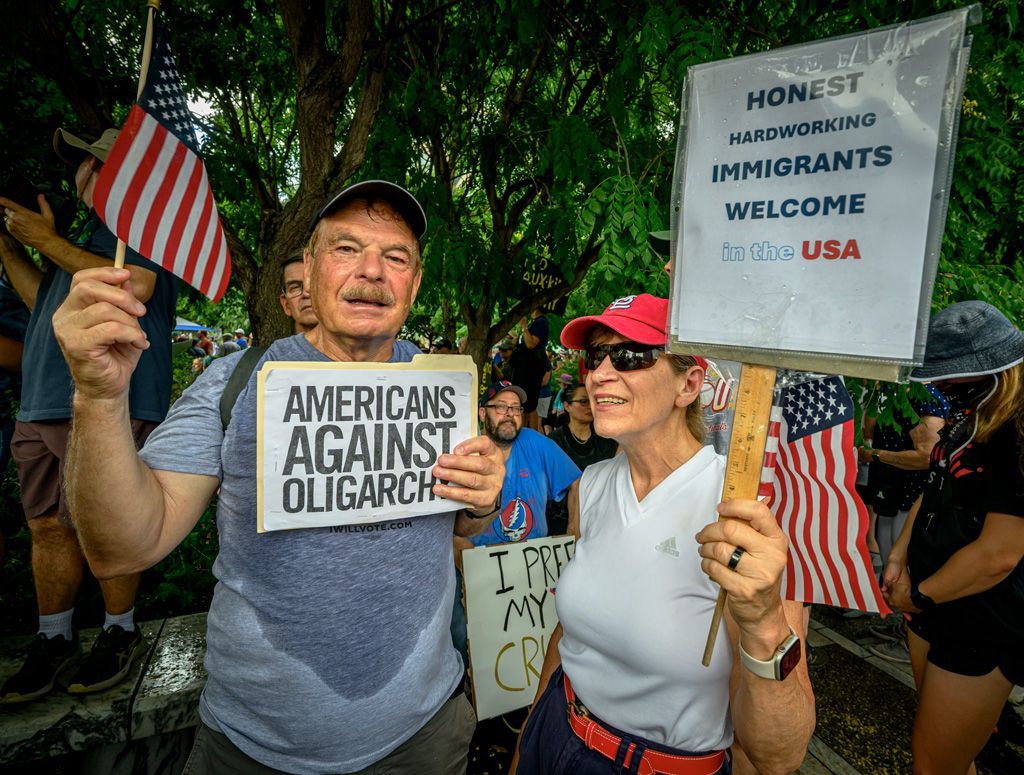
Slide title
Signs convey beliefs for protesters and display their priorities. This couple stood for hours in the heat to make their grievances known during the “No Kings” protest in Kiener Plaza, downtown St. Louis, Missouri. Photographed on June 14, 2025.
Button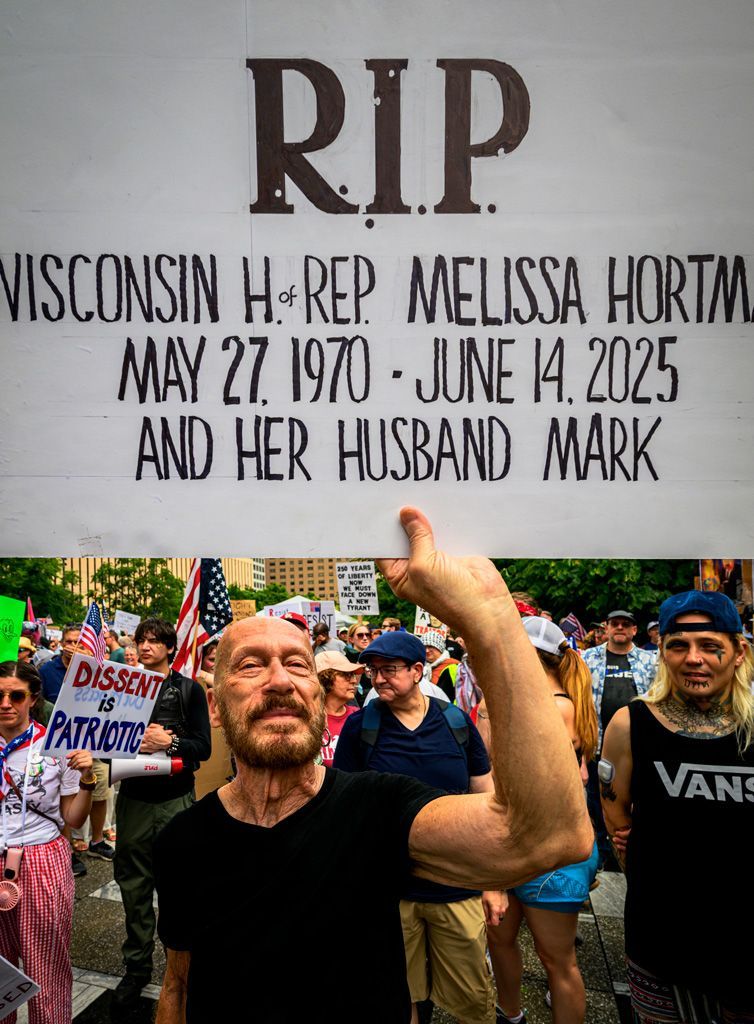
Slide title
From the first “No Kings” rally, held in downtown St. Louis: It began in Keener Plaza, then thousands of protesters marched from Broadway up Market Street to Tucker heading north to Washington, and then back down Broadway to express their dissent against the Trump administration’s policies and lawless behavior. Photographed June 14, 2025.
Button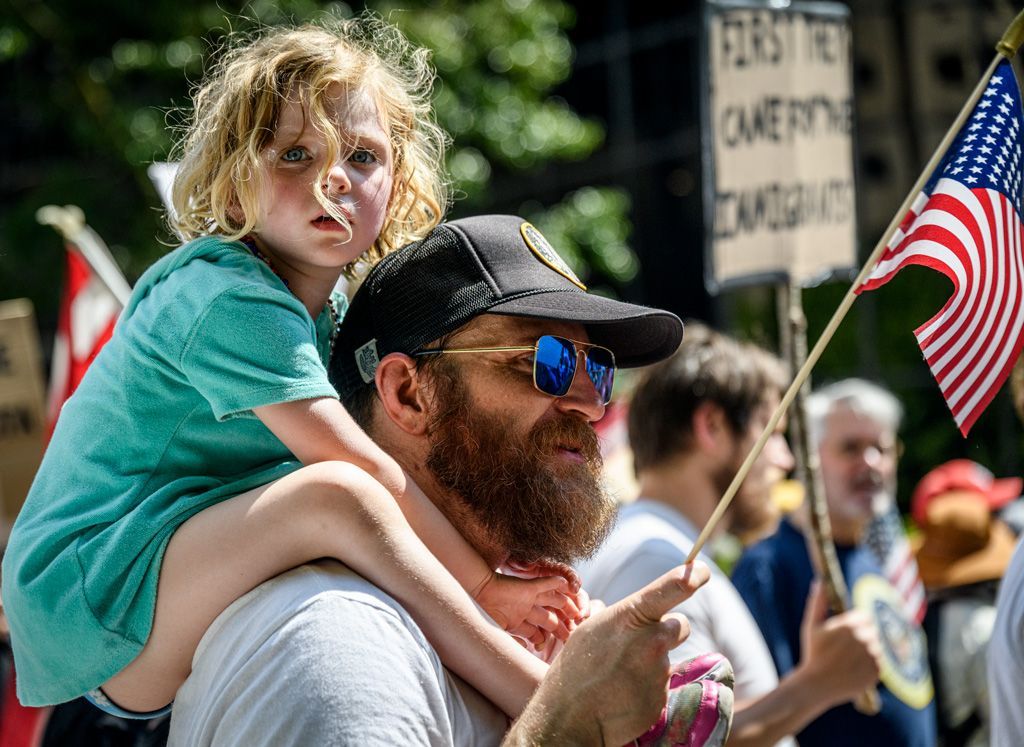
Slide title
On the long march from Kiener Plaza around the perimeters of downtown St. Louis, this father gave a piggyback ride to his daughter, offering a valuable civics lesson to her. Children and pets were active participants of the “No Kings” protest along with college students, retirees, veterans, feminists, people of color, and varied national origins. It was a true melting pot day. Photographed on June 14, 2025.
Button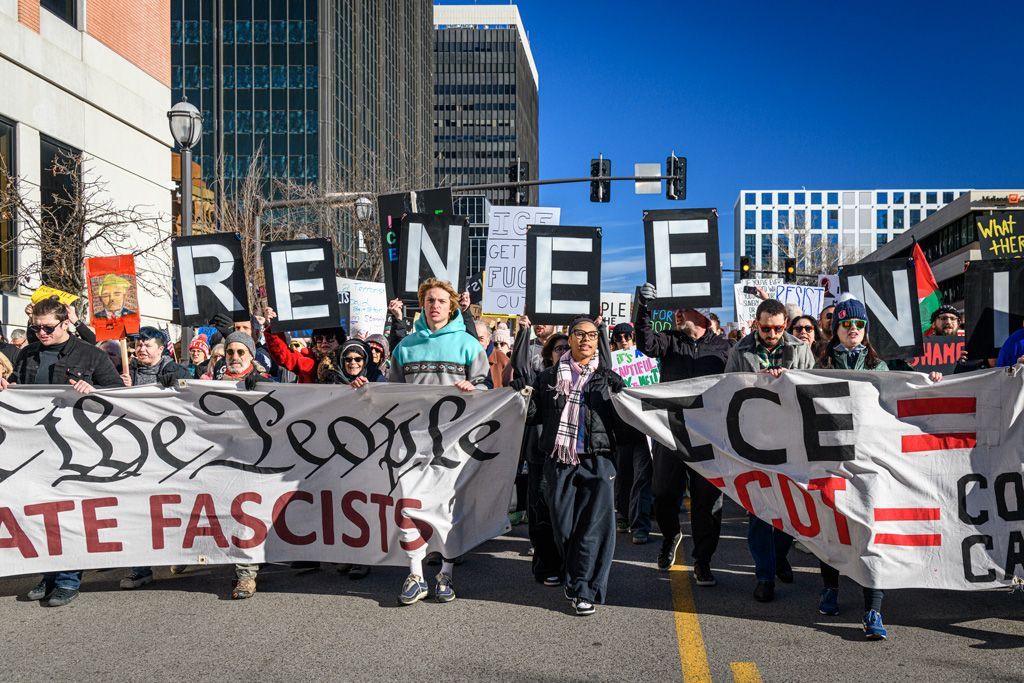
Slide title
A protest and march to honor Renee Nicole Good, the 37-year-old mother and poet murdered by an ICE agent in Minneapolis, Minnesota, was attended by thousands in the St. Louis County Seat of Clayton, Missouri. However, this was only one of two held that day at the same time. Typically, St. Louis is a liberal city with conservative leanings, but protests against the Trump administration are growing as discontent mounts. The lawlessness of ICE, along with its cruelty and obvious racism, fuels dissent, especially when American citizens are murdered in broad daylight for no legitimate reason. Photographed January 11, 2026.
Button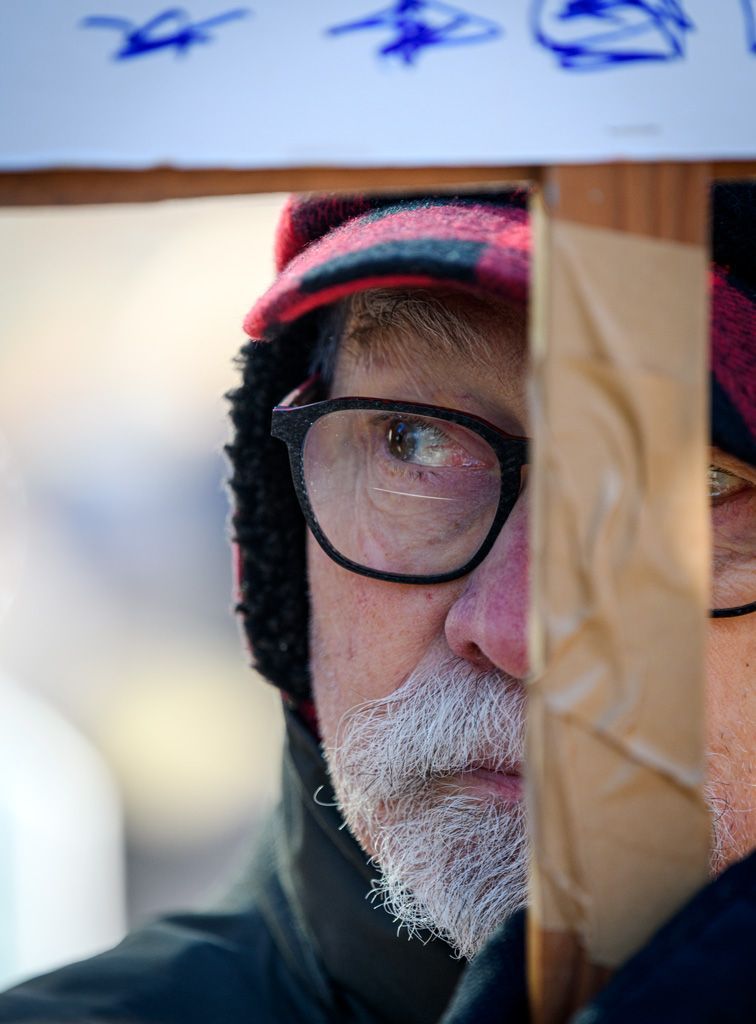
Slide title
A protester peers from behind his sign, objecting to the murder of Renee Nicole Good. Demonstrators were not joyous on this day and exhibited both mourning and anger that this is happening in America — so reminiscent of bygone slave patrols and gestapo tactics in Nazi Germany. Photographed on January 11, 2026.
Button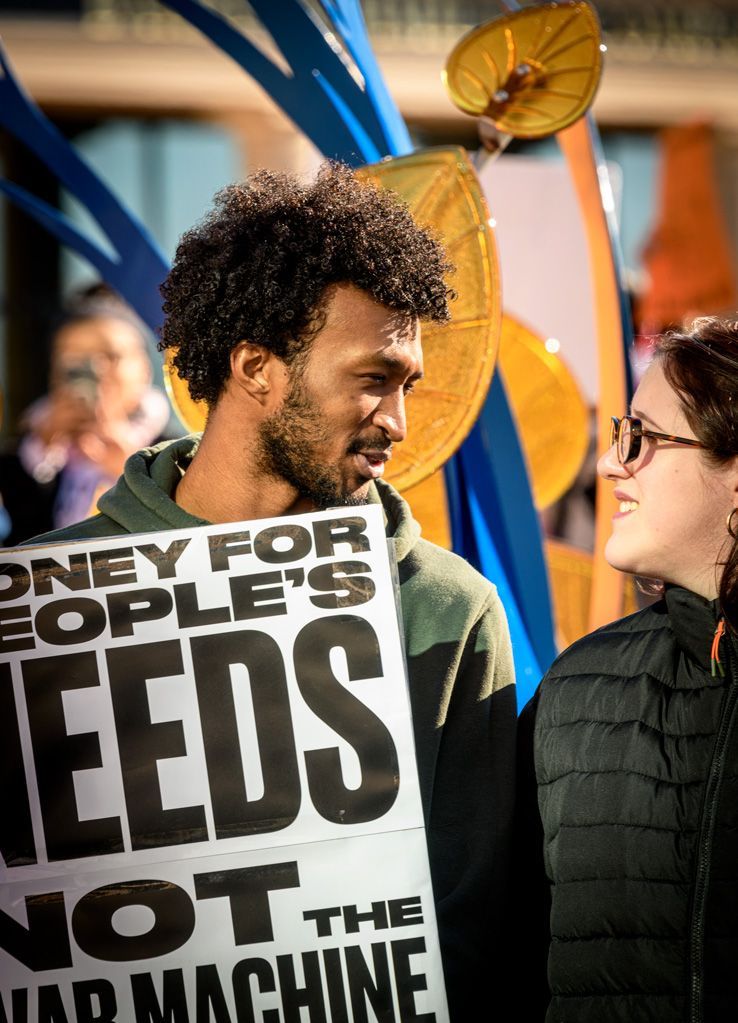
Slide title
A couple stands in protest of how taxpayer dollars are being spent to militarize American communities where ICE roams and randomly abducts people based on skin color and accents, while also detaining and arresting American citizens for no apparent reasons without court-ordered warrants or due process. The commitment that couples, families, neighbors and others make to each other strengthen the resistance to the tyranny and authoritarianism America witnesses these days. Photographed January 11, 2026.
Button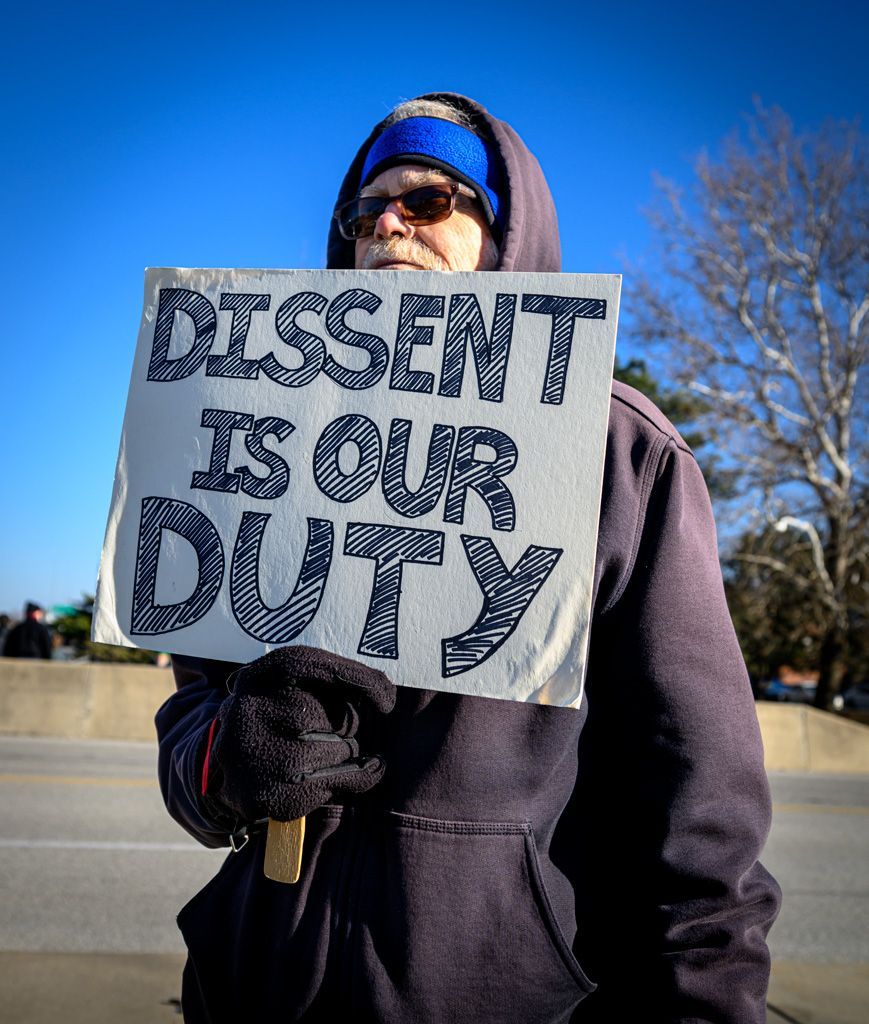
Slide title
The Free America Walkout occurred nationwide on January 20, 2026., one year after Donald Trump took the oath of office for his second term. For most Americans it was a year of chaos, turmoil, disappointment, frustration, and agony as they witnessed the decline of democracy and a rise in authoritarianism. This gentleman at the Tamm Avenue overpass above I-64 in St. Louis, proclaimed with his sign one key aspect about our tenuous First Amendment rights as ICE and other entities threaten its existence under the Trump regime.
Button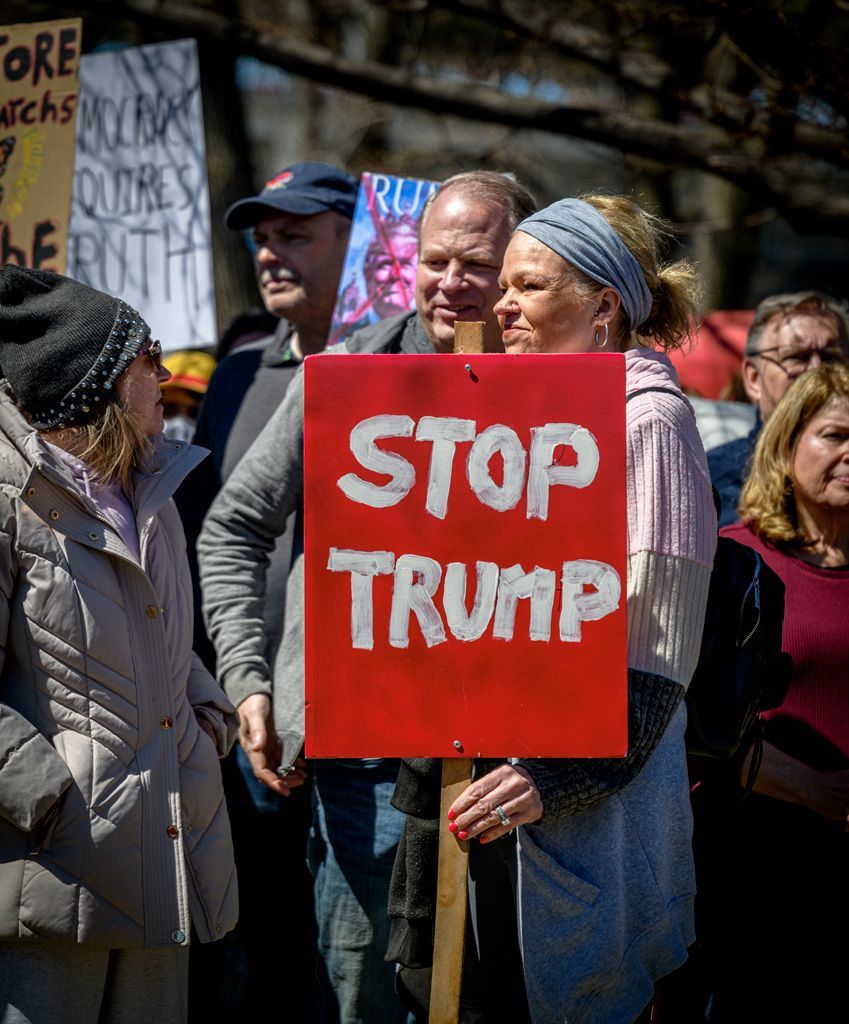
Slide title
This protest was held at Aloe Plaza, across from St. Louis’ famed Union Station. For many, the issues are so numerous and onerous that “Stop Trump” summed up their political emotions best. Photographed March 28, 2026.
Button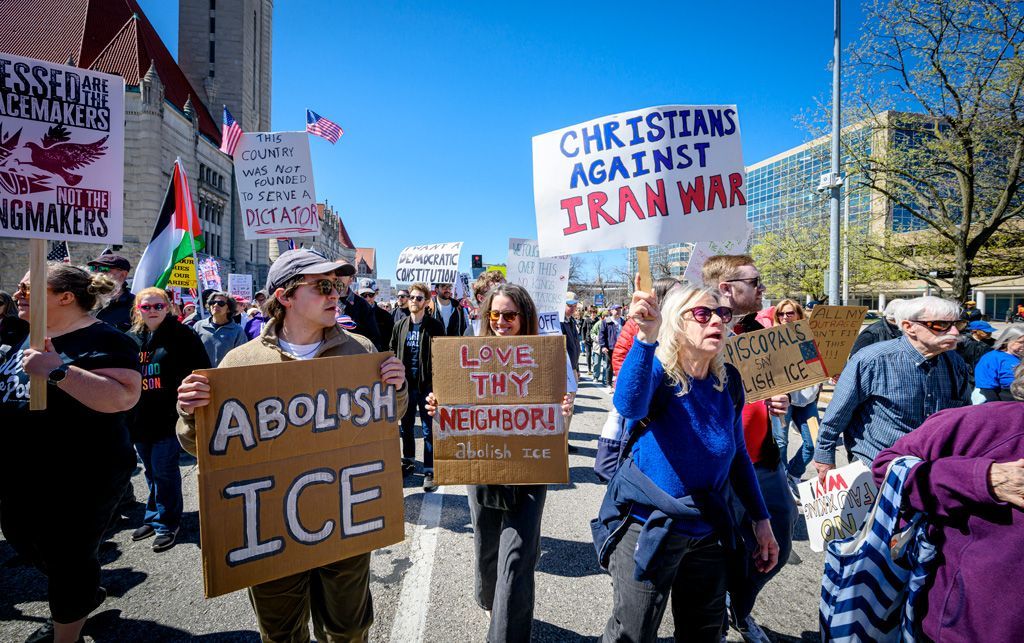
Slide title
Protesters marched to call attention to a worsening economy, a war against Irfan, ICE illegally detaining and killing legal immigrants and U.S. citizens, and unemployment growing, along with America’s reputation on the world stage deteriorating, “No Kings” rallies held nationwide and in several foreign countries were the largest yet with over 8 million people turned out nationwide. Photographed March 28, 2026.
Button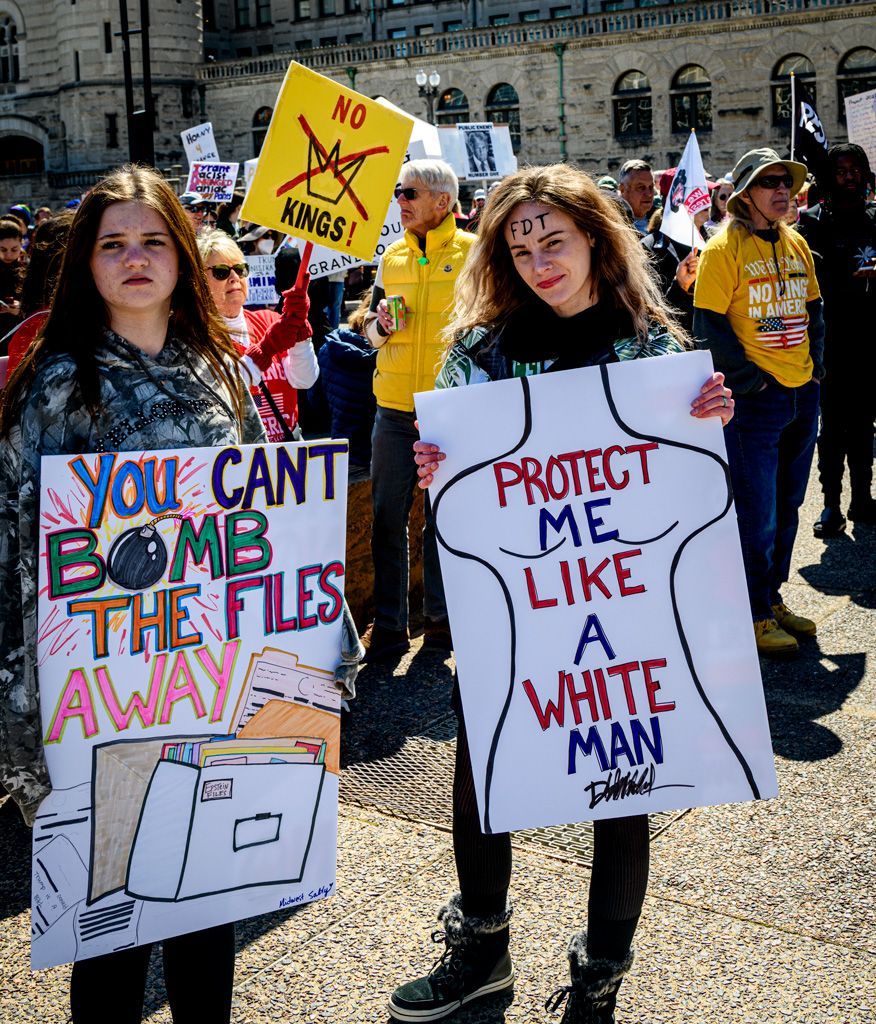
Slide title
The Epstein files coverup continued to be a primary issue with voters as victims are ignored and perpetrators, many of them well-known politicians including the President and wealthy businessmen, were not prosecuted. The Iran war, ICE, tariffs, and other issues provide “cover” to distract attention away from those in the Epstein files. Photographed Marcy 28, 2026.
Button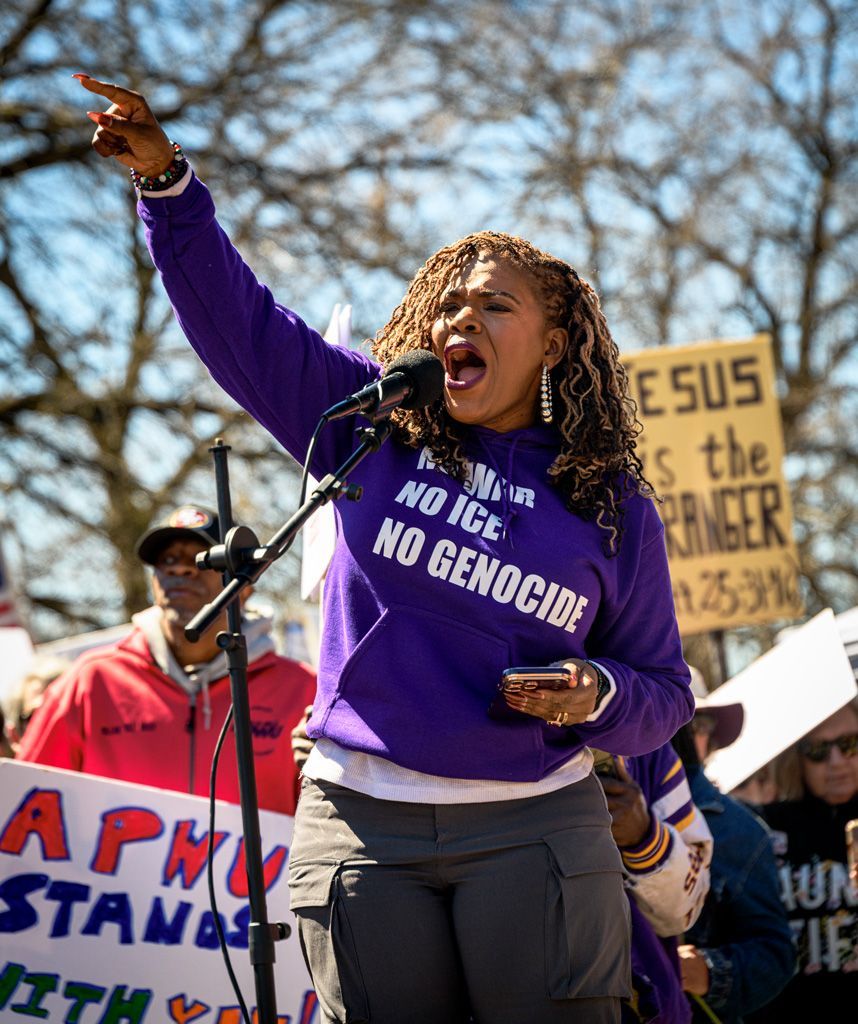
Slide title
Cori Bush, candidate for re-election to the House of Representatives in Missouri’s First Congressional District, spoke at the protest and used a traditional Maasai greeting, “And how are the children?,” to emphasize how the Trump administration continues to ignore the will of the people, affordability, civil rights, and the health of our nation to favor the rich getting richer. Photographed March 28, 2026.
Button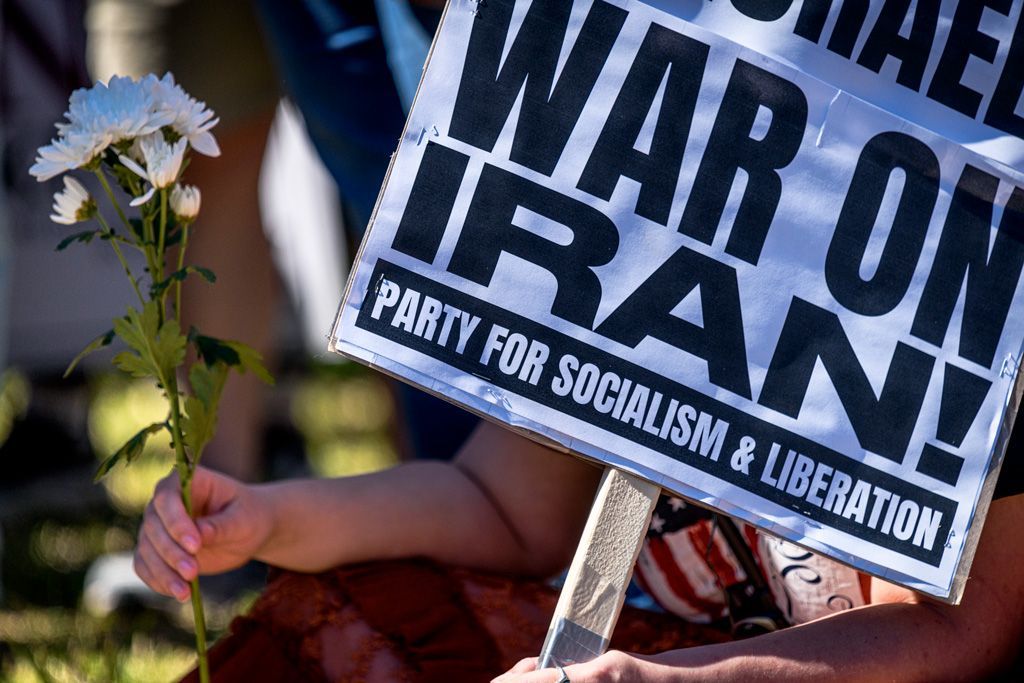
Slide title
An anti-war element surfaced during this protest attracting both young and old, from a wide spectrum of income and educational levels, and made their discontent known. With the 2026 mid-term elections approaching there was also a renewed sense of hope for Congress to return to a responsible and democratic leadership. Photographed March 28, 2026.
Button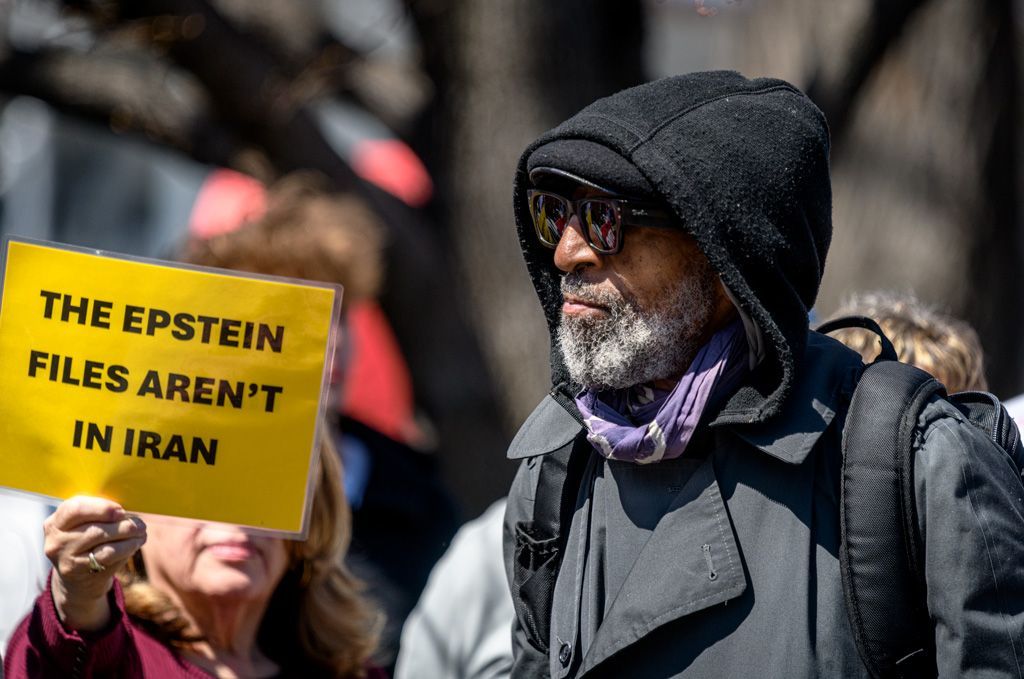
Slide title
Tolerance for another war — chosen by old white men who willingly send young men and women into harm’s way — was at an all-time low at the time of this protest. With families having a difficult time making ends meet, gas rising to over $4.00 a gallon, and jobs and healcare going away thanks to Trump policies, even many Republicans were saying “enough.” Photographed March 26, 2026.
Button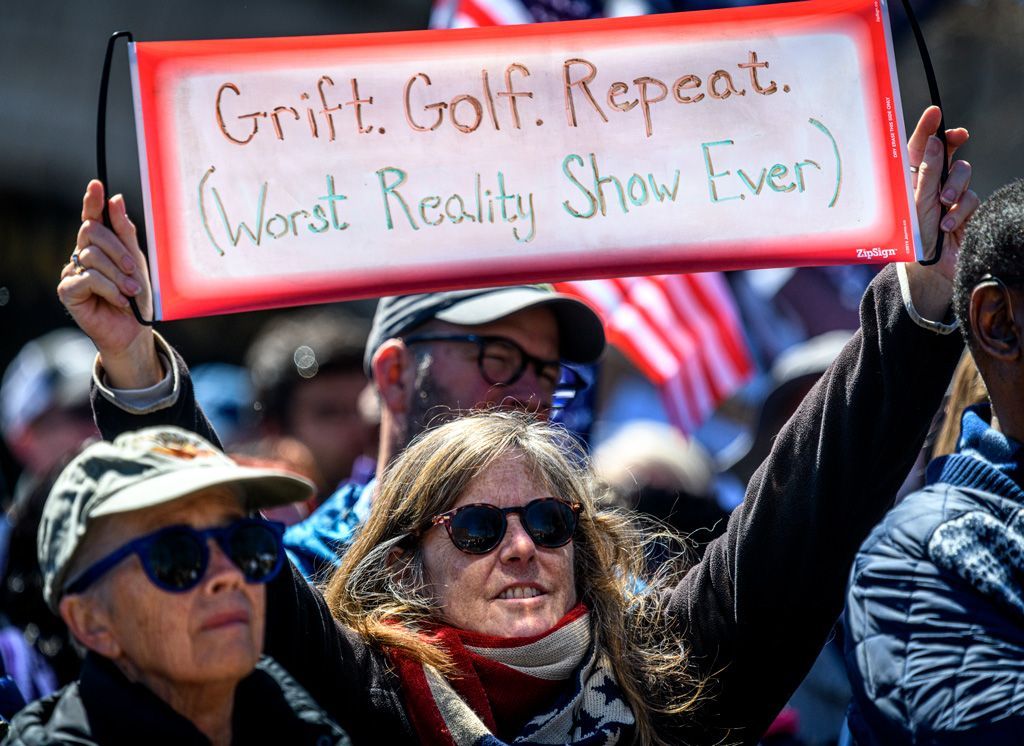
Slide title
Trump’s tendency to mix government policy with corrupt self enrichment at taxpayer expense, and playing golf at taxpayer expense has created a special disdain for the president. Photographed Marcy 28, 2026.
Button
Slide title
Button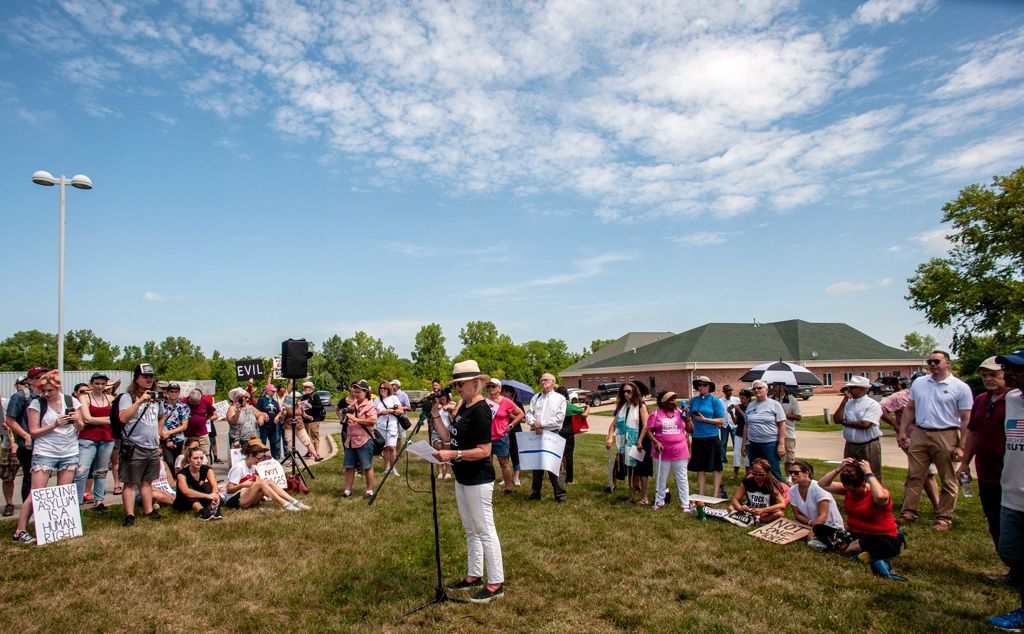
Slide title
During President Trump’s first term, Americans were exposed to the first signs of authoritarian rule when ICE agents began rounding up immigrants and were not transparent about where they were taking them. Then we learned that they were separating families and keeping sloppy or no records at all that would allow reunification. A large group of citizens descended on the ICE headquarters in Troy, Missouri, just northwest of St. Louis to protest this behavior. Photographed June 30, 2018.
Button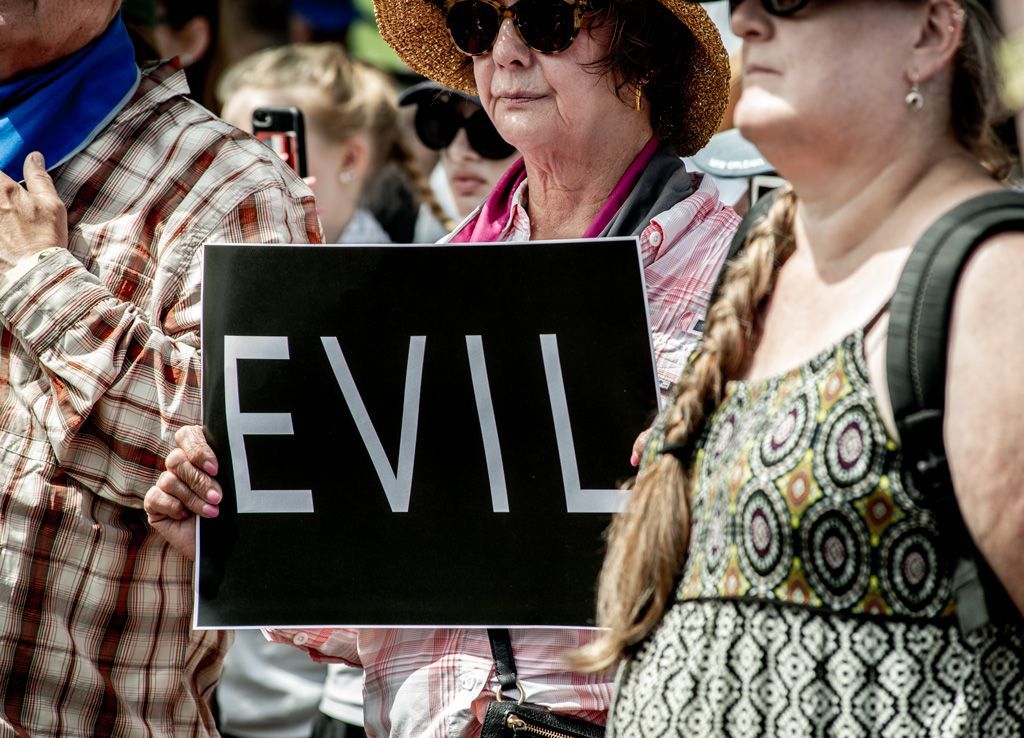
Slide title
In 2018, folks became angered by how the federal government was detaining and disappearing people who had immigrated (both lawfully and without papers to the United States for work, as political refugees, or to be with family. But, instead of peaceful methods, with due process, court ordered warrants, and other legal remedies, they began a campaign of terror and kidnapping that has only gotten worse under the second Trump presidency. Photographed June 30, 2018.
Button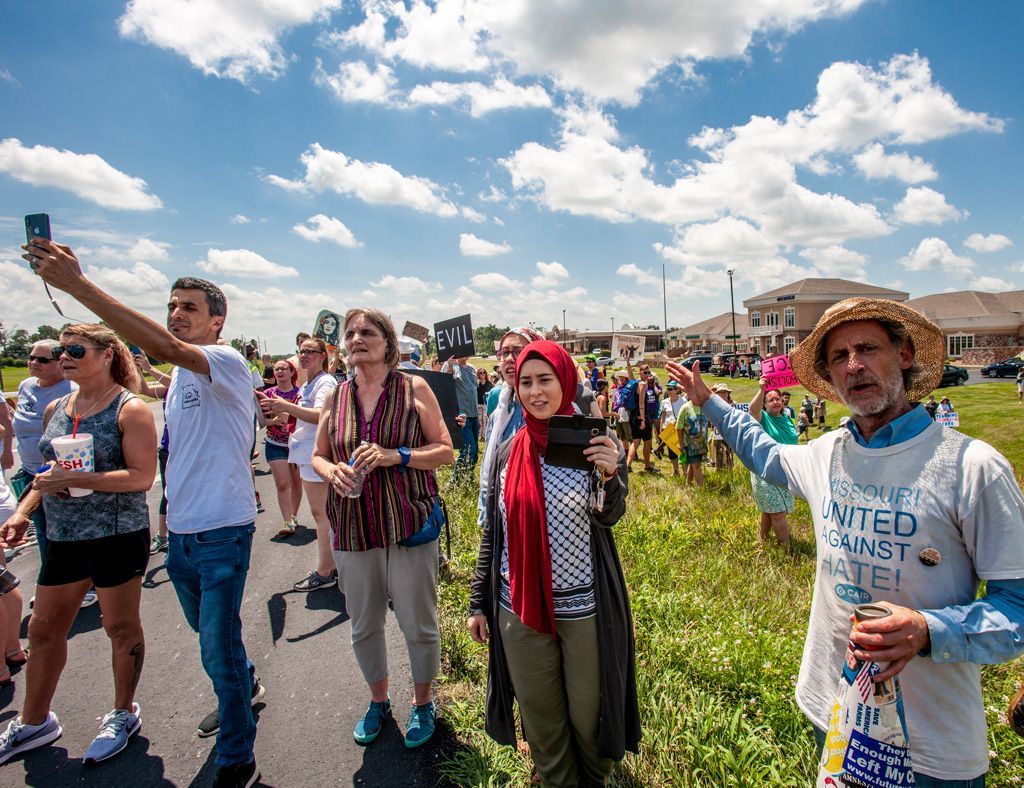
Slide title
Protesters as they leave the ICE property and advance onto the a four-lane highway in Troy, Missouri. Blocking traffic is a method protesters use to spread their message to others quickly. Photographed June 30, 2018.
Button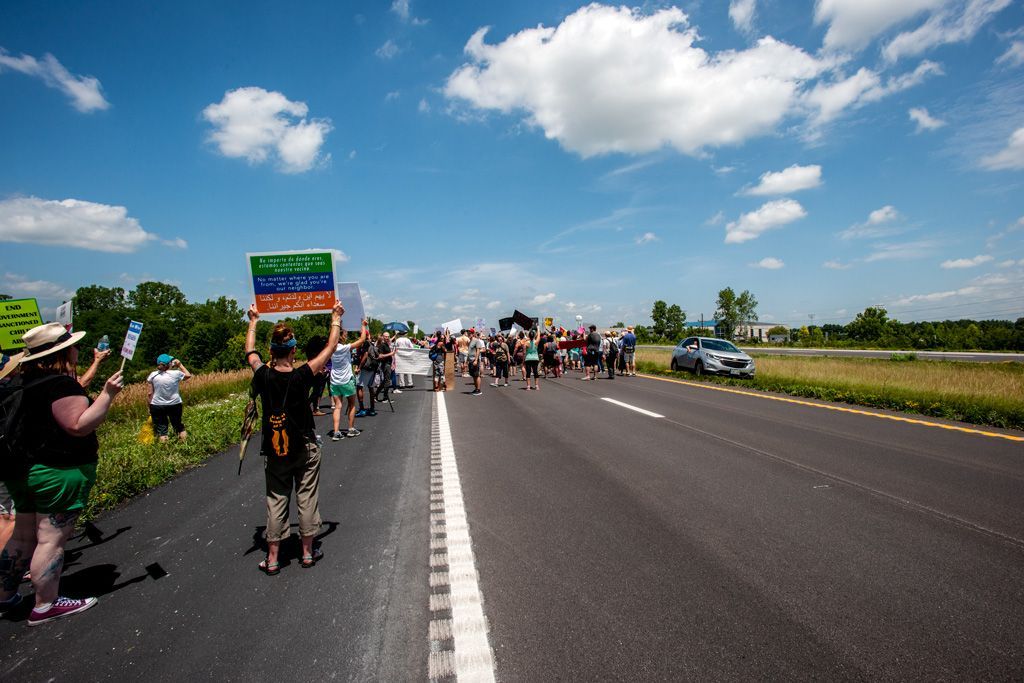
Slide title
A view of the highway blockage during the ICE protest in Troy, Missouri. With the cooperation of the Highway Patrol, the shutdown of the highway was safe and fairly brief. It was an effective attention getter to what ICE was doing — separating families, sometimes as much as 1,000 miles away from each other. Photographed June 30, 2018.
Button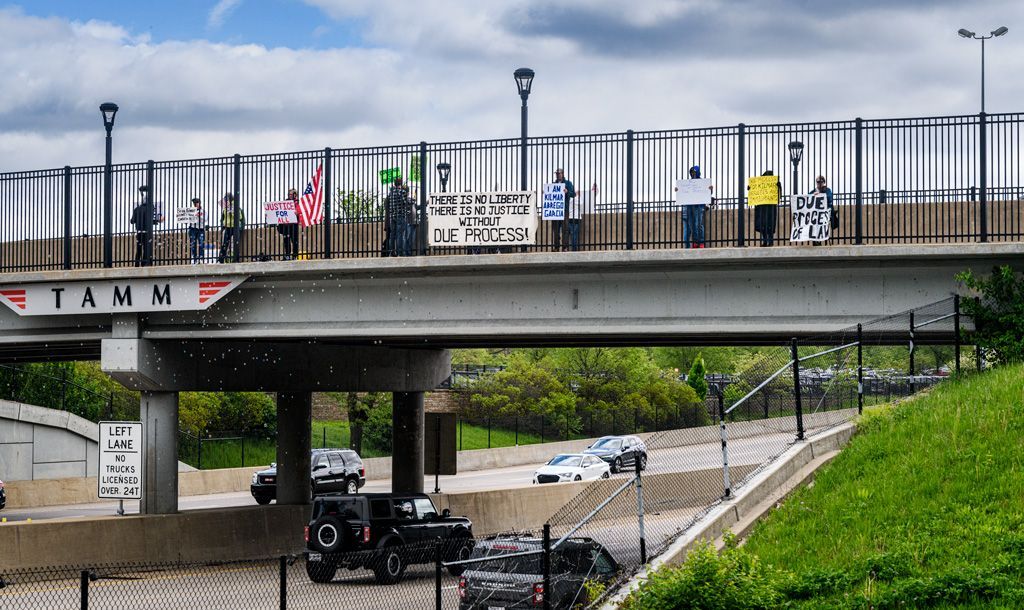
Slide title
The Tamm Avenue overpass connects the Dogtown neighborhood to the St. Louis Zoo in Forest Park over I-64, a heavily-traveled highway. On this day, “Bring Kilmar Abrego Garcia Home” was the topic of their free speech — alerting others of the illegal abductions of immigrants and citizens by ICE, per the orders of the Trump administration. Photographed April 26, 2025.
Button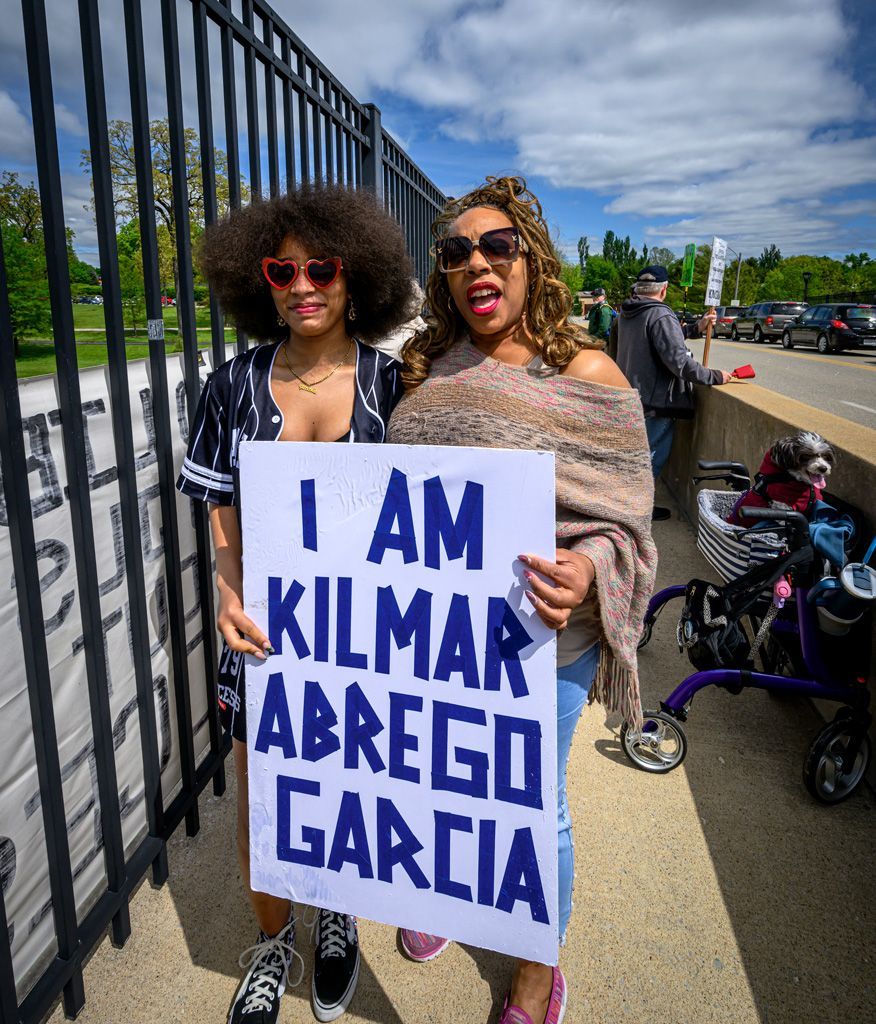
Slide title
Two young ladies speak out at the “Bring Kilmar Abrego Garcia Home” protest, where the message was to stop the abuse of power by the Trump administration and Homeland Security’s ICE to arbitrarily enforce immigration laws by kidnapping, detaining, abusing, and deporting legal immigrants and naturalized citizens without due process. The protest was held on the Tamm Avenue and I-64 overpass in the Dogtown neighborhood. Photographed on April 26, 2025.
Button
Slide title
Button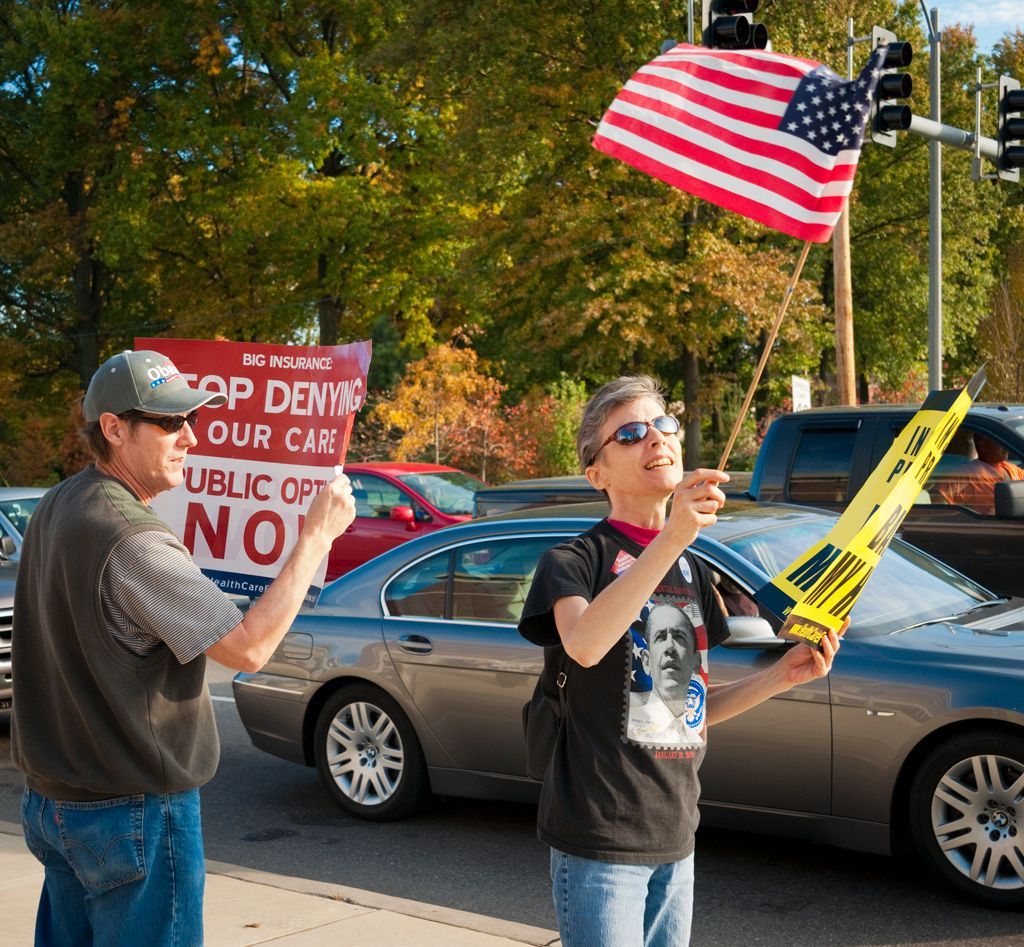
Slide title
One of the first demonstrations for the Affordable Care Act in St. Louis was held at the corner of Skinker Boulevard and Forest Park Parkway where Kayak’s Coffee (now a Kaldi’s) resided. The young woman (right) in this photo was Melanie Shouse, an early healthcare activist. Melanie died on January 30, 2010 after a long battle with breast cancer. She had been a foot soldier for Obama and healthcare reform. The lack of affordable health insurance was personal to Melanie. She said in an interview on KDHX radio, “I was only able to afford catastrophic health insurance coverage with about $8,000 in co-pays and deductibles,” Ms. Shouse said. “As a result, I put off getting preventive services and medical screenings and treatments.” Photographed October 20, 2009.
Button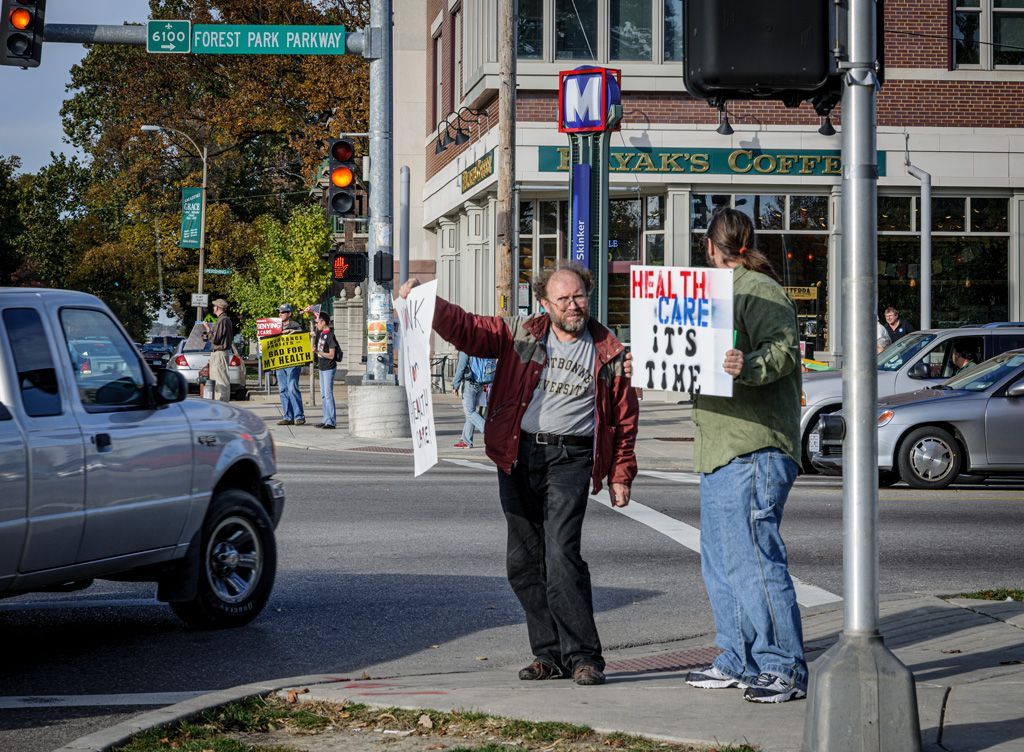
Slide title
Two demonstrators hold signs in the early days of healthcare reform in St. Louis. This location was chosen not only for its high traffic patterns, but also because of its proximity to Washington University in St. Louis where many of the students were finding it nearly impossible to afford health insurance and, for those who had a preexisting conditions, would not qualify for insurance. The location also borders on the Delmar Divide, separating high income housing from lower income housing where healthcare was a dream. Photographed October 20, 2009.
Button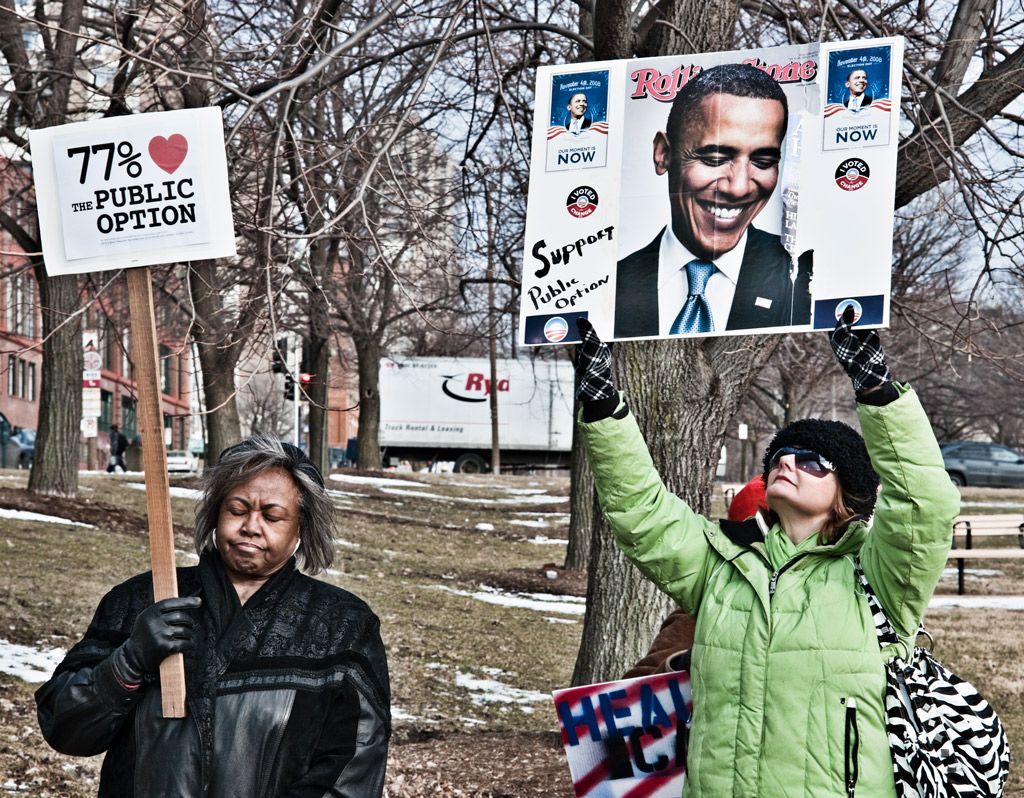
Slide title
Demonstrating for the Affordable Care Act passage in downtown St. Louis at the then Blue Cross/Blue Shield offices. Signed into law by President Obama on March 23, 2010, the Affordable Care Act (ACA) (or Obamacare) represents the most significant U.S. health care overhaul since 1965. Photographed on February 17, 2010.
Button
Slide title
Button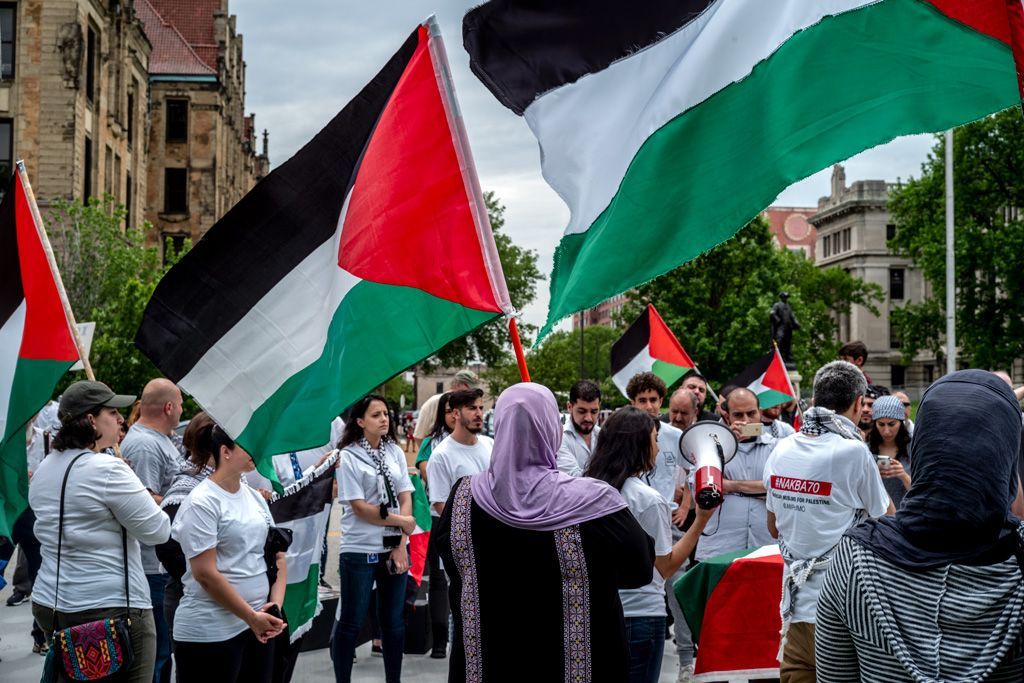
Slide title
A demonstration in front of St. Louis City Hall and a march down Market Street to call attention to the genocide and war crimes being committed against the Palestinian people. The event was largely sponsored by The Council on American-Islamic Relations (CAIR), but attended by allies from all major religions. Photographed May 14, 2018.
Button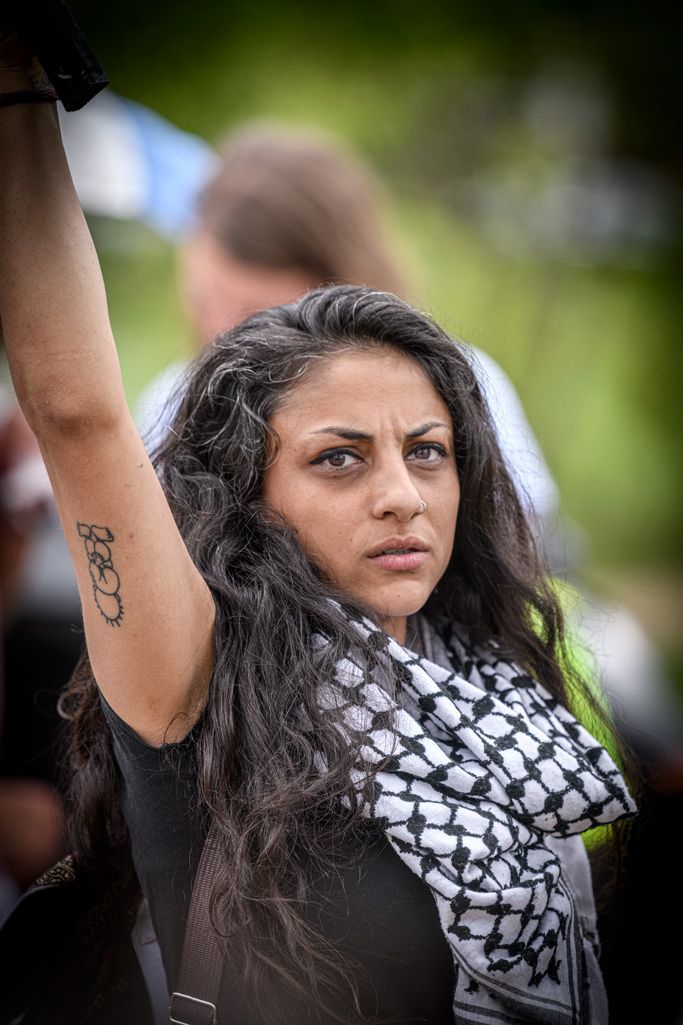
Slide title
As the genocide in Gaza continued along with land theft in the West Bank, local Palestinians, along with Jews and Christians, and other allies came out to Forest Park to protest. Kaitlyn Killgo, one of those protesters shown here, was later illegally arrested while protesting that day by police. She was later vindicated after winning a lawsuit claiming Wahington University and Eureka police officers violated her constitutional rights under the Fourth, Fifth and First Amendments.
Photographed on April 27, 2024.
Button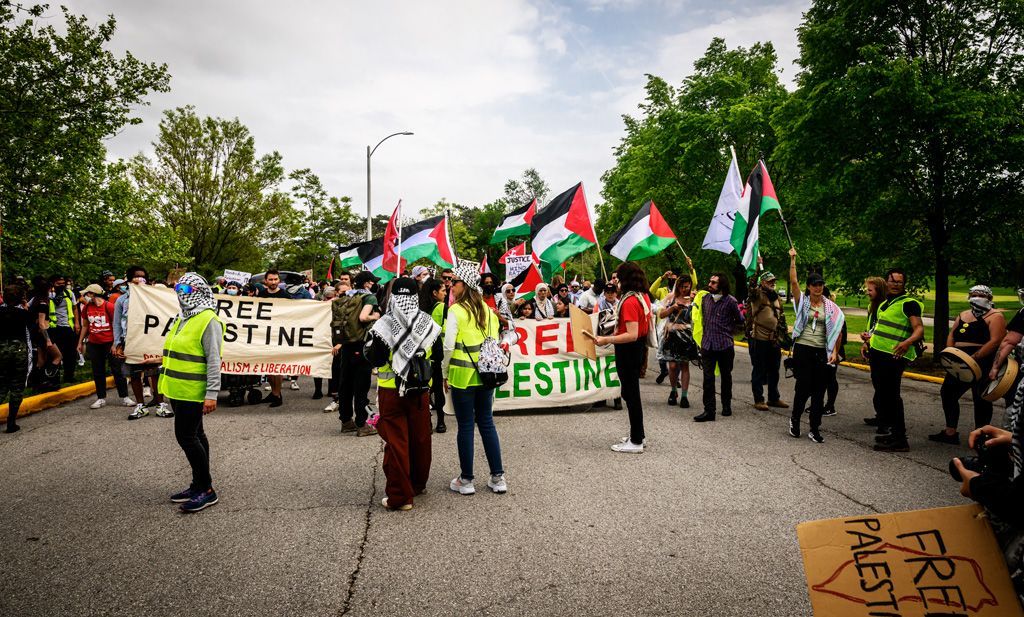
Slide title
Protesters assemble in Forest Park to march to the Washington University in St. Louis campus nearby. They were demonstrating the continue genocide, land grabs, and war crimes committed by Zionists from Israel. Photographed April 27, 2024.
Button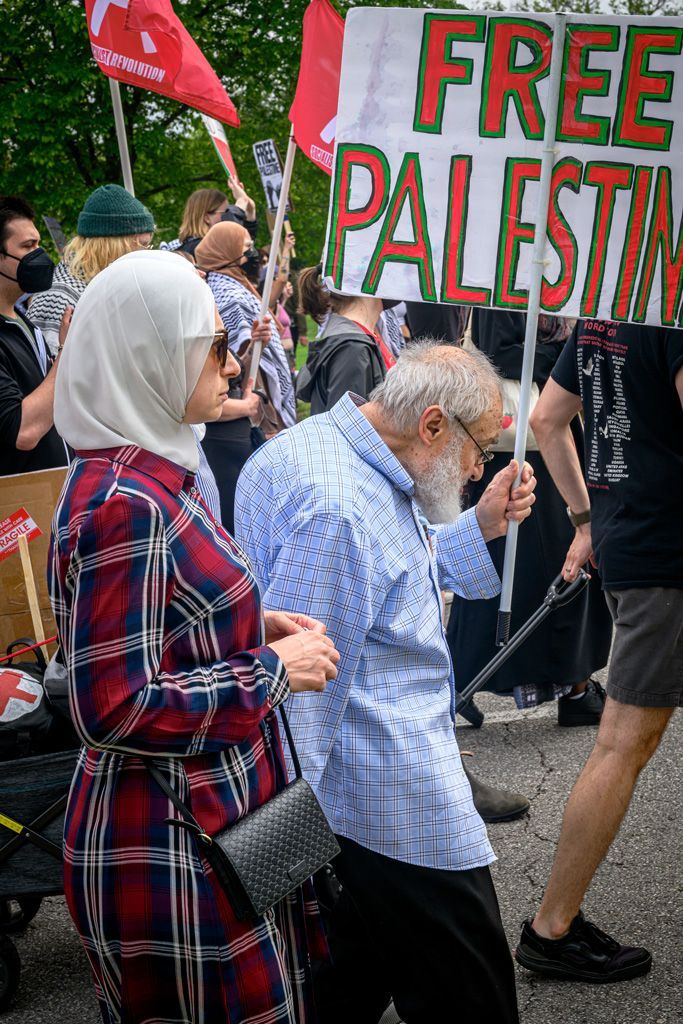
Slide title
This elderly man, accompanied by his daughter, is old enough to remember when Palestine was partitioned by the United Nations in 1948, which proposed dividing British-mandated Palestine into separate Arab and Jewish states with Jerusalem under international control. Today Israeli Zionist settlers are chipping away at the West Bank by stealing (colonizing) land from Palestinians under the control of the Israeli Defense Forces. Gaza has been obliterated with genocide the form of bombings, snipers, starvation and disease with all but a few hospitals remaining after bombings. Photographed April 27, 2024.
Button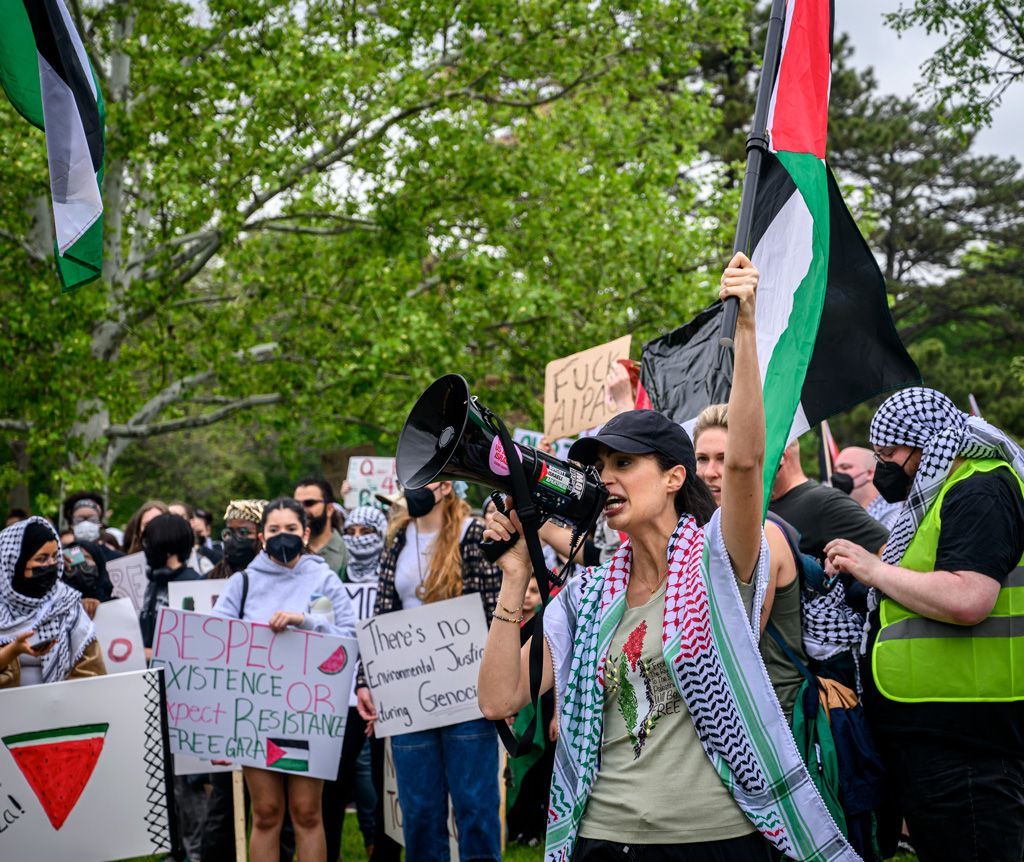
Slide title
An activist leads chants with a group who gathered to protest for a free Palestine. Chants are often used to state the common demands and goals of a protest, as well as to display the solidarity of those participating in a demonstration. Photographed April 27, 2024.
Button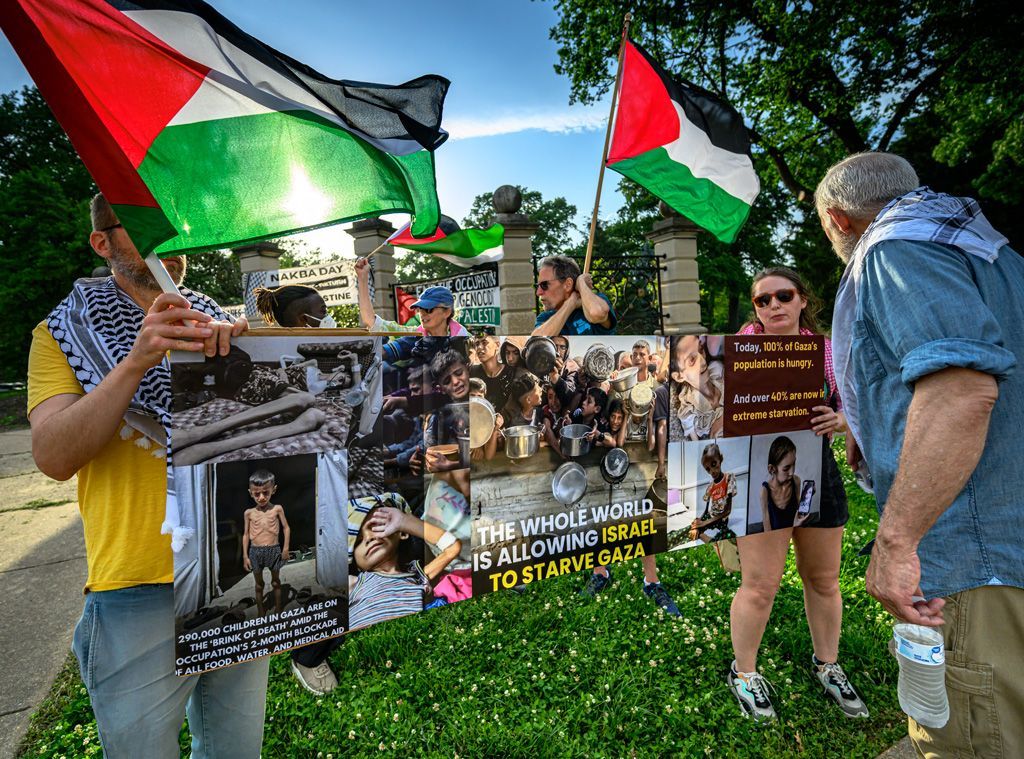
Slide title
NAKBA Day being celebrated as a protest of the genocide still occurring in Gaza; it is also known as Memory of the Catastrophe, which comprised the destruction of Palestinian society and homeland in 1948, and the permanent displacement of a majority of the Palestinian people. Generally commemorated on May 15, this one took place at Tower Grove Park in St. Louis and was attended by Palestinians, allies and human rights activists to spread the word of the genocide that much of the world has ignored. Photographed May 15, 2025.
Button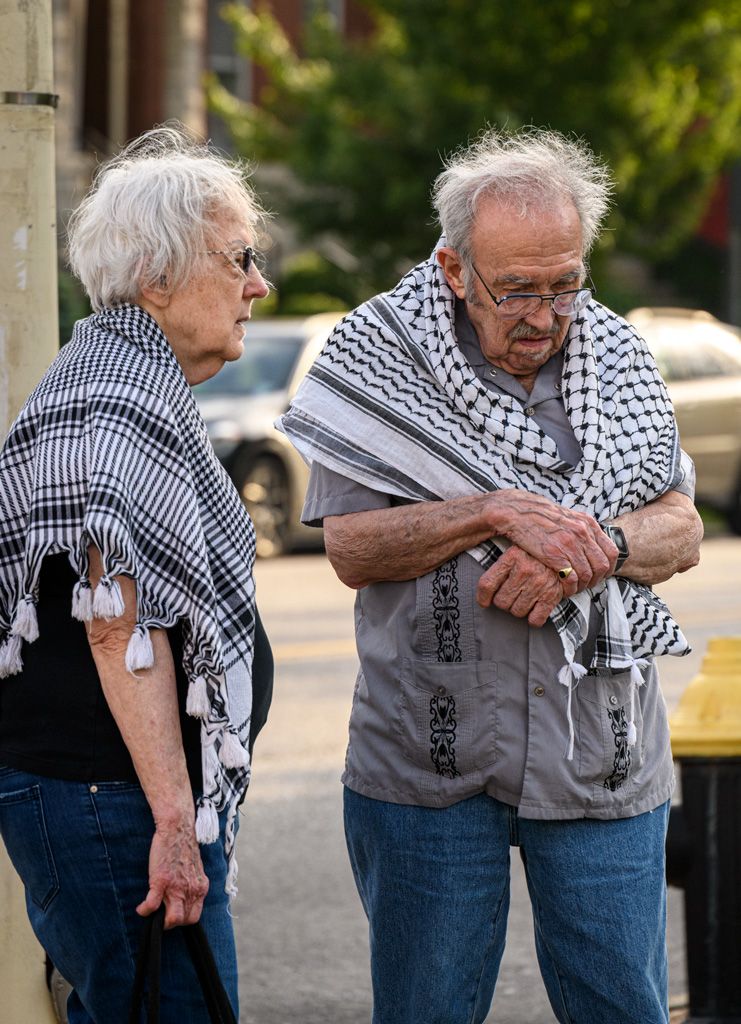
Slide title
This elderly couple attended NAKBA Day in Tower Grove Park and stopped to pray silently at several of the photos on display showing the effects of the starvation, destruction, and desperation in Gaza. In addition, speeches were made at the protest and participants stood at the corner of Grand Avenue and Arsenal Street with signs beseeching an end to the genocide carried out by Israeli Zionists. Photographed May 15, 2025.
Button
Slide title
Button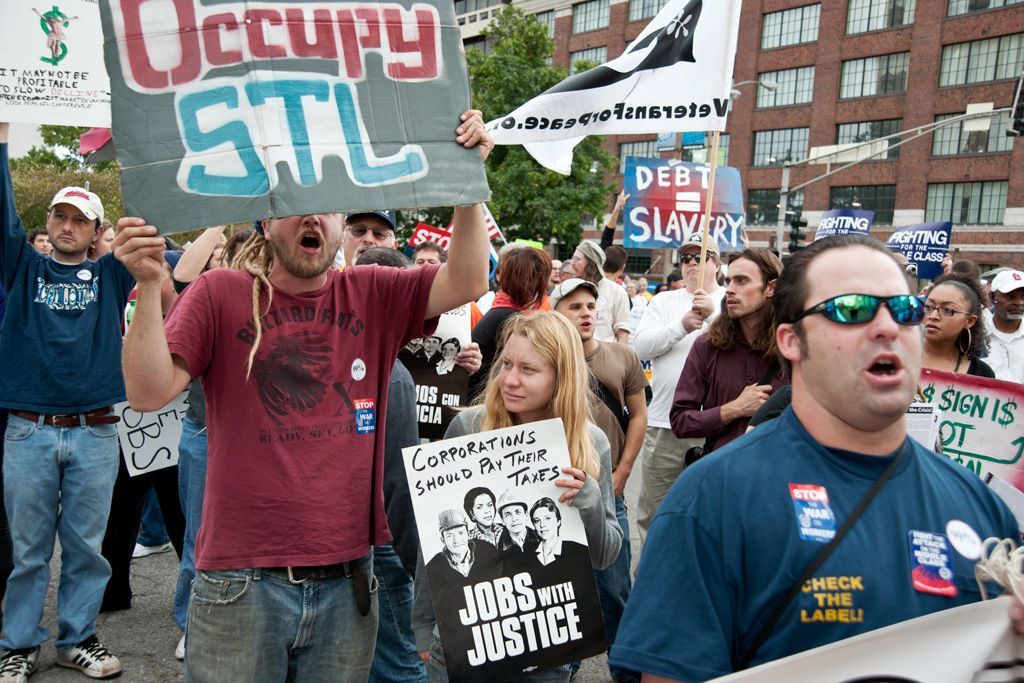
Slide title
The 2008 financial crisis devastated many American pocketbooks. In 2011, Occupy STL brought together working class citizens of all stripes for protests, marches and stirring speeches on the streets of downtown St. Louis. Union members, government workers, teachers, students, and others wanted change and sought that change by raising their voices together. Photographed October 18, 2011.
Button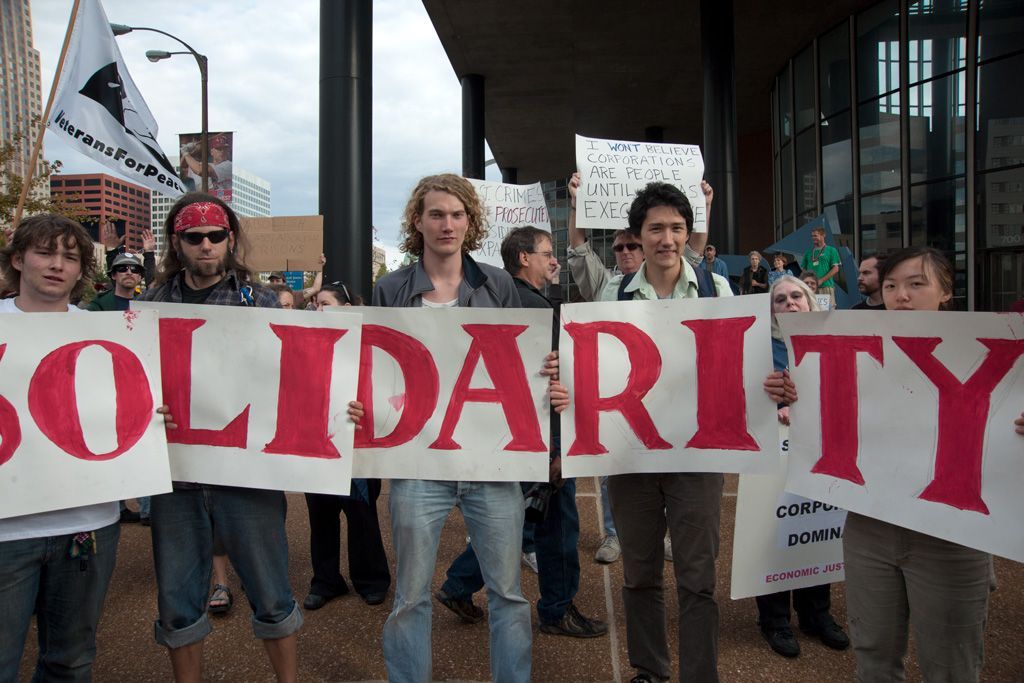
Slide title
In 2011, the gap between rich and poor was widening at a frantic pace. Inequity between the classes created hardships for many Americans from healthcare to housing, even putting food on the table. For a few, times were great, but for most it was scary and harmful. The chant of “One Percent” identified those privileged few who were oppressing the “rest of society” and caused protests to mount. The group of students here said it with a banner about how to fight oppression as they stood outside the doors of then Boatmen’s Bank downtown. Photographed October 18, 2011.
Button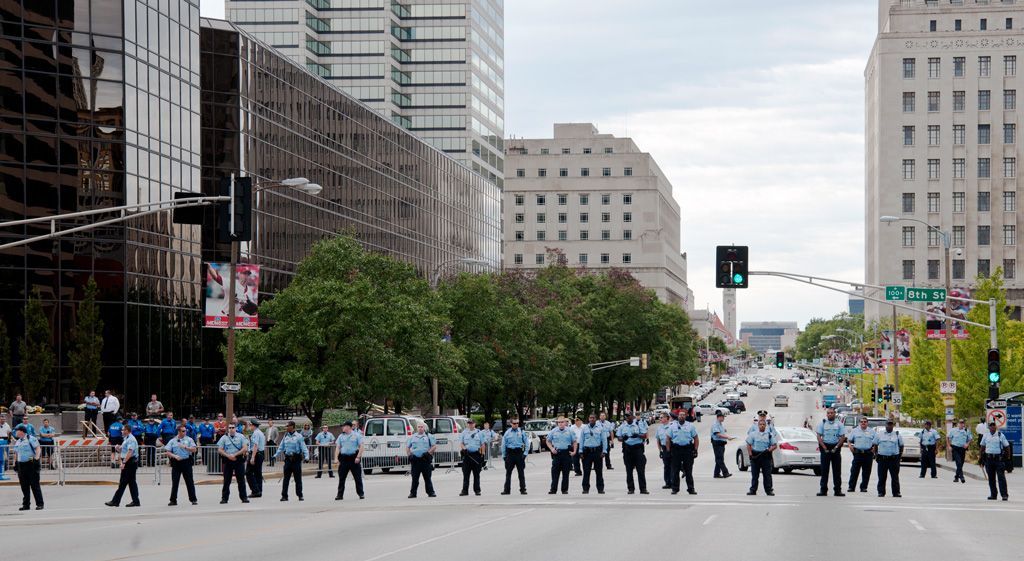
Slide title
In 2011, the St. Louis Metropolitan Police Department was less tolerant of First Amendment assembly than they are today. The tendency then was to confront, escalate, and arrest protesters. Seen here, the police line prepared to meet the Occupy STL march by limiting it to a few blocks. This type of aggressive policing, which ignored Constitutional rights, often led to fatal state violence (FSV), highlighted elsewhere in this gallery. Photographed October 18, 2011.
Button
Slide title
Button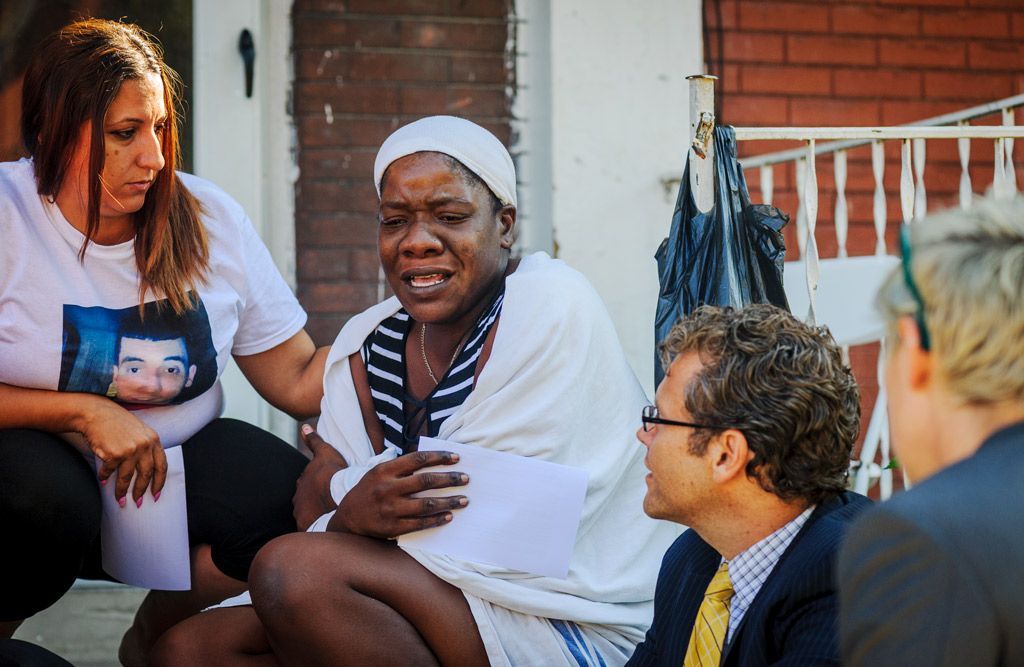
Slide title
A tenant of an apartment was threatened with eviction with only an hour’s notice. Here, she is being consoled by two attorneys (Thomas Harvey, left, and Lee Camp, right; and an unidentified woman outside of her apartment while waiting to hear back from the landlord’s attorney. Photographed on August 4, 2017.
Button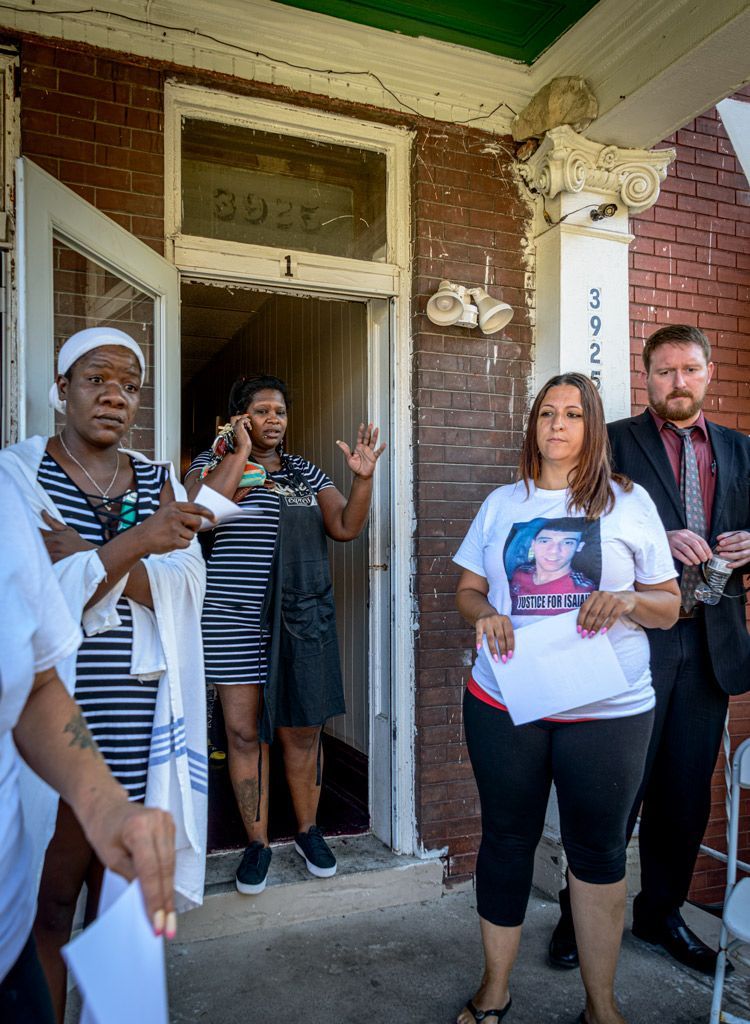
Slide title
Tenants, lawyers, and social workers stand on the front porch where the tenant was being evicted through unlawful procedures by an absentee landlord. The tenants were not notified in advance, though attorneys were able to arrive quickly to help, along with social workers, neighbors, and several affordable housing activists. Photographed on August 4, 2017.
Button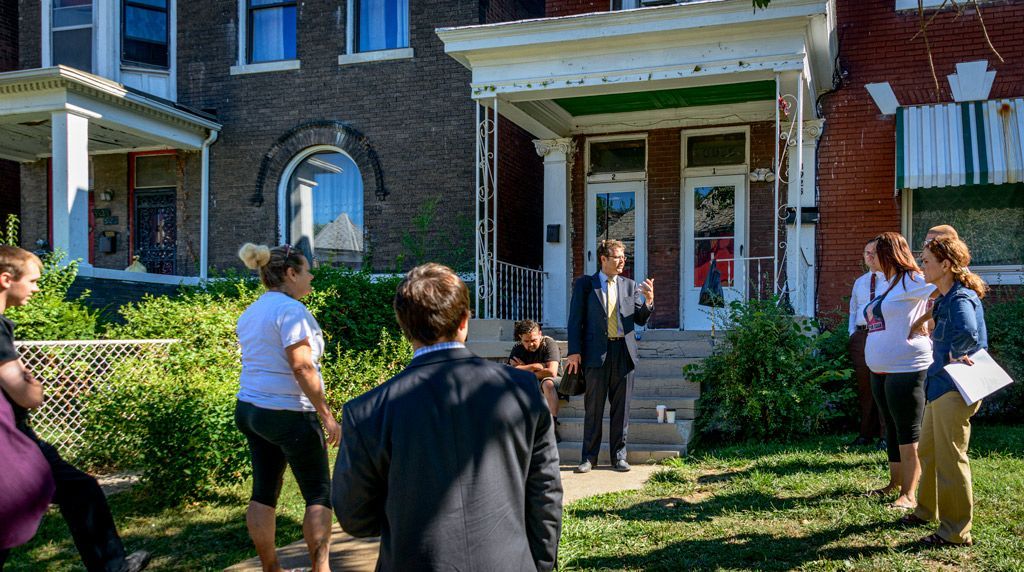
Slide title
Thomas Harvey, then one of the attorneys with ArchCity Defenders, a non-profit civil rights, holistic law firm in St. Louis that provides legal assistance to clients in need but unable to retain legal help otherwise, briefs the other lawyers, social workers, neighbors, and allies about what they are doing for the tenant and the possible steps that need to be taken to help the family either stay in this home, or find a suitable alternative. Photographed on August 4, 2017.
Button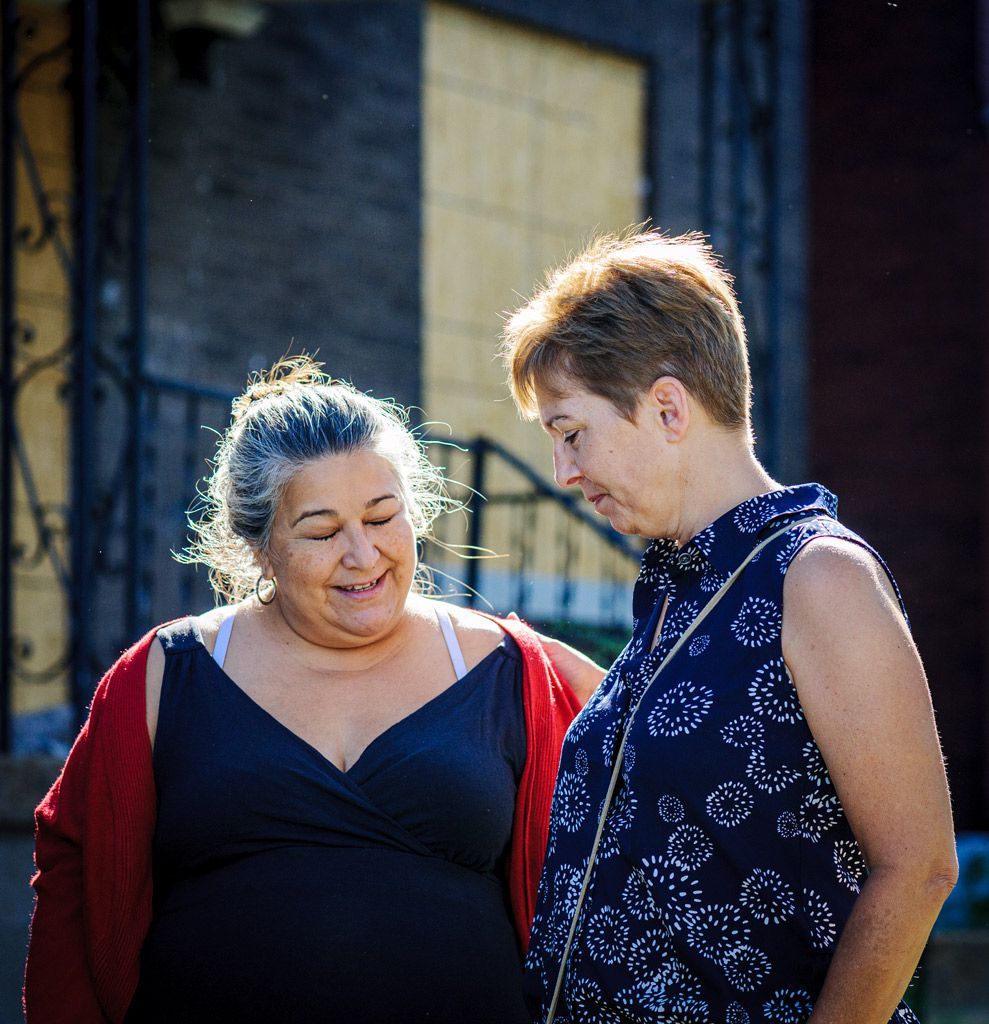
Slide title
Two housing activists, who rushed to the scene to be available to help the family if evicted that day, stand off to the side waiting. This type of support is not unusual in the activist community, and is often referred to as “family. Photographed on August 4, 2017.
Button
Slide title
Button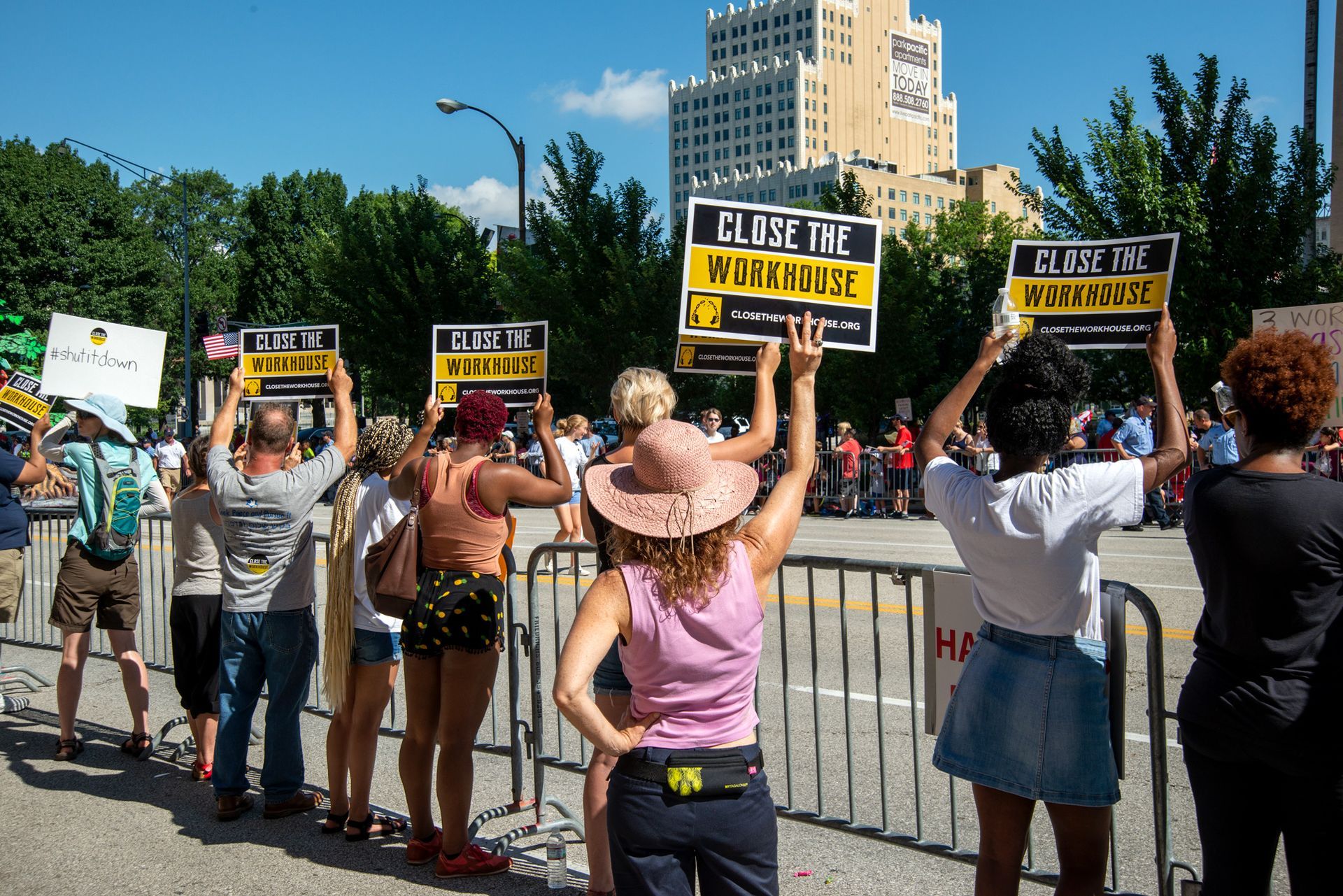
Slide title
Protesters face the July 4th parade with signs that inform City residents on Independence Day that the St. Louis Workhouse still exists and should be closed. Public outcry eventually closed the Workhouse after a three-year campaign and public opinion changed after the horrific conditions there such as extreme heat and cold, abysmal medical care, rats and cockroach infestations and mold became known. Organizations like ArchCity Defenders, Action St. Louis, and The Bail Project were instrumental in closing the derelict jail, and recently it was demolished. Photographed on July 4, 2014.
Button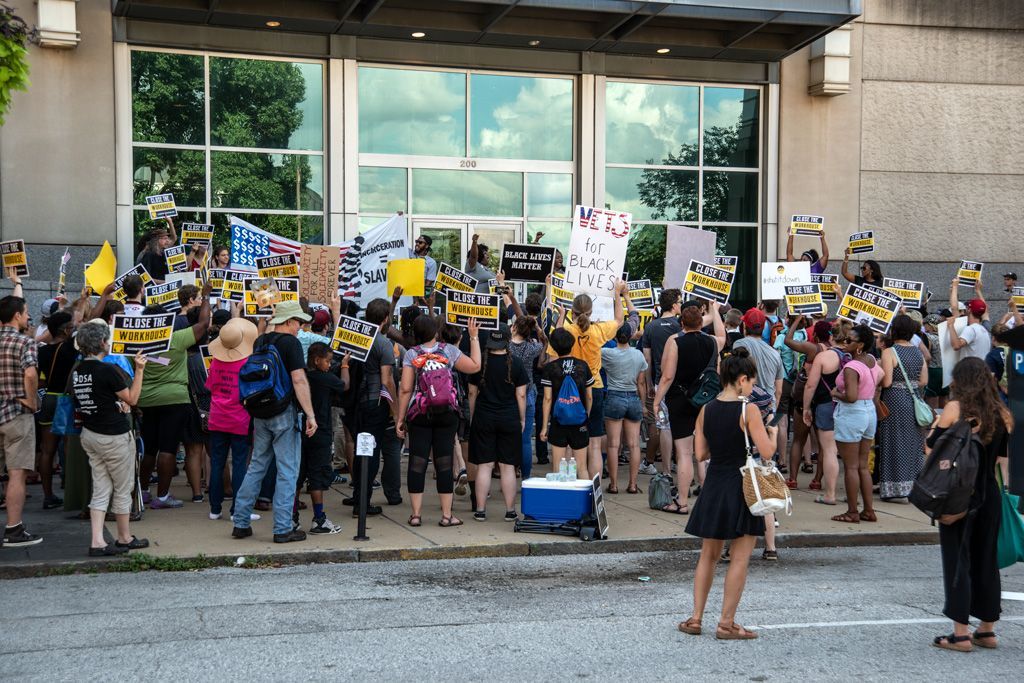
Slide title
The Workhouse, one of two jails in St. Louis City for many years, was known for its inhumane conditions. It was a medium security institution without air conditioning or adequate heating for inmates. The name “Workhouse” was derived as detainees were sentenced to forced labor when they could not afford to pay their fines, Later detainees were incarcerated there due to their inability to pay unconstitutionally high cash bails. Most inmates were awaiting trial caged and criminalized due to their poverty. This protest was held in downtown St. Louis during the annual July 4th parade to call attention to the abhorrent existence of this jail. Photographed July 4, 2018.
Button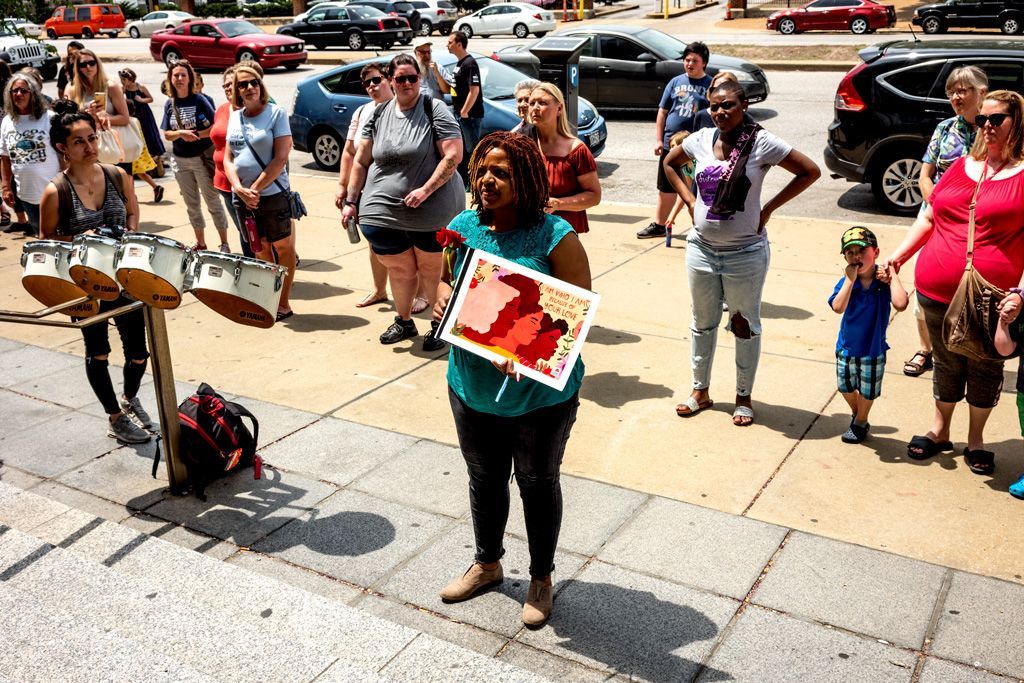
Slide title
This protest at the St. Louis Justice Center (jail) focused on its overcrowding due to an emphasis on setting high bail amounts to create revenue for the City. Families and friends, along with civil rights activists and defense attorneys organized a Mother’s Day Bailout rally to call attention to the plight of families who suffer when a relative is jailed for long periods of time waiting for their trial. Photographed May 12, 2018.
Button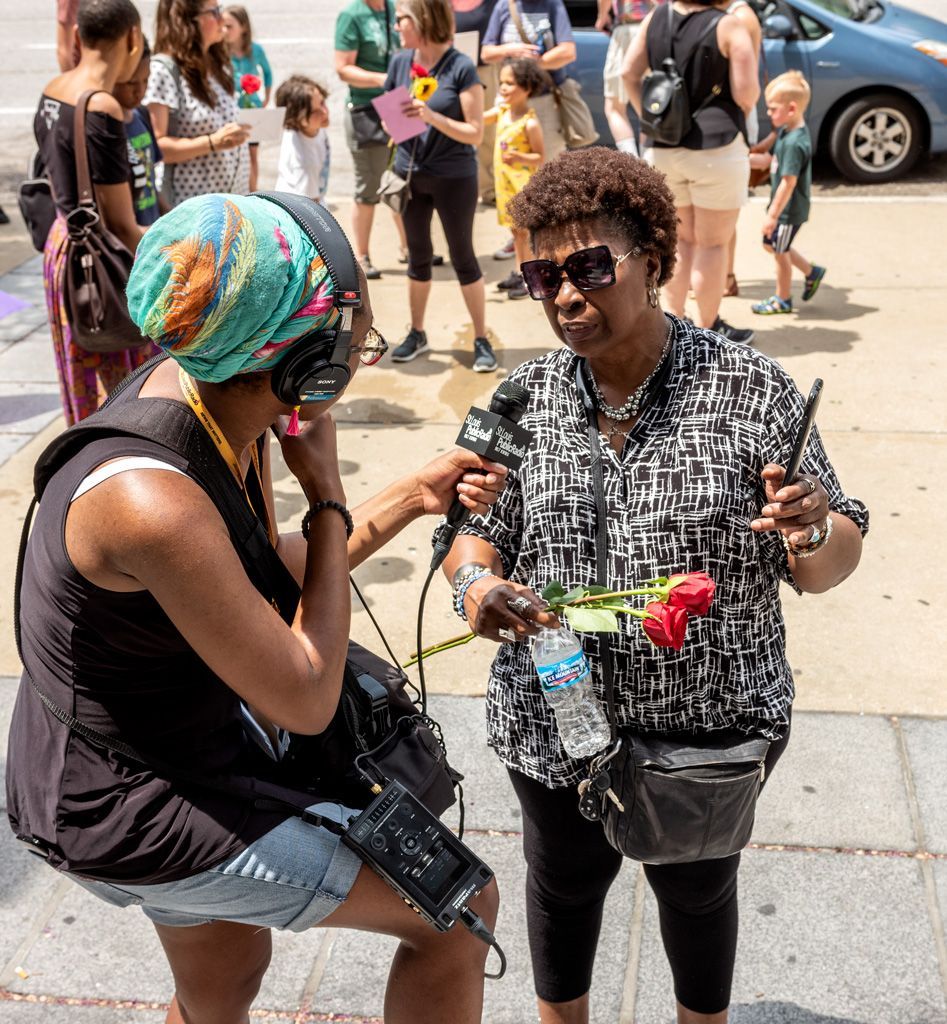
Slide title
A spouse of one inmate speaks to a St. Louis Public Radio (NPR) reporter to explain the effects of high cost bail to poor families. First, many cannot afford the bail. Being in jail for months awaiting trial puts them into further risks. By not being able to work, they risk losing their jobs, or while not working, cannot pay rent and risk eviction. They also face having utilities turned off for lack of payment, and some even have fallen ill because of lack of medical attention and prescriptions while incarcerated — just a few effects of this inequitable system. Photographed on May 12, 2018.
Button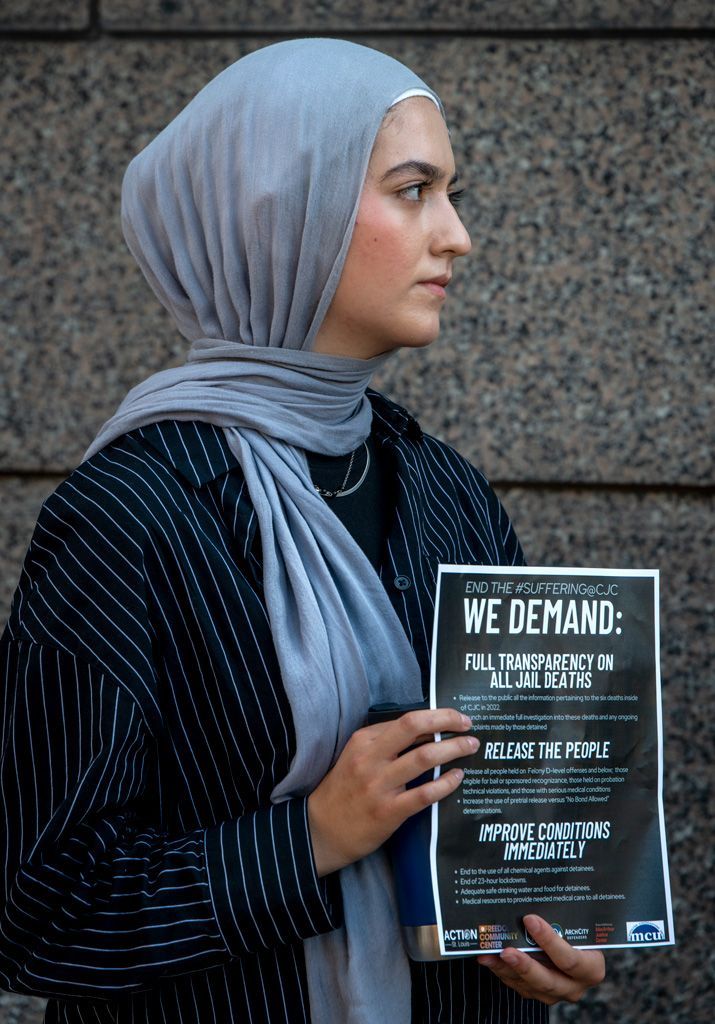
Slide title
St. Louis’ jails are infamous for the deaths, serious illnesses, and brutal treatment at the hands of jailers. Over the years, many efforts have been made to address these situations, and although some progress has been made, those who are detained in the City’s one remaining jail still face risks.
This young woman showed up to make demands for improvements so their loved ones, friends, neighbors, or people they do not know, can receive caring, humanitarian treatment while in jail. Photographed on September 19, 2022.
Button
Slide title
Button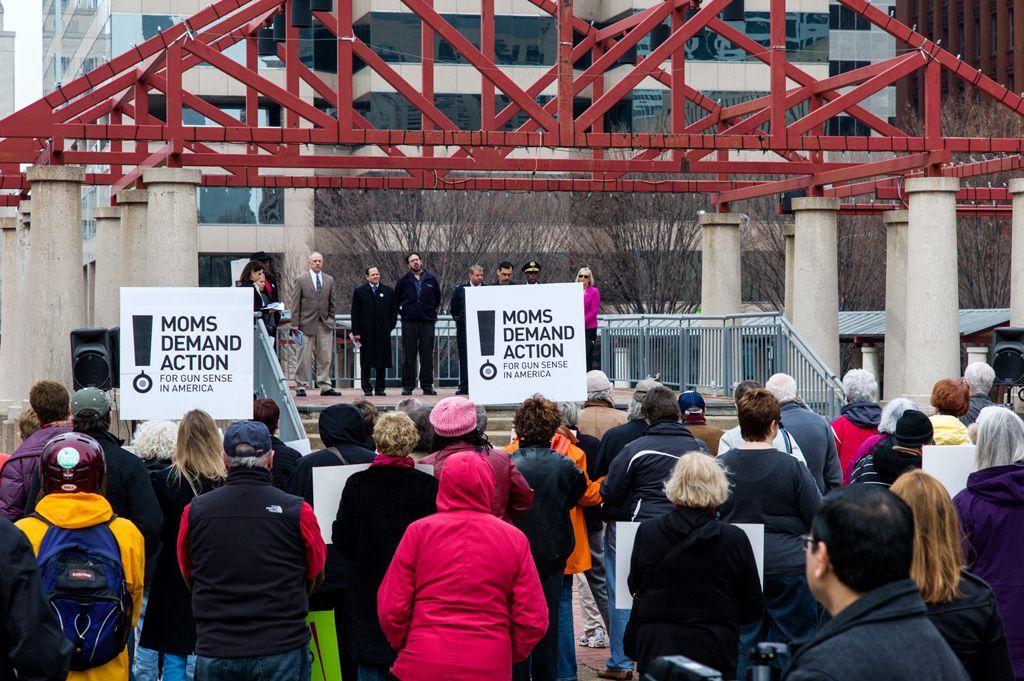
Slide title
Moms Demand Action for Gun Sense in America held a protest rally in Kiener Plaza downtown after the dramatic increase of gun violence in St. Louis and the nation. Mass shootings in schools and other places, along with a rise in drive-by shootings, prompted the call for new laws regulating firearm sales. Photographed March 30, 2013.
Button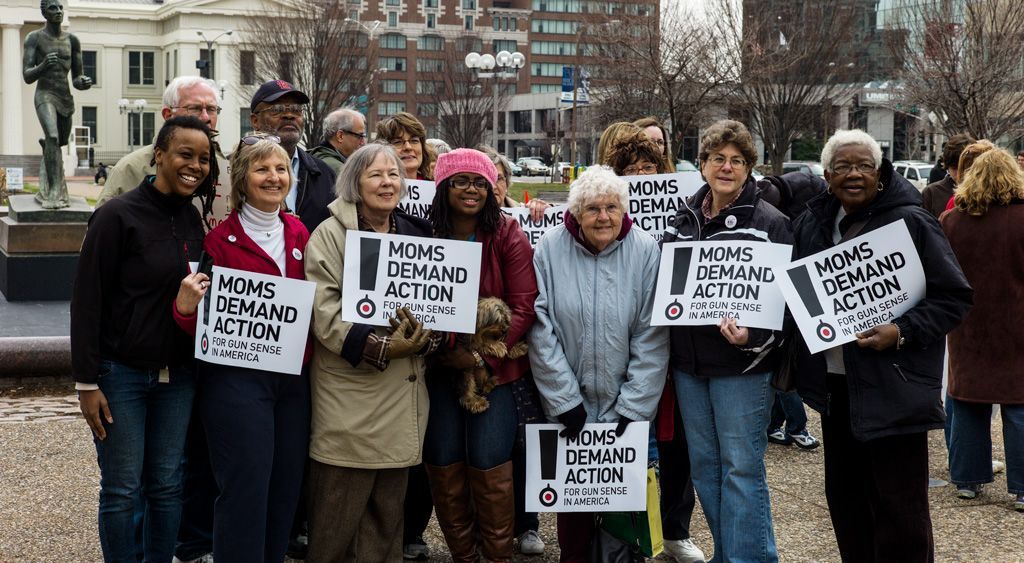
Slide title
This group of moms and dads came to the protest together and shared their stories of local gun violence, particularly about drive-by shootings and the increase in youth deaths by other youths. Photographed March 30, 2013.
Button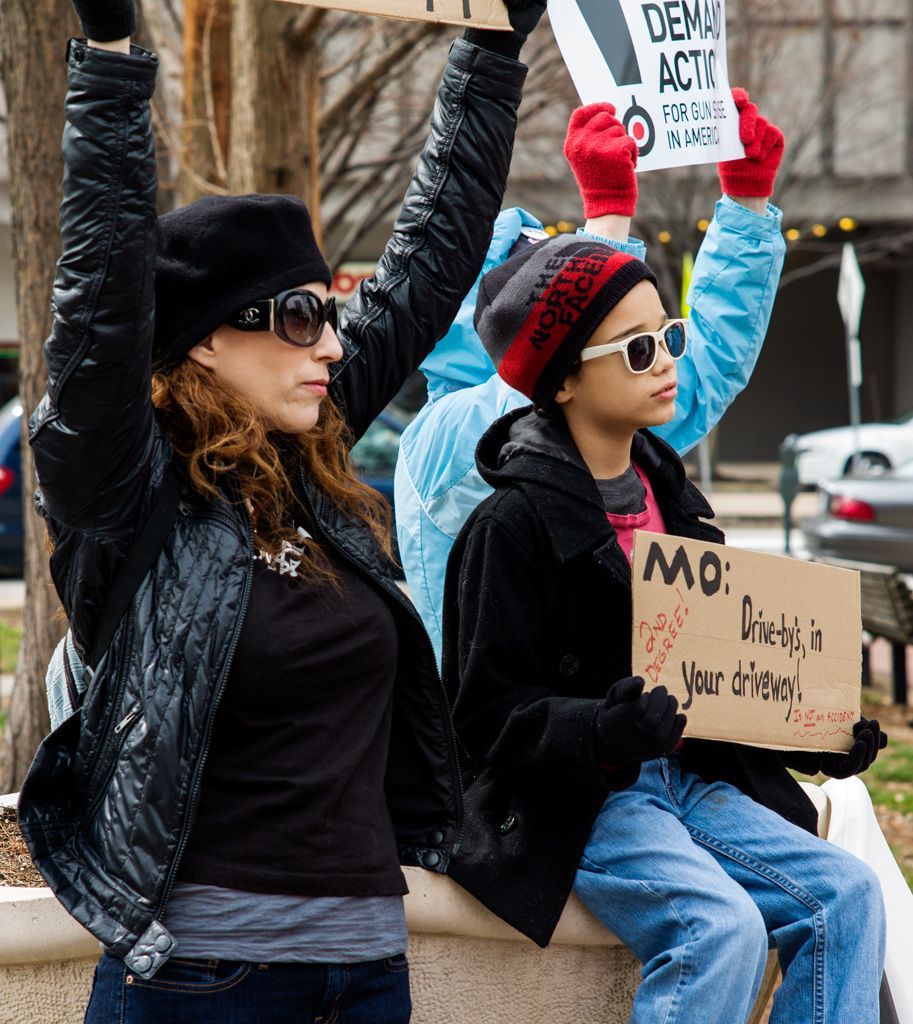
Slide title
This mom brought her son to the protest, demanding action by both the Missouri State legislature and local law enforcement after their neighborhood had been plagued recently by drive by shootings. Photographed March 30, 2013.
Button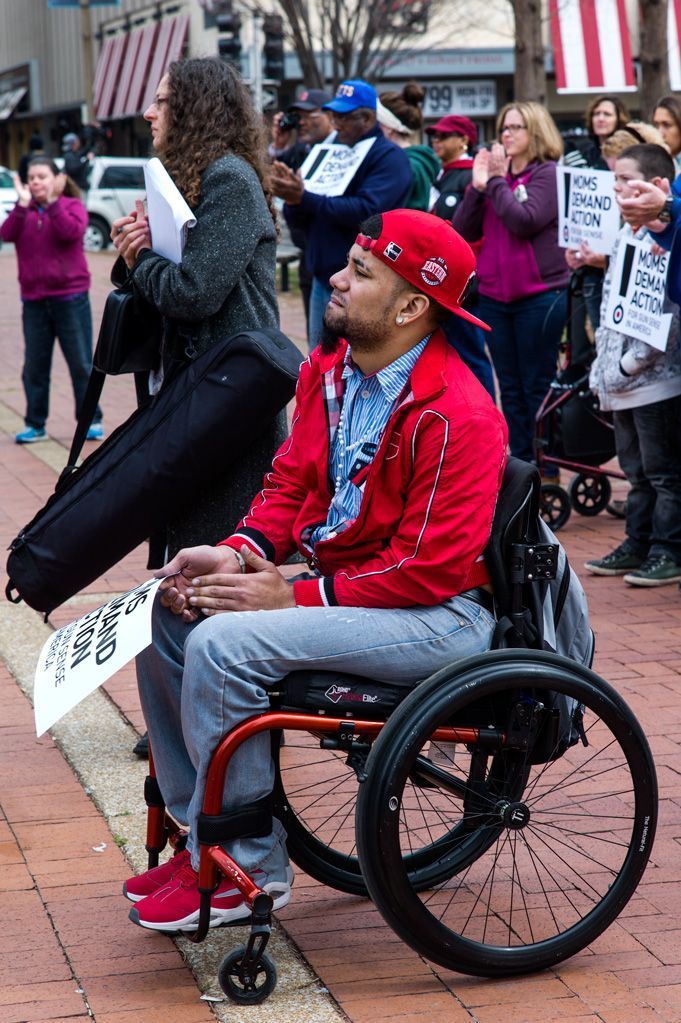
Slide title
One of the victims of firearm violence attended the Moms Demand Action protest to speak of his experience and to emphasize the need to make it more difficult to purchase firearms. Photographed March 30, 2013.
Button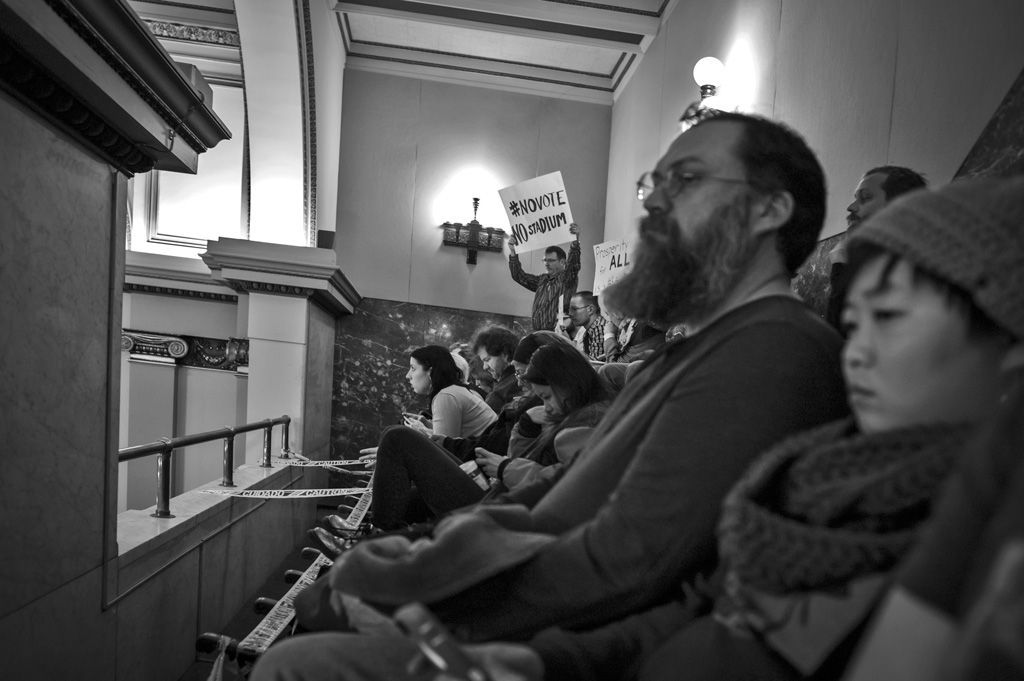
Slide title
During a controversial Stadium vote at City Hall. Protesters sit in the second floor gallery overlooking the Board of Aldermen proceedings to protest a procedural matter that would deny citizen comments to keep and pay for a football stadium in downtown St. Louis, built by the St. Louis Rams NFL team, but abandoned when they moved to Los Angeles in 2015. Citizens did not want to be shackled with extra corporate debt by Rams owner Stan Kroenke. Photographed on December 15, 2015.
Button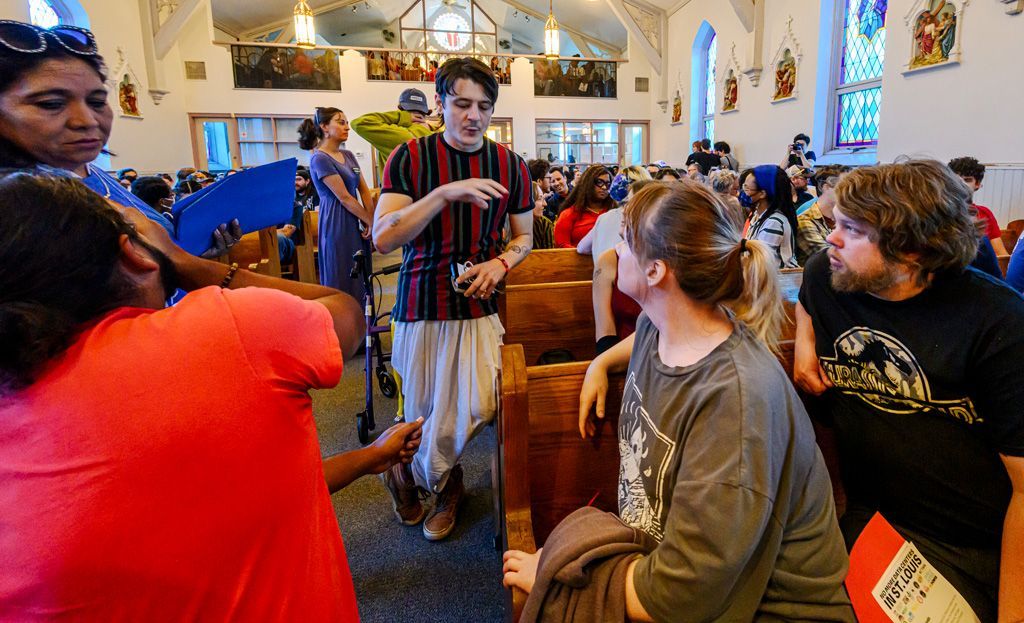
Slide title
When a data center was proposed to replace a now defunct entertainment venue, residents throughout the City of St. Louis gathered for a town hall meeting to discuss the pros and cons of this type of development that could affect their “quality of life.” Small groups were formed to facilitate open discussions. Everyone had the opportunity to weigh in with their point of view. Overwhelmingly, the attendees decided to oppose the data center development led by large contractors, unknown developers, and other special interests. Photographed October 12, 2025.
Button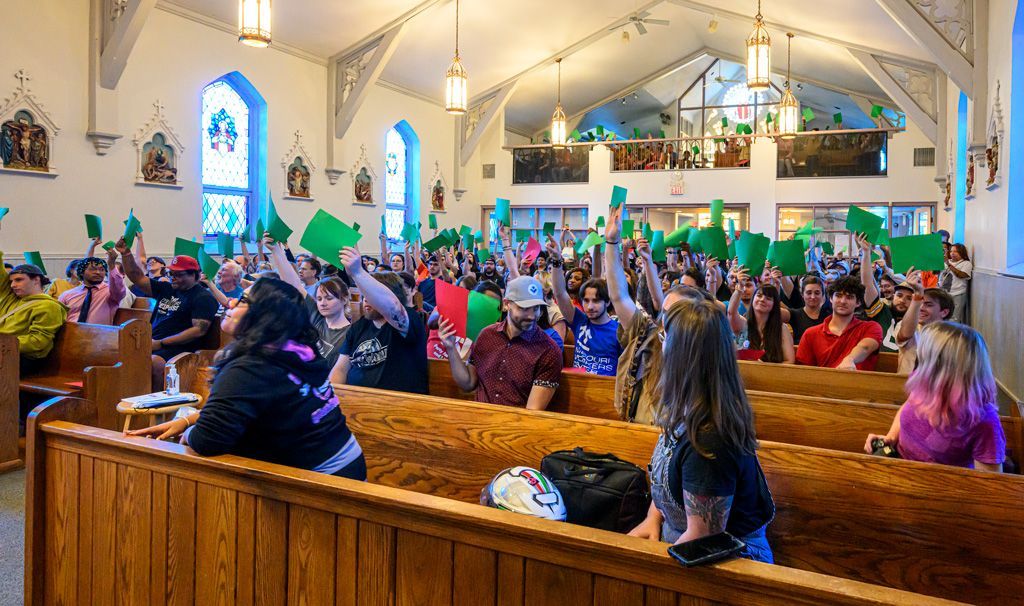
Slide title
Attendees of the data center town hall meeting at St. Cronin’s Catholic Church in The Grove neighborhood voted on key issues by raising either green sheets of paper for YES or red sheets for NO. Key issues included acceptability of higher electricity bills that result when data centers are built, increased pollution to the environment from greater demand for electricity, and pressure on water resources needed to cool the center’s machinery. These impacts were seen as negative when weighed upon narrow benefits from the companies operating data centers. Photographed October 12, 2025.
Button
Slide title
Button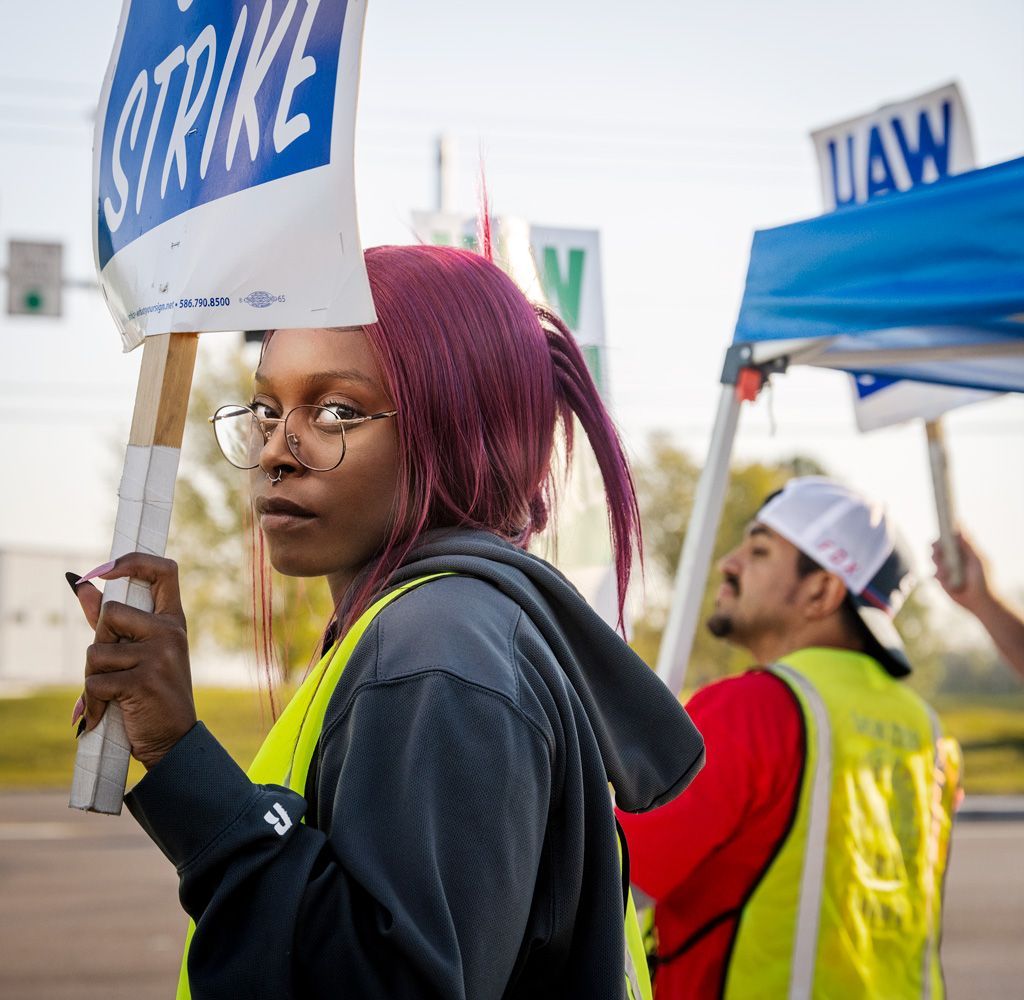
Slide title
Collective bargaining rights go way back in U.S. history, but the fight for fair pay, fair treatment by employers, safe working conditions, benefits, and employment security, continues. In 2023 the General Motors plant in Wentzville, MO, just west of St. Louis, shut down due to a UAW strike as the workers demanded a new contract. The strike lasted 45 days. This photo is from one of the many picket lines surrounding the large manufacturing campus there, and this woman showed us the new face of a younger, more diverse workforce who depends on their union. Photographed on October 2, 2023.
Button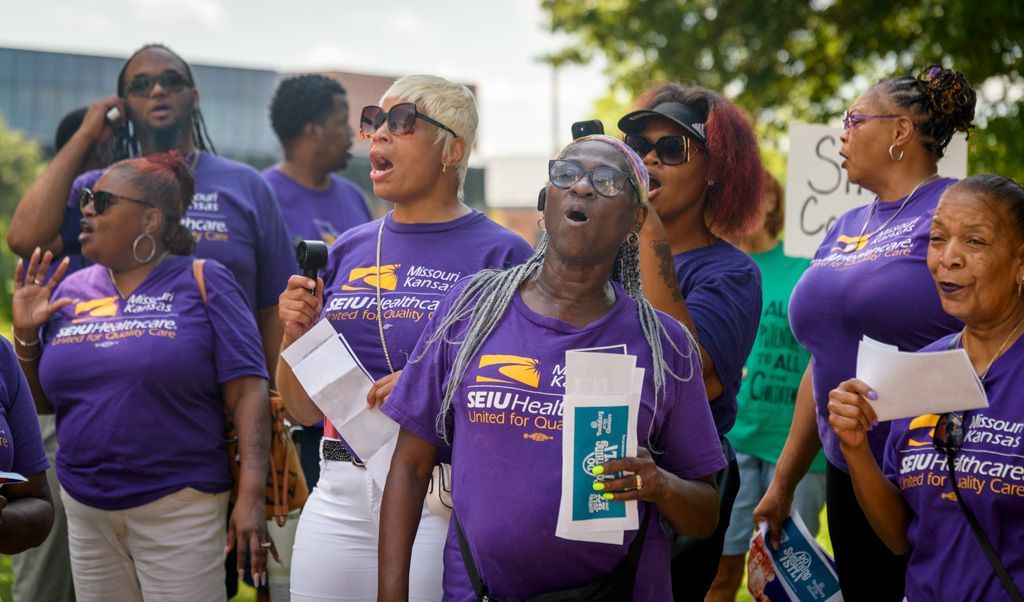
Slide title
Local 200 of the Service Employees International Union (SEIU), representing workers in healthcare, public services, and property services, came together on a very hot July day to protest the recent abuses of the Trump administration. At their “Families First Day of Action” rally, held in Webster Groves, a suburb of St. Louis, they stood up to protect care, education, and dignity for working families and against harmful budget cuts and policies that threaten our communities and the services we all rely upon. Cuts to healthcare, education, and food assistance affect most American families whether they are blue collar or white collar. Photographed July 26, 2025.
Button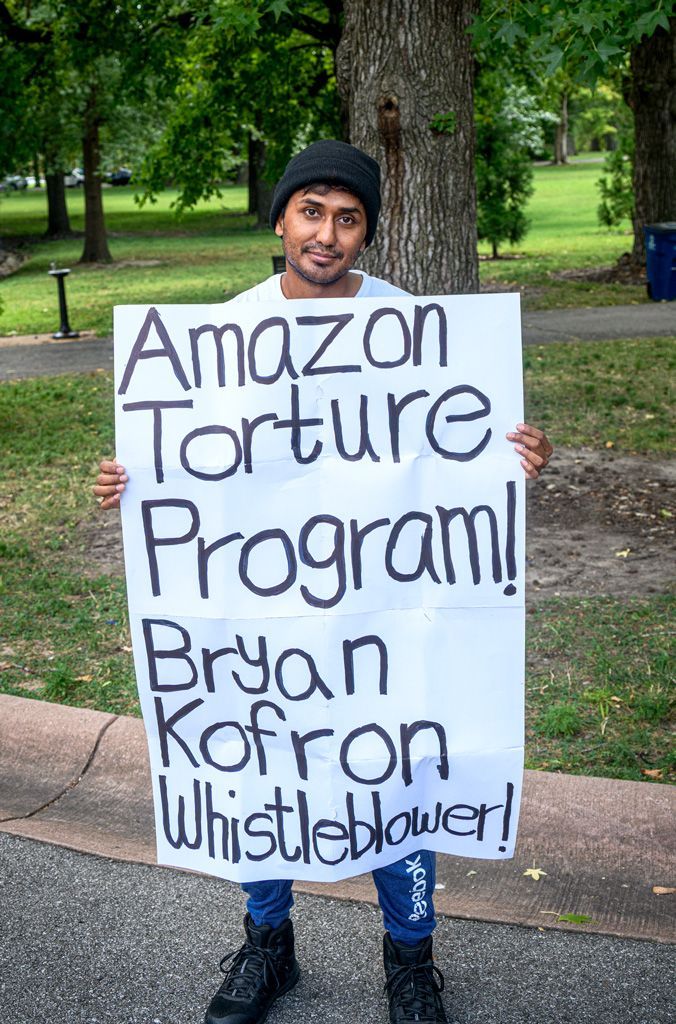
Slide title
This is a singular demonstration in many ways — he stands alone in his protest without colleagues or supporters. He claims to be a whistleblower for companies maintaining giant databases of human DNA that can (and are) being used by corporations, such as Amazon, in this instance. Verifying the veracity of his claims is difficult because online sources are sketchy and none include reputable mainline media outlets. But, the First Amendment gives this gentleman the right to say what he says and to assemble to say it. Photographed August 23, 2025.
Button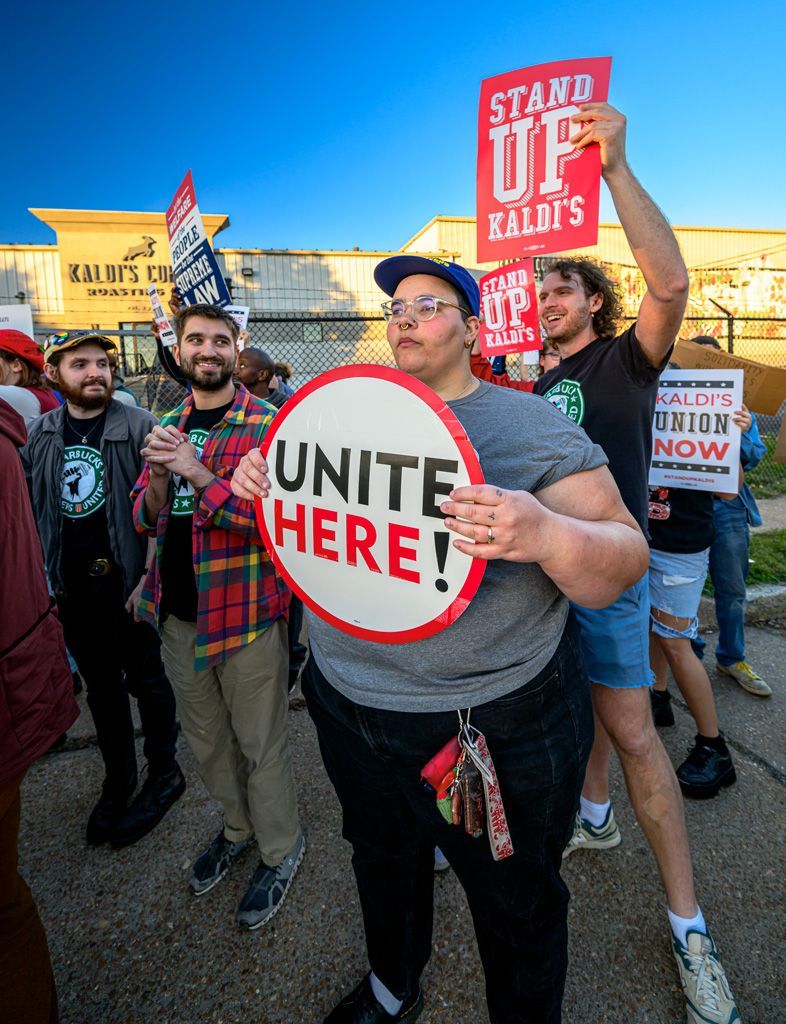
Slide title
When workers at a local coffee house chain in St. Louis held a vote and petitioned to form a union, the company ignored them. That resulted in a protest in front of company headquarters by their employees, local union leaders, and the public who support collective bargaining rights. The baristas and café workers are mostly young and often work two jobs, so things like receiving schedules earlier, higher pay so they won’t need a second job, better and safer working conditions, and a voice at the table means a lot to them. Photographed on November 5, 2025.
Button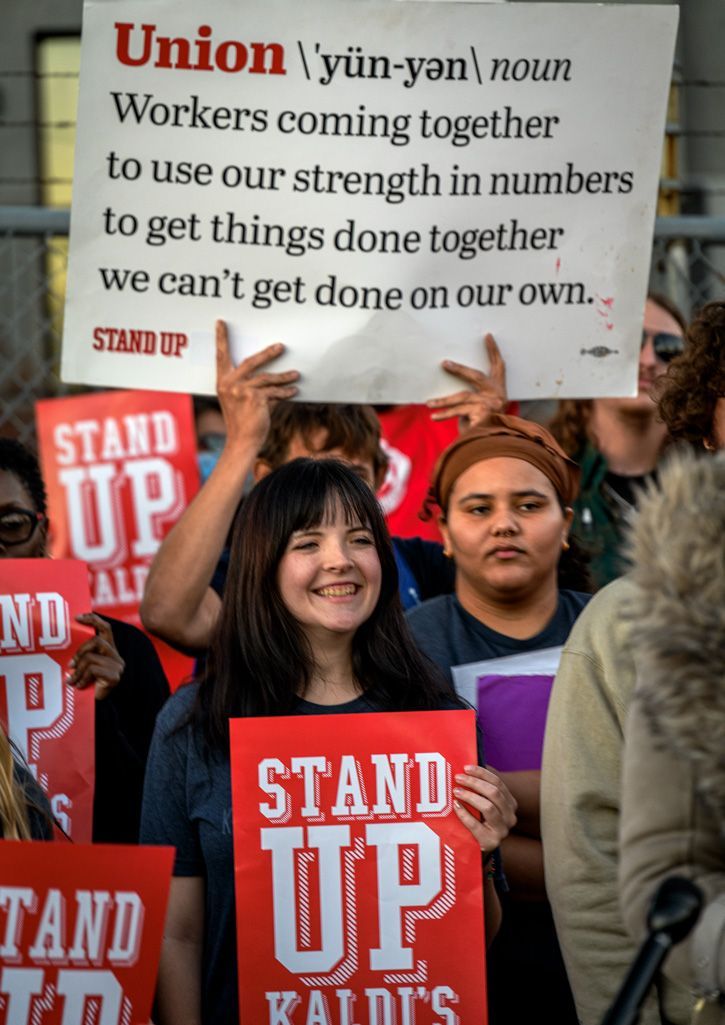
Slide title
Kaldi’s Coffee workers assemble to rally for recognition of the union they voted for and to publicly define why they need a union to speak for them. The protest was held outside the company’s headquarters building. Photographed on November 5, 2025.
Button
Slide title
Write your caption hereButton
Slide title
Button
Slide title
Write your caption hereButton
Please share your impressions of this gallery with us by sending us a short comment here.
And, please share the link to this gallery with your friends.